


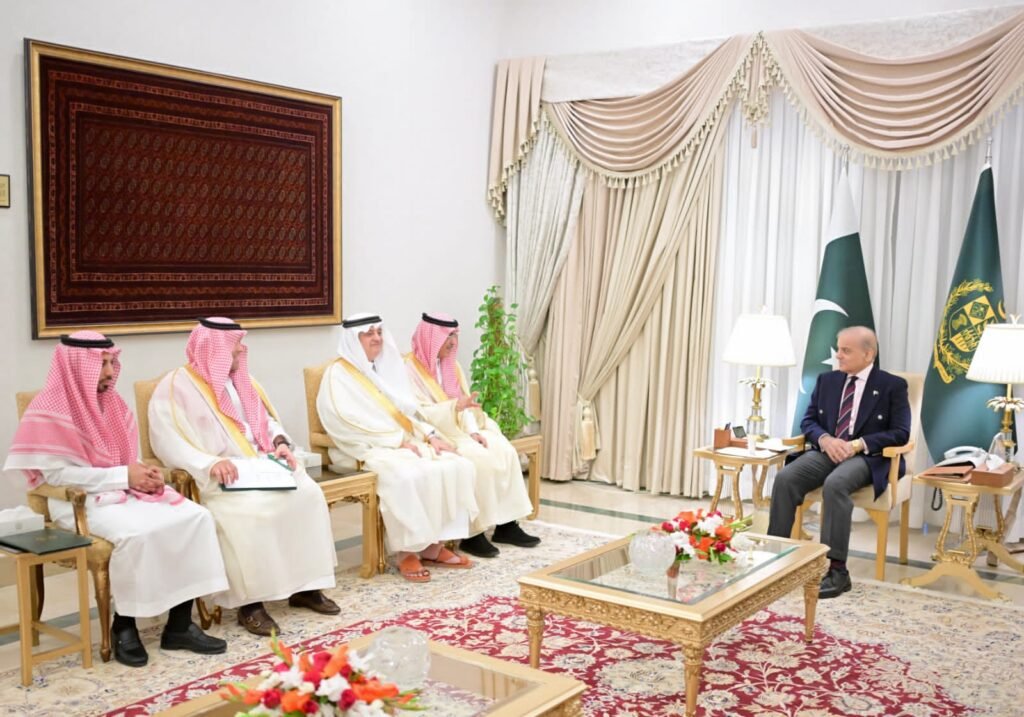
- $10B Gwadar Oil Refinery: Strategic Partnership Milestone: The $10 billion (up to $12 billion) Gwadar oil refinery project stands as another shining example of the deep friendship and economic cooperation between Saudi Arabia and Pakistan, with renewed momentum following Saudi Finance Minister Mohammed bin Abdullah Al-Jadaan’s high-level visit to Islamabad on April 10, 2026.
- Project Scale & Structure: Led by Saudi Aramco in collaboration with Pakistan’s PSO, OGDCL, PPL, and GHPL, the greenfield refinery will process 300,000–400,000 barrels per day (potentially up to 500,000 bpd), with Pakistani firms contributing 40–45% of the investment as part of a planned “Gwadar Oil City” integrated with the deep-sea port.
- Mutual Benefits: For Pakistan, the refinery promises to slash the massive oil import bill by up to 30%, enhance energy security, create thousands of jobs, and transform Gwadar into a regional energy hub under CPEC. For Saudi Arabia, it secures a strategic crude export outlet in Asia while strengthening bilateral ties beyond traditional oil supplies.
ISLAMABAD — April 11, 2026 — Saudi Arabia is preparing to lead a detailed feasibility study for a proposed $10bn (occasionally estimated as high as $12bn) oil refinery and petrochemical complex in Gwadar, Pakistan’s strategic deep-water port in Balochistan province. A high-ranking Saudi delegation currently in Pakistan is expected to formalise a memorandum of understanding to hand responsibility for the assessment to Saudi Aramco, according to officials familiar with the discussions.
This latest development comes in the wake of Saudi Finance Minister Mohammed bin Abdullah Al-Jadaan’s one-day visit to Islamabad on April 10, during which he met Prime Minister Shehbaz Sharif. The talks focused on expanding cooperation in trade, investment and economic development, with both sides reaffirming their commitment to strengthening bilateral relations. The refinery project forms part of broader Saudi-Pakistan economic engagement that has included oil supply support and defence co-operation.
The initiative is another clear example of the enduring friendship and strategic partnership between Saudi Arabia and Pakistan. Riyadh has consistently offered economic backing to Islamabad during challenging periods, and the Gwadar refinery — if realised — would further embed that relationship in regional energy infrastructure.The proposed greenfield facility would process 300,000-400,000 barrels per day of crude oil, with some Pakistani planning documents suggesting a potential capacity of up to 500,000 bpd.
Saudi Aramco would serve as the lead investor, collaborating with Pakistan’s state-owned Pakistan State Oil (PSO), Oil & Gas Development Company Limited (OGDCL), Pakistan Petroleum Limited (PPL) and Government Holdings Private Limited (GHPL). Pakistani partners are expected to contribute 40-45 per cent of the equity. The complex would anchor a planned “Gwadar Oil City” spanning roughly 88,000 acres, featuring storage capacity for up to 3mn tonnes of oil and direct integration with the Chinese-developed Gwadar Port.
Discussions first emerged in October 2018 during high-level talks. The project gained public prominence in January 2019 when Saudi Energy Minister Khalid al-Falih visited Gwadar, inspected the site and announced that Crown Prince Mohammed bin Salman would travel to Pakistan the following month to formalise agreements.
It was positioned as support for Pakistan’s economic stability through the China-Pakistan Economic Corridor (CPEC), aiming to transform the remote port into a Gulf-Central Asia-China energy and trade hub.Early momentum slowed due to feasibility concerns, global market volatility, logistical challenges and reports of Aramco pausing work around 2020.
A formal memorandum of understanding was signed in July 2023 between Aramco and the Pakistani entities, but progress remained gradual. Pakistan has offered incentives under its deep-conversion refinery policy, including a 7.5 per cent customs duty on locally produced petrol and diesel for 25 years, along with full government support.For Pakistan, the refinery promises significant gains.
The country imports more than 80 per cent of its petroleum needs, with the annual bill often exceeding $12-16bn. Refining cheaper crude domestically rather than importing finished products could reduce that bill by up to 30 per cent or generate annual savings above $3bn. It would enhance energy security, ease foreign-exchange pressures, create thousands of direct jobs (estimates exceed 5,000), drive industrial growth in Balochistan and position Gwadar as a regional export platform, potentially supplying China and beyond.
For Saudi Arabia and Aramco, the project offers a secure outlet for crude in a growing Asian market while diversifying export routes. It deepens economic ties beyond traditional oil supplies, aligns with outward investment objectives under Vision 2030 and strengthens Saudi presence along the CPEC corridor, contributing to stability in a key partner country.The Saudi delegation, which recently visited Gwadar, expressed satisfaction with site preparations.
Officials note that Pakistan lacks the specialised expertise for a project of this scale, making Aramco’s technical leadership essential. A higher-level Saudi team will ultimately decide on investment. Land allocation for the refinery is also reported to be advancing, with completion expected in the coming months.Pakistani authorities have repeatedly highlighted the project’s strategic importance. In the 2023 MoU phase, the then petroleum minister praised its potential for economic growth, foreign-exchange savings, energy security, employment and social upliftment.
Earlier statements described it as Pakistan’s largest refinery and a game-changer for Gwadar. Saudi officials, including al-Falih in 2019, emphasised Riyadh’s desire to support Pakistan’s development through the refinery and CPEC partnership.Analysts consider the refinery strategically vital for Pakistan’s energy independence and Gwadar’s transformation into an energy hub. However, delays are common in mega-projects of this magnitude, influenced by detailed studies, site challenges near the Iranian border and market conditions.
A market study had been targeted for completion by the end of 2025, with its findings now feeding into the refreshed Aramco-led assessment. While social media has circulated optimistic claims of “finalised plans” following the April ministerial visit, the project remains in the advanced planning and feasibility stage rather than active construction.
If approved, the refinery would take five to six years from financial close to operations, suggesting potential first output towards the end of the decade. Recent high-level engagement, including defence pacts and sustained dialogue, indicates stronger political commitment than in previous years.The Al-Jadaan visit and impending MoU reflect continued interest from both capitals in advancing the initiative.
In an environment of constrained global capital and volatile energy markets, such flagship projects demonstrate how longstanding strategic friendships can deliver infrastructure capable of reshaping economic outcomes. The technical assessments now under way will clarify the path forward, but the intent to deepen co-operation appears firmer in early 2026 than for some time.