


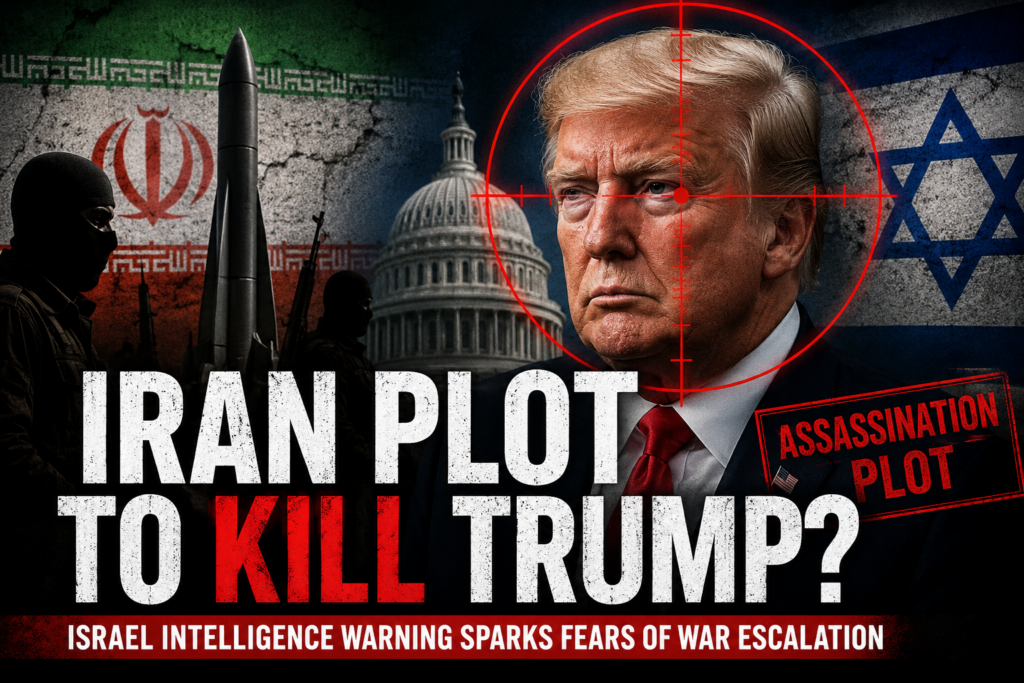
- 2026 Midterm Elections Terrorism Threat: CSIS data shows that out of 11 election-related domestic terror incidents in the past decade, 10 occurred in or after 2021, driven primarily by election denialism, candidate hostility, and opportunistic disruption.
- Shift Toward Local and Accessible Targets: While national candidates face heightened security perimeters, vulnerability is shifting toward softer targets—including local poll workers, state officials, and vote certification bodies—primarily from decentralized, lone-actor threats using accessible firearms.
- Global Strategic and Geopolitical Implications: International stakeholders across Europe, the Middle East, and Asia closely monitor U.S. election stability, as internal security friction and domestic political volatility threaten foreign policy continuity and Washington’s global bandwidth.
A sobering report published by the Center for Strategic and International Studies (CSIS) titled “The Terrorism Threat to the 2026 Midterm Elections” exposes a persistent vulnerability in the democratic architecture of the United States.
While instances of election-related terrorism remain statistically low compared to broader violent crime, CSIS data reveals a clear operational trend: violent extremists have actively targeted American election cycles over the past decade, with incidents becoming increasingly concentrated in recent years.
Out of hundreds of domestic terror plots and attacks recorded in the CSIS U.S. Terrorism Incidents Dataset between 2015 and mid-2026, exactly 11 were directly tied to federal and local elections. Strikingly, 10 of those 11 incidents occurred in or after 2021.
Trump Assassination Plot: How a Mother’s Call Foiled a White House Attack
While protective security, flawed operational execution, and fortune have prevented any of these perpetrators from killing their primary targets, the systemic threat to democratic participation, institutional legitimacy, and political stability is escalating.
Key CSIS Findings: How, Why, and When Terrorists Strike
The CSIS analysis breaks down the operational patterns of election-targeted political violence into distinct structural insights:
1. Three Primary Motivations Drive Election Attacks
-
Rejecting or Overturning Results: The majority of incidents (six out of 11) stemmed from election denialism and false claims of voter fraud. This includes armed actors participating in the January 6 Capitol attack, pipe bombs placed outside party headquarters by Brian Cole Jr., and drive-by shootings targeting Democratic officials’ homes orchestrated by failed legislative candidate Solomon Peña.
-
Candidate Assassination: Three incidents involved direct attempts to kill political figures due to specific policy hostility or personal grievances. Notable cases include Ryan Wesley Routh’s 2024 attempt against Donald Trump, Michael Steven Sandford’s 2016 effort to seize a firearm to execute Trump at a rally, and Quintez Brown’s 2022 shooting at Louisville mayoral candidate Craig Greenberg.
-
Exploiting Electoral Attention: Two plots involved opportunistic extremists seeking to leverage the massive public focus surrounding election periods. These included an ISIS-inspired mass-shooting plot by Nasir Ahmad Tawhedi and Abdullah Haji Zada aimed at Election Day crowds, and Mark Adams Prieto’s plot to massacre Black concertgoers to trigger a race war before the vote.
2. Cross-Ideological Threat Vectors
Election terrorism in America is not the monopoly of a single political faction. CSIS notes that six incidents were tied to right-wing ideologies, three to left-wing grievances, one to jihadist sympathizers, and one targeted both major national parties simultaneously.
3. Vulnerabilities Span the Full Calendar
Only one of the 11 incidents was planned specifically for Election Day. The threat extends across the entire political calendar: targeting candidates during early campaign stops, disrupting vote certification processes after polls close, or retaliating against officials months after an election is settled.
The Terrorism Threat to the 2026 Midterm Elections: What the Data Tells Us
4. Operational Profile Mirrors Broader U.S. Domestic Terrorism
Perpetrators are overwhelmingly lone actors or small, decentralized cells utilizing readily available weapons—primarily firearms. Because these actors operate without formal organizational hierarchies, detecting and disrupting simple attacks in accessible, low-security spaces remains inherently difficult for law enforcement.
Strategic Forecasting: Vulnerabilities Surrounding the Midterms
Drawing on the CSIS dataset and broader domestic security trajectories, several key shifts define the risk landscape:
Redistribution of Vulnerability to Local Soft Targets
While security perimeters around high-profile national candidates have expanded significantly, vulnerability is shifting downward.
Local election workers, volunteer poll staff, state legislators, and judicial bodies certifying outcomes will remain prime targets for intimidation and low-complexity attacks. Decentralized lone actors using easily accessible firearms present a threat vector that traditional law enforcement measures struggle to interdict before the attack stage.
2026 Midterm Elections Terrorism Threat: The Chilling Effect and Democratic Compression
The true danger of election terrorism is not merely the immediate physical harm, but its systemic psychological impact.
Persistent threats discourage qualified public servants from seeking office, intimidate voters away from public rallies, and force state authorities to implement heavy security measures—such as armed law enforcement or military personnel at polling stations. Overreaching security risks intimidating voters, deepening institutional cynicism, and suppressing democratic participation.
Why the 2026 Midterms Are Watched in Europe, the Middle East, and Asia
Beyond domestic borders, international governments across Europe, the Middle East, and Asia are closely monitoring the political health and stability of the 2026 midterm elections. For European allies within NATO, the outcome directly dictates the continuation of U.S. security guarantees, defense funding, and transatlantic trade consistency amid ongoing regional conflicts.
In the Middle East, regional powers assess how congressional realignments will shape U.S. military posture, diplomatic mediation, and sanctions enforcement across sensitive energy corridors. Meanwhile, Indo-Pacific capitals across Asia evaluate the midterms as a barometer of American domestic resilience; internal political paralysis or systemic election violence signals to both partners and adversaries that Washington’s long-term strategic focus and diplomatic bandwidth may be compromised by internal volatility.
Global Implications for Foreign Observers
For international stakeholders monitoring Washington from abroad, the primary hazard of U.S. domestic political violence is the gradual erosion of governance stability and foreign policy continuity. Internal security friction, heightened partisan polarization, and threat-driven political attrition constrain the federal bandwidth for global engagement. As domestic political figures face increasing pressure to focus inward, predictable diplomatic commitments may yield to domestic crisis management, creating strategic vacuums in international relations.