


BY YAAKOV KATZ
A few weeks ago, three luxury cars pulled up alongside the beach promenade in central Tel Aviv – a Porsche, an Audi, and a third sports car. Inside, the men were wearing what looked like the traditional Emirati Kandura robes and Ghutra headscarves, while the car speakers were booming some of the latest Arab music hits in the United Arab Emirates.
Israelis stood by in awe. Some asked for pictures. At one point it grew into a line of people wanting a selfie with the visitors from the UAE.
Someone took a video of the group, which immediately went viral. But these were not tourists from the UAE, Israel’s new peace partner in the Middle East. These were Arab-Israelis from the town of Kafr Kassem just a 30-minute drive away. It was all a prank.
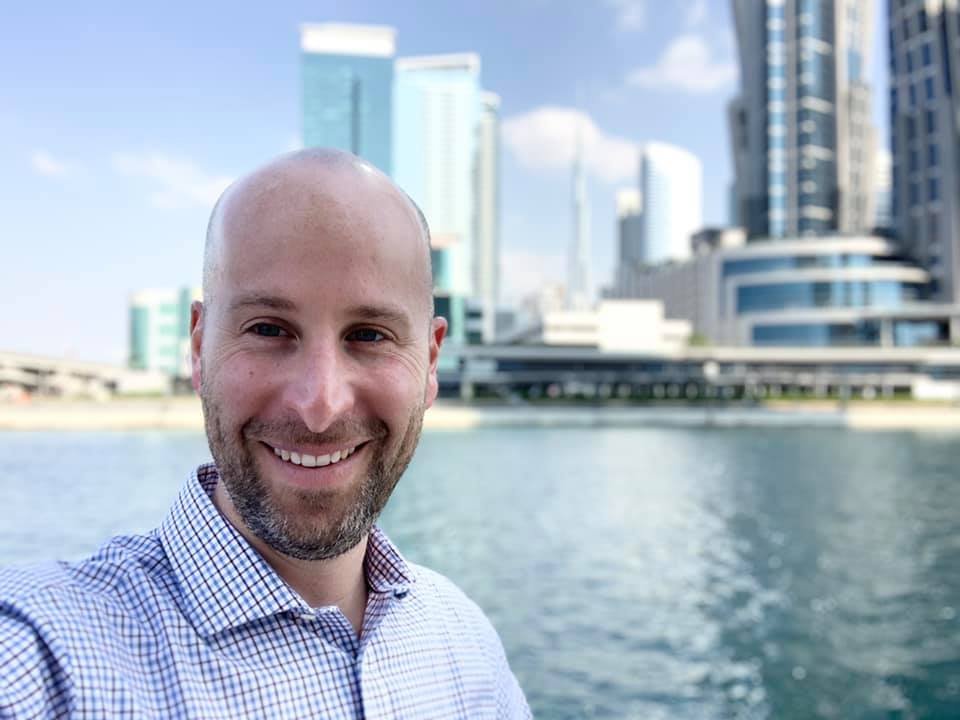
I thought of the group from Kafr Kassem this past week during my first visit to Dubai. I went there for two days of meetings with our new partners from the Khaleej Times, ahead of two conferences we are planning together in January and February.
It is hard as an Israeli not to be moved when walking the streets of Dubai, sitting in coffee shops or meeting in restaurants. In hotel lobbies, Emirati men speaking Arabic walked past Israeli children wearing kippot. Hebrew could be heard all over downtown, where tens of thousands of Israelis had descended as part of the flood of tourists coming to one of the only “green” countries left to visit.
It was moving, because as an Israeli journalist, I finally had the opportunity to visit a country that I had written about countless times, albeit from the abstract perspective of what I was told by Israeli, American or even Emirati officials in Europe or the US.
I had written about arms sales to the UAE and their impact on Israel’s qualitative military edge, as well as secret Mossad operations that had taken place there and throughout the wider Gulf. Now here I was walking near the hotel in Dubai I had written about 11 years before, the place where Mossad assassins were said to have killed top Hamas commander Mahmoud al-Mabhouh.
To fly over Saudi Arabia – a country that for decades we were told would never recognize Israel without a resolution to the conflict with the Palestinians – shows what the future still holds. The region truly is realigning before our eyes, and to see it in Dubai removes any cynicism – even if Israeli tourists are already leaving their mark there and not always in a positive way (about half a dozen Israelis have been arrested for theft and prostitution, but for now the authorities are preferring to close these cases quietly).
As moving as all this might be, I couldn’t stop thinking about Hamada Odeh, the Arab-Israeli from Kafr Kassem who organized the hoax a couple of weeks ago in Tel Aviv.
While Odeh might have just been having fun, the deeper point he was inadvertently making was that in Israel we already see Arabs every day. We work alongside them, we hear their music, we eat their food, but here is the difference: we don’t get excited. On the contrary – we are suspicious. Jewish-Israelis don’t stop Arabs in the Old City of Jerusalem, in Acre or in Kafr Kassem to take a selfie. Mostly they just move out of the way.
There are a lot of reasons why. There is the highly-charged emotional baggage Jewish-Israelis and Arab-Israelis each carry from years of discord, conflict and discrimination. With Palestinians, the tension is even greater.
Relations with the Emiratis on the other hand come with a clean slate. There is no emotional baggage. There is no past war that we all carry the scars from in our hearts or on our bodies. No one accuses anyone there of taking their land, and no one there has tried to blow up a bus or a restaurant.
This is why there is excitement. It is excitement because a visit to Dubai shows what is possible for Israel in the Middle East, how the Jewish state can be accepted as an equal in a region where Israelis have always felt like outsiders alongside neighbors bent on their destruction. Some, sadly, have yet to abandon that ambition.
This is heartwarming to see, but it is hard not to wonder what is possible closer to home, in our own backyard. Peace with the UAE, Bahrain, Sudan and now Morocco are all huge achievements. But what about peace in our country and among our own citizens? Does our government invest even a fraction of what it invests in peace with Arab states in the reconciliation that is needed between Israelis and the different sectors that make up this country – Arabs, haredim (ultra-Orthodox), Druze, secular, National-Religious and others?
I think we all know the answer, and it is disheartening. The government today doesn’t care to try and unite between Israelis, even if that is what is truly needed. Instead, due to the endless cycle of political instability, politicians use the divide to their advantage. They exacerbate it for political gain and benefit. It serves them even if it doesn’t serve us, the people who they are meant to serve.
Jewish-Israelis don’t have to take selfies with Arab-Israelis like they might do with Emirati Arabs on the streets of Dubai. But they also don’t have to look at them suspiciously and as an adversary as continues to be the case today.
Re-published with permission by the author