


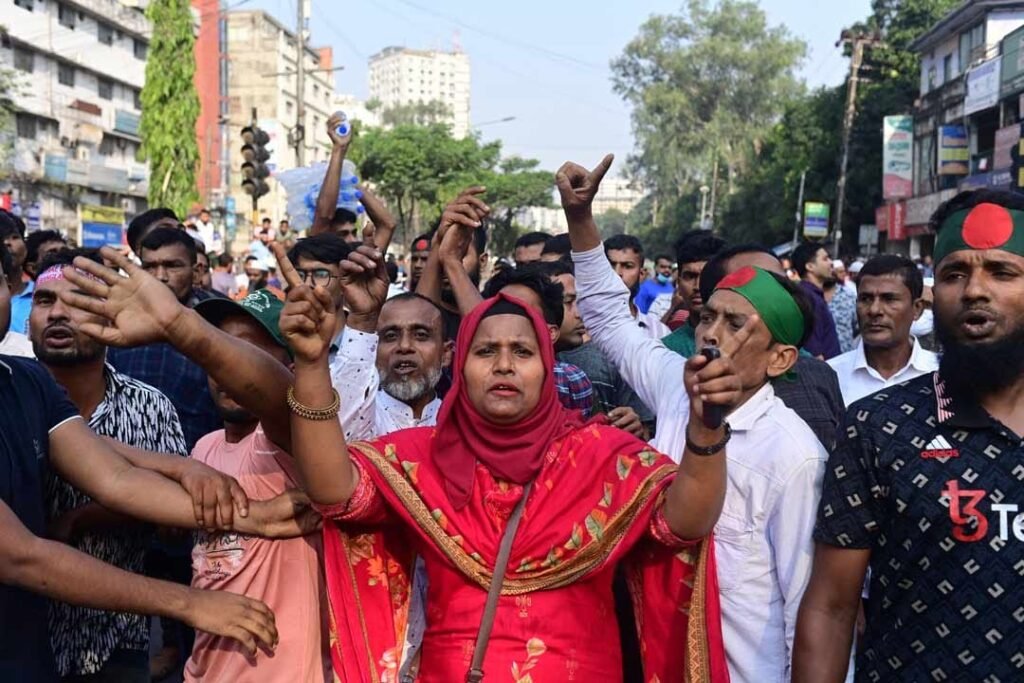
- Historic Election: Bangladesh held its first general elections since 2024, marking a significant democratic milestone.
- Peaceful Voting: Election day was largely calm, with only isolated incidents contained swiftly, showcasing national stability.
- Free and Fair: The interim government ensured transparent elections, monitored by 394 international observers and 197 foreign journalists.
- Citizen Participation: Over 127 million voters cast their ballots, actively safeguarding election integrity alongside security forces.
- Voter Turnout: Initial figures indicate 47.9% turnout across 36,000 polling stations, reflecting strong civic engagement.
Bangladesh witnessed a historic moment this week as voters flocked to more than 36,000 polling stations for the nation’s first general elections since the dramatic political upheaval of 2024. Amid intense scrutiny, heavy security, and international observation, the elections were conducted in a largely peaceful, free, and fair manner—a remarkable achievement that sets a new precedent for democratic processes in the country.
The interim government, led by Muhammad Yunus, deserves unreserved praise for overseeing an election that combined strict adherence to legal frameworks with an inclusive, participatory atmosphere. Voting began at 0130 GMT and continued for nine hours, with long queues forming outside polling stations across the nation. The final voter turnout, while still being verified, reached 47.9 percent according to initial figures released by Akhtar Ahmed, senior secretary of the Bangladesh Election Commission—a respectable number considering the political turbulence of the past two years.
The day was not without isolated incidents: one fatality and a handful of minor Molotov attacks in Chauddagram and Gopalganj Sadar were reported. Yet these incidents were minimal in scale, and their rapid containment showcased the combined effectiveness of Bangladesh’s security forces and the extraordinary civic responsibility demonstrated by ordinary citizens. For the first time in the nation’s history, maintaining election peace was not the task of the military and police alone; the people themselves actively safeguarded the integrity of the vote. This partnership between state and society in protecting democracy is unprecedented and signals a transformative shift in Bangladesh’s political culture.
More than 127.6 million citizens were eligible to cast their votes, choosing 300 members of parliament directly, alongside 50 reserved seats for women, for a total house of 350 members. Additionally, voters participated in a referendum on constitutional reforms, underscoring the breadth of civic engagement in shaping Bangladesh’s governance. A total of 51 political parties and 2,034 candidates—including 275 independents—vied for seats, reflecting a vibrant, multi-party democracy even amidst the historic barring of former Prime Minister Sheikh Hasina’s Awami League.
Observers and journalists from around the globe, numbering 394 and 197 respectively, monitored the elections. Their presence adds credibility and international recognition to the process. Interim Prime Minister Yunus hailed the elections as “peaceful and festive,” describing them as “a day of joy for all of Bangladesh, a day of liberation. The end of our nightmare, the beginning of new dreams.” Such words capture the sentiment of a population that has navigated political instability with resilience, now embracing a future defined by participation, responsibility, and accountability.
Perhaps the most striking feature of this election is its potential to reshape Bangladesh forever. By demonstrating that peaceful elections are possible even after upheaval, the country has sent a clear message: democratic integrity and national stability are collective responsibilities, shared by both the government and its citizens. Security forces ensured safety, yes, but it was the active vigilance of ordinary voters that maintained calm, deterred misconduct, and preserved the legitimacy of every ballot cast.
This election will likely serve as a blueprint for future democratic exercises in Bangladesh and across the region. It proves that free and fair voting is achievable when institutions, civil society, and citizens collaborate with commitment and courage. The nation’s political landscape has changed irreversibly, moving toward a model where electoral fairness is not merely enforced from the top down but embraced as a collective national duty.
As results trickle in and parliamentary seats are allocated, one thing is clear: Bangladesh is entering a new era. The country’s citizens have claimed their stake in governance, political discourse has broadened, and the interim government has demonstrated that leadership, when combined with transparency and civic partnership, can achieve historic milestones. The 2026 elections will not merely be remembered as a procedural necessity—they will be celebrated as a watershed moment that may define Bangladesh’s democratic trajectory for decades to come.