


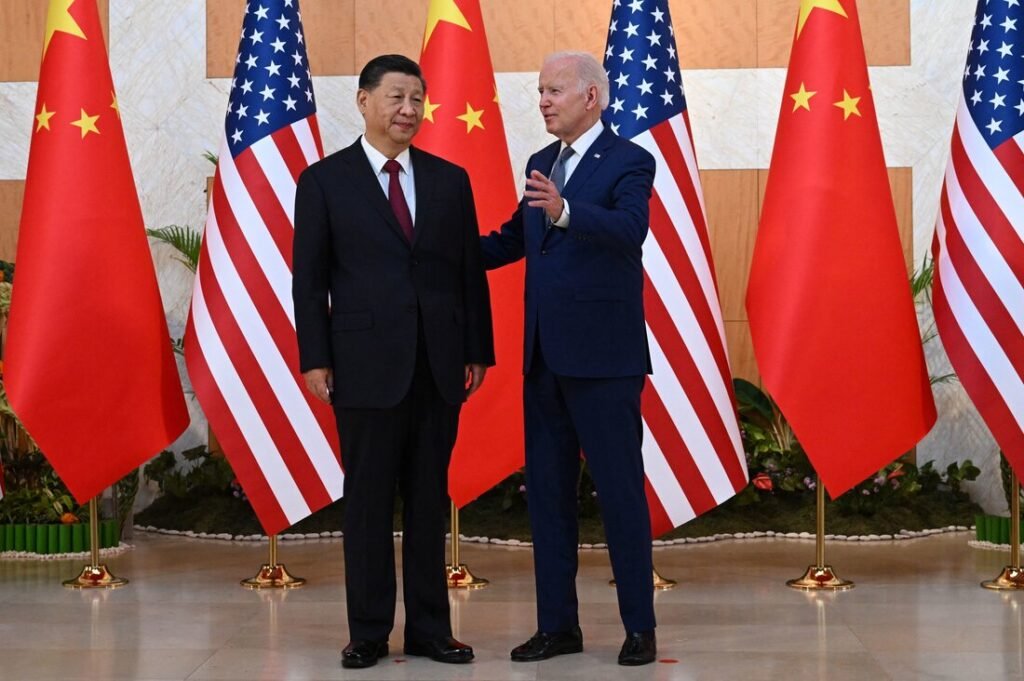
In a pivotal meeting held on November 16 in Peru, U.S. President Joe Biden and Chinese President Xi Jinping tackled a range of pressing global issues, with a primary focus on artificial intelligence (AI) in the context of nuclear weapons control. The dialogue, set against the backdrop of mounting tensions between the two superpowers, emphasized the critical need for maintaining human oversight in nuclear decision-making, reflecting a rare moment of consensus on a matter of immense global significance.
AI in Nuclear Weapons: A Shared Concern
Both leaders agreed on the importance of ensuring that decisions related to the deployment or use of nuclear weapons remain exclusively under human control. They underscored that automating such decisions or delegating them to AI systems poses unacceptable risks. This unified stance, also echoed by the White House, highlights the shared understanding of the catastrophic consequences that could arise from the mismanagement or misapplication of AI in military contexts.
Xi says he will work with Trump in last meeting with Biden
The Chinese government’s official summary of the meeting corroborated this alignment, signaling Beijing’s acknowledgment of the issue’s gravity. However, despite the agreement in principle, uncertainty looms over whether these discussions will evolve into tangible policy frameworks or collaborative initiatives. Historically, China has resisted formal engagement in nuclear arms talks, and efforts by the U.S. to bring Beijing to the negotiation table have seen limited success.
Challenges in Nuclear Arms Control
Recent months have witnessed sporadic attempts to rekindle nuclear arms control discussions. In November, there was a brief resumption of official talks between the U.S. and China, but progress stalled shortly thereafter. A senior U.S. official expressed dissatisfaction with China’s hesitancy, stating that formal negotiations appear unlikely in the near future. This impasse comes amidst growing concerns in Washington over China’s rapidly expanding nuclear arsenal, which analysts believe could challenge the existing balance of power.
Muslims Voice Concerns Over Trump’s Pro-Israel Cabinet Picks
While formal negotiations remain elusive, informal and semi-official dialogues between the two nations have continued. Bilateral discussions on AI regulation, initiated in May in Geneva, have primarily focused on the broader implications of the technology without directly addressing its intersection with nuclear policy. These conversations, though incremental, represent a step toward building trust in an increasingly fractured international landscape.
Biden’s Concerns Over North Korea and Russia
Beyond AI and nuclear policy, President Biden raised another critical issue during the meeting: North Korea’s alleged involvement in supporting Russia’s ongoing war in Ukraine. According to U.S. intelligence reports, North Korea has reportedly sent troops to aid Russia, a development Biden described as a “serious and dangerous escalation.” He warned that such actions not only threaten European security but also destabilize the Indo-Pacific region, where U.S. allies are already navigating complex security challenges.
US Lawmakers’ Call for Imran Khan’s Release Sparks Diplomatic Row
Biden also voiced apprehension over China’s continued support for Russia’s defense sector amidst the Ukraine conflict. He emphasized that such actions undermine global stability and strain efforts to resolve the crisis diplomatically. While Xi did not directly address these accusations during the meeting, the discussion underscores the layered complexities in U.S.-China relations, where cooperation in one area often coexists with discord in others.
AI and the Future of Global Security
The discussions on AI regulation reflect the growing awareness among global leaders of the technology’s transformative potential—and its inherent risks. While Biden and Xi expressed mutual interest in regulating military applications of AI, the path forward remains uncertain. The integration of AI into defense systems, particularly in decision-making processes, has fueled concerns about unintended escalations, miscalculations, or even accidents that could have devastating consequences.
Experts warn that without clear guidelines and international agreements, the race to integrate AI into military systems could lead to a dangerous spiral of competition and mistrust. The Peru meeting, therefore, serves as a timely reminder of the urgent need for collaborative efforts to establish guardrails around the development and deployment of AI technologies in sensitive domains.
A Complex Moment in U.S.-China Relations
The Biden-Xi meeting in Peru reflects a blend of tentative cooperation and entrenched rivalry. On one hand, the shared commitment to keeping nuclear decisions under human control and addressing the risks of AI offers a glimmer of hope for constructive dialogue. On the other, persistent disagreements over issues like North Korea’s role in the Ukraine conflict and China’s support for Russia reveal the deep fissures that continue to define U.S.-China relations.
This dual dynamic underscores the complexity of the bilateral relationship, where moments of alignment are often overshadowed by broader strategic competition. For Biden, balancing collaboration with deterrence remains a delicate task, especially as China asserts itself as a global power with expanding influence.
What’s Next?
As the dust settles from the Peru meeting, the global community will be watching closely for signs of progress—or setbacks—in the areas discussed. Will the shared commitment to human oversight in nuclear decisions translate into actionable policies? Can the U.S. and China find common ground on AI regulation amidst a broader technological arms race? And how will the tensions over North Korea and Russia’s defense ties influence the trajectory of U.S.-China relations?
While the answers to these questions remain uncertain, the meeting underscores the stakes involved. In an era of rapid technological advancement and geopolitical realignments, the decisions made by leaders like Biden and Xi have far-reaching implications—not just for their countries, but for the world at large.