


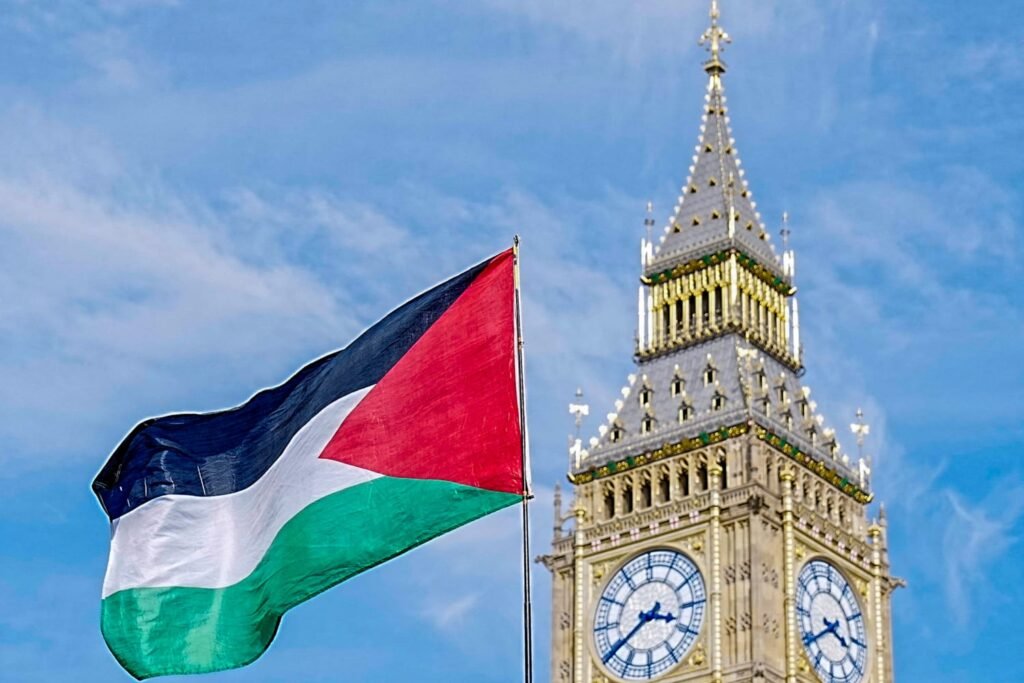
Britain’s Bold Recognition of Palestine Has Redrawn the Map of Global Diplomacy
History is often shaped not by grand wars or sweeping treaties, but by a single moment of courage. In September, the United Kingdom provided such a moment. By formally recognizing the State of Palestine, London has not only altered the trajectory of the Middle East but also jolted Europe into collective action, forcing the world to confront a question that has been evaded for decades: when will Palestinians finally enjoy the dignity of statehood?
For too long, Palestinian recognition has been treated as a dangling carrot, something to be granted “when the time is right.” The British government shattered that illusion. It declared that the time is now—and in doing so, it unleashed a wave of diplomatic momentum that spread rapidly across Europe and beyond. France followed. Canada and Australia joined. Belgium, Spain, Ireland, and others voiced their readiness. What seemed impossible just months ago suddenly became a new political reality.
“This is a matter of justice and peace,” UK Prime Minister Rishi Sunak told the House of Commons. “Palestinians must know that their future is not in perpetual limbo. Recognition is a step toward equality, toward dignity, and ultimately, toward peace.”
Britain’s Rediscovery of Leadership
The UK’s role in Palestinian recognition is deeply symbolic. After all, Britain’s history in the region is complicated: the Balfour Declaration of 1917 paved the way for the creation of Israel while sidelining Palestinian aspirations. That London has now chosen to stand firmly for Palestinian sovereignty carries moral weight far beyond the corridors of Westminster.
G7 Summit 2025: Trade Tensions, Global Wars, and Tariff Talks Dominate High-Stakes Gathering
France quickly followed suit. President Emmanuel Macron, speaking at the UN General Assembly, declared: “The time for peace has come. The time for justice has come. France recognizes the State of Palestine, and we call on others to join us.” His words echoed through a hall where Israeli and American diplomats sat in protest.
Saudi Arabia, co-sponsor of the New York Declaration alongside France, welcomed the UK’s leadership. Foreign Minister Prince Faisal bin Farhan said: “Britain has shown moral courage where others showed hesitation. We urge all nations to follow this example. The establishment of a sovereign Palestinian state is the key to lasting stability.”
The Changing European Posture
This shift reflects something larger: Europe’s desire to reclaim relevance in a changing world order. For decades, Middle Eastern diplomacy was outsourced to Washington. The Oslo Accords, Camp David, the Trump-era “Deal of the Century”—all were American-led, and all ended in failure. Europeans provided aid, hosted summits, and voiced concern, but they rarely altered outcomes.
India and Pakistan Fuel South Caucasus Arms Race: Fighter Jet Deals with Armenia and Azerbaijan Escalate Tensions
That passivity is no longer tenable. Israel’s September 9th strike in Qatar, which killed members of a Hamas negotiating team and a Qatari security officer, was a wake-up call for Gulf states and Europe alike. For the Gulf Cooperation Council (GCC), it underscored Israel’s recklessness. For Europe, it revealed the limits of Washington’s stranglehold on diplomacy.
By moving ahead with recognition, the UK and France signaled that Europe will no longer be a junior partner to U.S. policy. Instead, it seeks to become a co-architect of Middle Eastern peace, working in tandem with Gulf states that now view Palestinian statehood as a non-negotiable priority.
Beyond Symbolism: What Recognition Achieves
Skeptics have been quick to dismiss these recognitions as “symbolic.” Symbolism, however, is the currency of international politics. Recognition does three crucial things.
-
It changes the legal and diplomatic landscape. Palestine, recognized by a growing number of Western democracies, can no longer be dismissed as an abstract idea. It is a state in waiting, entitled to representation in forums from the UN General Assembly to the International Criminal Court.
-
It alters the balance of public opinion. Once, Israel dominated the Western narrative by framing its wars as defensive struggles. Today, images of destroyed hospitals in Gaza and settler violence in the West Bank have shifted sympathy. With Britain and France openly recognizing Palestine, the debate in Western capitals has decisively changed.
-
It creates leverage against Israel. Recognition opens the door to sanctions on settlement products, visa bans on extremist Israeli officials, and conditionality in EU–Israel relations. If Europe follows recognition with policy, Israel’s cost-benefit calculus will shift.
As Irish Foreign Minister Micheál Martin bluntly put it: “Recognition is not charity—it is justice. It is not symbolic—it is a tool of accountability.”
What Must Happen Next
Recognition is a beginning, not an end. To transform Britain’s bold step into tangible sovereignty for Palestinians, several actions are essential:
-
Push for full UN membership. The UK, France, and allies must confront U.S. obstruction at the Security Council. Even if Washington vetoes, repeated General Assembly votes will erode the legitimacy of American resistance.
-
Enforce accountability. Europe should adopt targeted sanctions against settlement enterprises and bar extremist Israeli ministers like Bezalel Smotrich and Itamar Ben-Gvir from entry.
-
Support Palestinian unity. Recognition must not entrench division. London, Paris, Riyadh, and Doha should facilitate a transitional unity government to give Palestinians a credible, representative voice.
-
Prepare for stabilization. The Franco-British “day after” plan, envisioning a stabilization mission in Gaza and the West Bank, must be fleshed out with resources and commitments. Otherwise, recognition risks being stranded without infrastructure.
Britain’s Courage and the Path Ahead
It is easy to forget how much courage it takes for a Western power to defy Washington. Britain did not merely recognize Palestine; it defied the gravitational pull of U.S. diplomacy. In doing so, it restored faith that European nations can act with principle rather than default to American positions.
This courage matters not only for Palestine but for the credibility of the international system itself. If the world continues to allow Israel to expand settlements, annex land de facto, and bomb Gaza into ruins without consequence, then the promise of a rules-based order is meaningless. Britain has shown that rules and principles can be reasserted—if leaders choose to do so.
As Palestinian Ambassador to London, Husam Zomlot, said on the day of recognition: “This is not just a political decision. It is a moral one. Britain has shown that justice delayed does not have to be justice denied.”
The coming months will test whether recognition was a turning point or a fleeting headline. Israel will push harder to expand settlements. Washington will continue to shield it. But with Britain and Europe standing firm, and Gulf states aligned, the balance of diplomatic power has shifted.
Palestinians have waited generations for this moment. Recognition alone does not deliver statehood, but it opens the door. Britain has held that door wide. The world must now summon the courage to walk through it.