


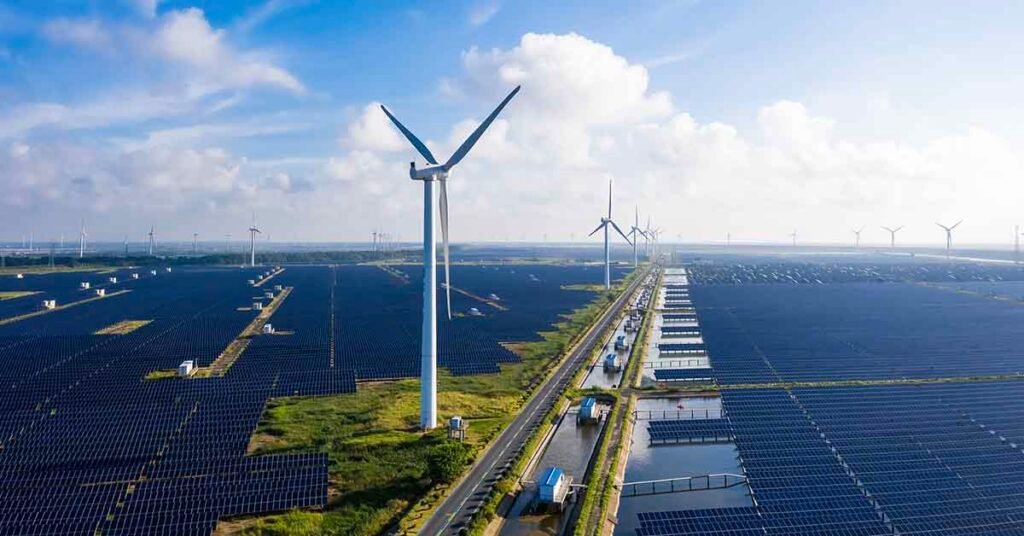
- China and Australia have overlapping but complementary roles in Southeast Asia’s green energy transition, especially in EV and hydrogen markets.
- ASEAN’s surging energy demand offers opportunities for trilateral cooperation in clean energy infrastructure and supply chains.
- Existing partnerships and trade frameworks like RCEP support joint ventures in lithium processing, battery production, and hydrogen technology.
- Diplomatic resets and institutional agreements offer hope for long-term regional energy collaboration despite geopolitical rivalries.
In an era dominated by climate urgency and great power rivalry, Southeast Asia finds itself at the intersection of two global imperatives: the green energy transition and regional power realignment. For Australia and China—two countries with divergent geopolitical outlooks but overlapping energy interests—the region offers a rare space where strategic competition might give way to pragmatic collaboration.
The green energy landscape in Southeast Asia is rapidly evolving. With a population of over 680 million and some of the world’s fastest-growing economies, the region is facing a sharp uptick in energy demand. Yet, it is also positioning itself as a serious player in the global shift toward renewable energy. The Association of Southeast Asian Nations (ASEAN) has set a target to raise its renewable energy share to 23 percent of its energy mix by 2025, and major member states have signed on to international commitments to triple renewable capacity by 2030.
Saudi Arabia Rolls Out the Red Carpet — and Fighter Jets — for Donald Trump’s Visit
China has made a bold first move. Between 2019 and 2023, Chinese investments in renewable energy across ASEAN exceeded US$3 billion, with projects spanning hydropower dams, solar infrastructure, and transnational electricity grids. The Laos–China 500 kilovolt Interconnection Project, for instance, now allows China to import surplus electricity from Laos—a project with the potential to expand into the broader Laos–Thailand–Malaysia–Singapore Power Integration framework.
Australia, too, has deepened its green energy ties with ASEAN. Through the ‘Aus4ASEAN Futures Initiative’, Canberra has funded renewable energy projects and regional energy centres, and backed large-scale infrastructure such as the SunCable Australia-Asia Power Link.
MORE READ:Title: US-China Trade War Escalates: Risks, Realities, and What Policymakers and CEOs Need to Know
This ambitious project aims to deliver solar energy from Australia’s Northern Territory to Singapore via subsea cables, promising a blueprint for regional energy integration. Additionally, Australia’s recent commitment of US$50 million to Singapore’s Financing Asia’s Transition Partnership underlines its intent to play a more substantial role in Southeast Asia’s green future.
Despite rising tensions between Beijing and Canberra in recent years—from trade spats to diplomatic freezes—Southeast Asia’s energy transition presents a rare area where shared interests may outweigh strategic rivalry. Unlike military alliances or digital infrastructure, where security considerations dominate, the renewable energy sector offers a zone of relative neutrality. More importantly, it offers a practical framework for trust-building.
China’s investments often come through the Belt and Road Initiative (BRI), focused on state-led, large-scale infrastructure in countries like Laos, Indonesia, and Myanmar. Australia’s approach, in contrast, leans toward market-led investments in solar energy, green hydrogen, and critical mineral exports, targeting partners like Vietnam, the Philippines, and Singapore. These differing models are not inherently competitive—in fact, they could be complementary.
One promising arena for collaboration is electric vehicles (EVs). Several ASEAN economies—Indonesia, Thailand, and Malaysia among them—have announced plans to become regional EV manufacturing hubs. Chinese battery giants like Contemporary Amperex Technology Co. Ltd. (CATL) have already made significant inroads, investing in Indonesia’s nickel supply chain and forging production partnerships in Thailand.
More Read:$600 Billion Deal of the Century: Trump and Saudi Crown Prince Reshape Global Trade
Australia, as the world’s leading supplier of lithium and other battery-grade minerals, finds itself at the upstream end of this supply chain. Yet most of its lithium is exported to China for processing. As EV demand grows, a new opportunity emerges: building a diversified, Southeast Asia-based supply chain for EV batteries that draws on Australian minerals, Chinese processing expertise, and ASEAN manufacturing potential.
During the 2023 Australia–Indonesia Annual Leaders’ Meeting, then-president Joko Widodo articulated this vision clearly, urging Canberra to deepen lithium exports to Indonesia and support an integrated EV battery ecosystem across Southeast Asia. Such a model would not only diversify Australia’s export markets but also contribute to Southeast Asia’s ambitions for clean mobility and energy security.
Indeed, cooperation between Australian and Chinese companies is already taking shape. Joint ventures in lithium processing and battery component manufacturing—especially in Thailand and Indonesia—demonstrate that commercial pragmatism can override geopolitical posturing. Trade frameworks like the Regional Comprehensive Economic Partnership (RCEP) could further smooth the path for collaborative ventures in the energy space.
Australia and China can power up Southeast Asia’s green energy transition
Another compelling avenue is hydrogen—a fuel source increasingly touted as the backbone of net-zero economies. Australia boasts one of the largest renewable hydrogen project pipelines in the world, while China leads globally in hydrogen production technology and infrastructure. In 2023, Canberra and Beijing initiated bilateral cooperation on hydrogen energy, laying the groundwork for joint research, investment, and deployment across the Indo-Pacific.
Meanwhile, Southeast Asia’s hydrogen demand has been climbing steadily since 2015. Industrial hubs in countries like Singapore and Vietnam are exploring hydrogen applications in transport, power generation, and manufacturing. If China and Australia can channel their respective strengths—Australia in production, China in technology—into supporting ASEAN’s hydrogen aspirations, the result could be a powerful trilateral energy bloc.
What stands in the way of this green détente? One obstacle is the lingering mistrust between Beijing and Canberra. While diplomatic ties have recently warmed—most notably with the signing of a Memorandum of Understanding on Climate Change Cooperation in mid-2024—questions remain over long-term strategic intentions. For now, both sides seem cautious, wary of being seen as compromising their broader foreign policy doctrines.
Institutional mechanisms could help bridge the trust gap. The Melbourne Declaration of March 2024, which reinforced Australia’s partnership with the ASEAN Centre for Energy, and China’s establishment of the ASEAN–China Clean Energy Cooperation Centre, both point to a growing appetite for structured regional collaboration. These platforms could serve as neutral venues for technical cooperation, capacity building, and joint financing arrangements.
Critics might argue that geopolitical tensions will eventually derail these efforts. But history suggests otherwise. Even during the height of Cold War hostilities, rival powers found ways to cooperate on shared existential challenges, from arms control to disease eradication. Climate change—and the green transition it demands—is no less urgent.
Southeast Asia does not want to be a theatre of great power confrontation. Instead, it seeks to benefit from both Chinese capital and Australian resources in pursuit of its developmental goals. For Canberra and Beijing, the message is clear: the region values outcomes over alignments.
Ultimately, the choice is whether to see Southeast Asia’s green transformation as a battleground or a bridge. If Australia and China can lean into the latter—supporting sustainable growth while respecting regional agency—they may not only advance their own strategic interests but also deliver a global public good.
In an increasingly fractured world, that would be a welcome exception.