


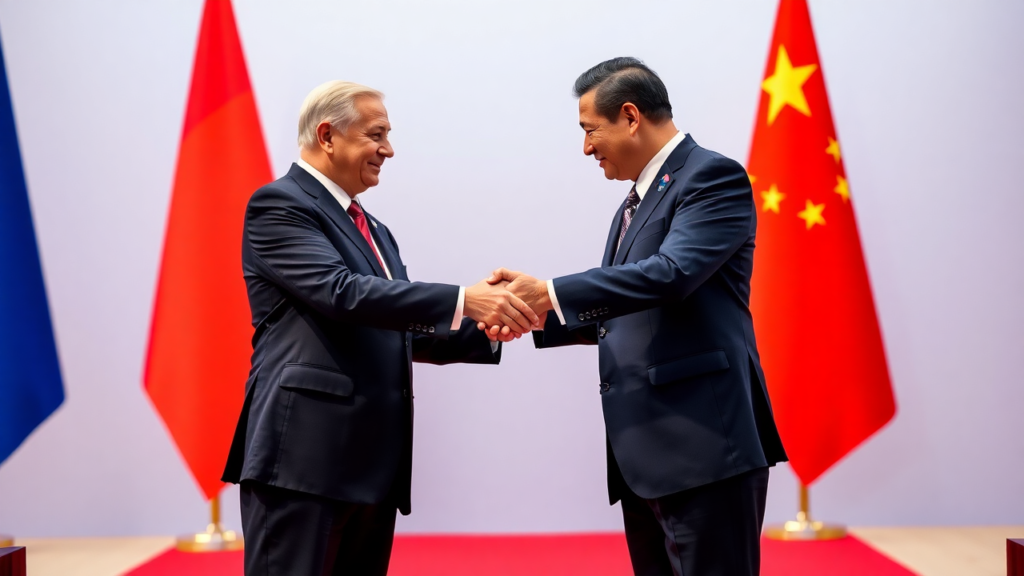
- Trump’s Tariffs Backfire: The US tariffs have unintentionally pushed the EU and China into a closer economic alliance.
- EU’s Strategic Shift: European leaders, including Ursula von der Leyen, are softening their stance on China while still balancing ties with the US.
- Economic Realignment: The EU is exploring trade agreements with China, signaling a shift in global economic power.
- Geopolitical Consequences: The growing rift between the US and Europe could reshape global trade and diplomacy in the coming years.
With changes unseen in a century rapidly unfolding and the world turning into an increasingly unstable and uncertain place, the risks of division, fragmentation, and disorder loom large. Against this backdrop, China-EU relations have taken on new strategic significance and global influence, marking an unprecedented shift in diplomatic and economic alignments. Chinese Foreign Ministry spokesperson Lin Jian highlighted this shift on Wednesday, emphasizing that closer ties between the European Union (EU) and China could help stabilize global trade and economic cooperation.
This transformation, largely triggered by former US President Donald Trump’s aggressive trade policies and tariff impositions, has compelled the EU to reassess its strategic partnerships. Trump’s protectionist approach, characterized by his “America First” economic policies, has not only strained US-EU relations but has also inadvertently pushed Europe and China toward greater economic and diplomatic collaboration.
The Trump Tariff Effect
China has long viewed the EU as an essential comprehensive strategic partner and an independent power in a multipolar world. The recent statements from European Commission President Ursula von der Leyen suggest that Brussels is now reciprocating that sentiment. On Tuesday, von der Leyen, often perceived as one of Europe’s most vocal critics of China, acknowledged that there is room to strengthen trade relations with Beijing in an era of “hyper-competitive and hyper-transactional geopolitics.”
Canada Must Defend Its Sovereignty at Any Cost—Even If It Means Forming New Alliances
“We will keep de-risking our economic relationship – as we have been doing in recent years. But there is also room to engage constructively with China – and find solutions in our mutual interest,” von der Leyen stated in Brussels, according to the South China Morning Post.
Her remarks come as a direct response to Trump’s recent warning that tariffs on the EU would “definitely happen.” Trump had already signed executive orders imposing a 25 percent tariff on Canadian and Mexican goods, along with an additional 10 percent tariff on Chinese imports. The EU now finds itself in the crosshairs of Washington’s protectionist policies, making a pivot toward China not just pragmatic but necessary.
Europe’s Calculated Response
Von der Leyen’s rhetoric signals a diplomatic balancing act. While Europe continues its efforts to “de-risk” economic ties with China, it is simultaneously looking for avenues to engage with Beijing in ways that benefit both sides. The European Commission President explicitly stated that the EU and China could find agreements that would expand trade and investment ties, reinforcing the notion that cooperation with China remains a vital strategic option for Europe.
Top EU official suggests strengthening trade ties with China as bloc faces US tariffs
“It is a fine line that we need to walk. But it can lead us to a fairer and more balanced relationship with one of the world’s economic giants. And that can make sense for Europe,” von der Leyen remarked, demonstrating a willingness to navigate between maintaining its alliance with the US while also fostering closer ties with China.
As Trump escalates trade tensions, the EU has signaled its readiness to engage in “tough negotiations” to prevent a full-scale trade war. The European Commission is bracing for impact, particularly after witnessing Canada and Mexico strike a last-minute deal with Washington to temporarily stave off painful tariff impositions.
Shifting Attitudes Toward China
Von der Leyen’s softened tone toward China is not an isolated occurrence. At the World Economic Forum (WEF) in Davos last month, she mentioned China 14 times, acknowledging the complexities of global trade and expressing a willingness to deepen EU-China ties.
According to Cui Hongjian, a professor at the Academy of Regional and Global Governance at Beijing Foreign Studies University, von der Leyen’s stance sends two distinct signals. To the US, it acts as a strategic play, warning Washington that Europe has alternatives if treated unfairly. To China, it signals that despite prior tensions, opportunities for cooperation remain open.
“Since Trump took office, Europe has been observing the situation, hoping to avoid negative impacts on European interests. Von der Leyen’s remarks suggest that Europe is willing to explore diplomatic and economic openings with China while still managing its long-standing alliance with the US,” Cui explained.
Despite this shift, the EU maintains a cautious approach. Reports suggest that Brussels will tighten customs checks on ecommerce goods shipped from China, targeting platforms like Temu and Shein. This reflects an ongoing duality in EU policy—pushing for greater cooperation with Beijing while maintaining certain restrictions to safeguard European interests.
The Battle for Economic Security
Europe’s positioning in the face of Trump’s trade war extends beyond China. Last week, top European trade official Maroš Šefčovič signaled a willingness to align with Washington in strengthening economic security. This approach suggests that while Europe sees China as a key trade partner, it still remains strategically linked to the US in broader economic matters.
China-Pakistan President’s Meeting: Explosive Moves That Supercharge the Pakistan–China Alliance
However, Cui argues that Europe cannot afford to ignore China’s economic potential. “No matter how much Europe talks about de-risking, China remains an indispensable economic partner,” he said, pointing to emerging fields like artificial intelligence and green technology where China and Europe could significantly collaborate.
A New Geopolitical Reality
The friction between Washington and Brussels could push the EU to reassess its strategic positioning. Europe’s inclination toward China is not just a reaction to Trump’s tariffs but also a recognition of Beijing’s growing role in global trade. While Europe is unlikely to sever ties with the US, it is actively seeking ways to hedge its bets and diversify economic partnerships.
The Trump-era trade policies, intended to strengthen America’s economic position, have instead spurred an unintended consequence: fostering greater economic and political cohesion between Europe and China. As Trump eyes another term in office, the EU’s balancing act between Washington and Beijing will become even more critical.
For now, Europe appears willing to walk the fine line between de-risking and engaging constructively with China. The coming months will reveal whether Trump’s tariffs will drive Europe and China into an even closer alliance—or if diplomatic maneuvering will allow the EU to maintain its position between the world’s two largest economic powers.