


In an unprecedented judicial move that signals a tentative thaw in one of the world’s most strained bilateral relationships, China’s top court has overturned the death sentence of a Canadian man whose case had long stood as a symbol of deep diplomatic hostility between Beijing and Ottawa.
China’s Supreme People’s Court has ruled against the death penalty imposed on Robert Schellenberg, a Canadian citizen convicted on drug smuggling charges, ordering a retrial at the Liaoning Provincial High People’s Court, according to his Beijing-based lawyer. The decision marks the first major reversal in a case that for years poisoned Canada–China relations and fueled accusations of politicized justice.
Schellenberg was arrested in China in 2014 and initially sentenced in 2018 to 15 years in prison. That sentence was abruptly upgraded to death following a retrial in January 2019—just weeks after Huawei executive Meng Wanzhou was detained in Vancouver at the request of the United States. The timing sparked international outrage and reinforced claims that Beijing was leveraging judicial cases for diplomatic pressure.
The Supreme Court’s intervention, announced late last week, represents a striking departure from China’s usual handling of foreign defendants in serious drug cases, particularly those already sentenced to death. Legal experts say such reversals are rare and politically sensitive, especially given that the Liaoning court upheld Schellenberg’s death sentence as recently as 2021.
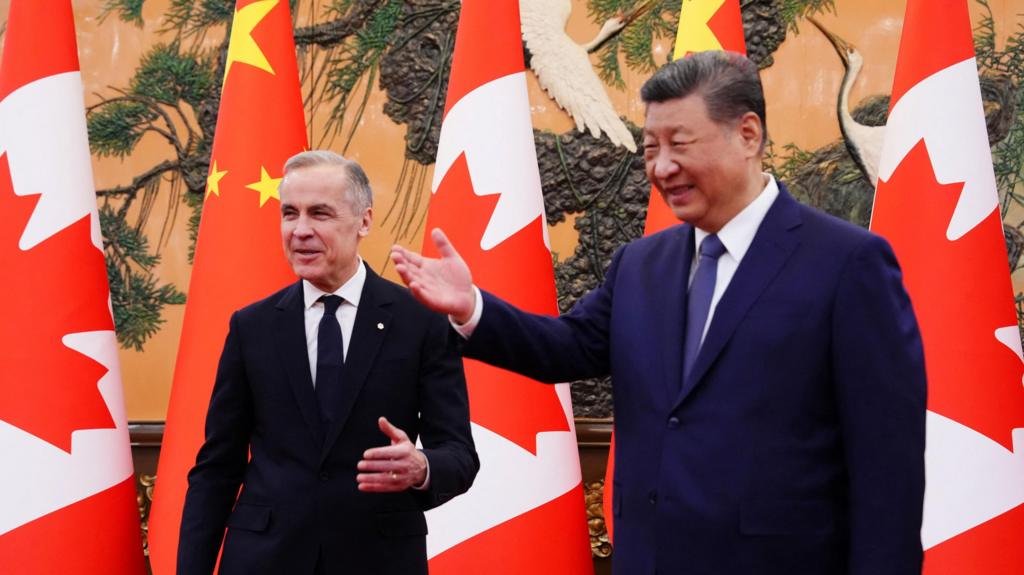
The ruling comes less than a month after Canadian Prime Minister Mark Carney completed a four-day visit to China aimed at resetting bilateral ties after years of confrontation. During the visit, Carney publicly welcomed what he described as a “stabilization” in relations following a prolonged freeze under his predecessor, Justin Trudeau.
Schellenberg’s lawyer, Zhang Dongshuo, suggested the timing was unlikely to be coincidental. Based on his experience, Zhang said the likelihood that the Supreme Court’s decision was influenced by the broader diplomatic climate was “very high,” though he cautioned that a full acquittal remained unlikely given the seriousness of the charges.
Canada’s foreign ministry confirmed it was aware of the ruling and said it would continue to provide consular support to Schellenberg and his family, stopping short of commenting on the reasons behind the court’s decision. Chinese officials, meanwhile, insisted the case was handled independently. Foreign ministry spokesperson Lin Jian said judicial authorities had ruled “in accordance with the law,” rejecting any suggestion of political interference.
Despite those assurances, the case cannot be separated from the broader political context. The Schellenberg sentence had become a flashpoint in a deteriorating relationship that reached its nadir after China detained two Canadians—Michael Kovrig and Michael Spavor—on espionage charges shortly after Meng’s arrest. Their detention, widely condemned by Western governments as “hostage diplomacy,” ended in 2021 on the same day Meng was allowed to return to China after U.S. prosecutors dropped their extradition request.
Tensions deepened further in 2024 when Canada imposed tariffs on Chinese electric vehicles, aligning itself with similar U.S. measures. Beijing responded with tariffs on more than $2.6 billion worth of Canadian agricultural and food exports, including canola oil, meal, and seed—key pillars of Canada’s export economy.
Carney’s recent visit produced a notable reversal. Both sides agreed to significantly roll back tariffs on electric vehicles and canola, signaling a pragmatic recalibration driven by economic pressures and strategic fatigue on both sides.
Analysts say the Supreme Court’s decision on Schellenberg fits into this broader pattern of cautious rapprochement. While Ottawa is not expected to dramatically shift away from its close alignment with Washington, improved ties with Beijing could provide Canada greater diplomatic flexibility as U.S.–China rivalry intensifies.
For China, the move offers a way to project judicial restraint and diplomatic maturity without conceding wrongdoing. For Canada, it removes one of the most emotionally charged obstacles to normalization, even as human rights concerns and security disagreements persist.
The retrial will now be closely watched—not just for Schellenberg’s fate, but for what it reveals about how far Beijing and Ottawa are willing to go to turn a bitter chapter into a managed, if fragile, coexistence.