


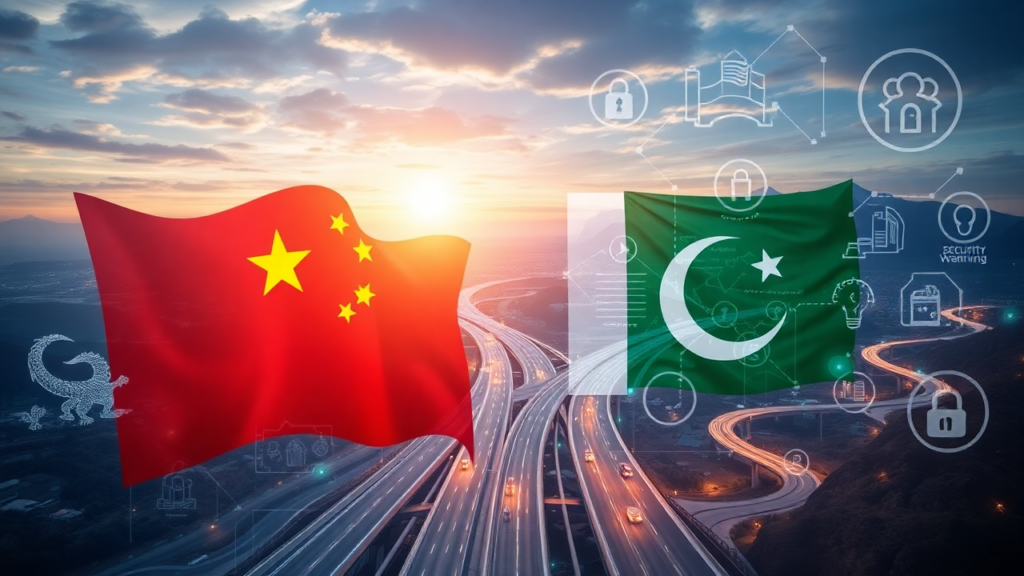
- Reaffirmation of the all-weather strategic partnership between Pakistan and China.
- Launch of CPEC 2.0 to drive regional connectivity and win-win development.
- Enhanced intelligence sharing and border security measures to counter emerging threats.
- Broad-based cooperation in science, clean energy, media, and cultural exchanges.
Pakistan and China have once again underlined their long-standing, “all-weather” strategic partnership as President Asif Ali Zardari met with Chinese President Xi Jinping in Beijing on Wednesday. The high-level encounter at the Great Hall of the People not only reaffirmed decades of mutual trust and cooperation but also set the stage for a new phase of bilateral engagement under the ambitious China-Pakistan Economic Corridor (CPEC) 2.0.
A Historic Meeting in Beijing
In an atmosphere of solemn patriotism and forward-looking optimism, President Zardari—currently on a five‐day official visit to China—sat down with President Xi Jinping to discuss a range of issues spanning from regional connectivity to international security. The meeting, held in the iconic Great Hall of the People, was steeped in symbolism: both leaders highlighted the enduring friendship that has seen Pakistan and China overcome geopolitical fluctuations and emerging security challenges over the years. Xi Jinping reaffirmed that the two nations enjoy an “ironclad friendship” and described the bilateral ties as the embodiment of mutual support in a turbulent global environment
For President Zardari, the meeting was an opportunity to not only celebrate the shared achievements of the past but also to pave the way for future cooperation. “Our relationship with China is unique, time-tested, and special,” he stated, emphasizing Pakistan’s steadfast commitment to an all-weather strategic cooperative partnership. By extending an invitation to President Xi to visit Pakistan, Zardari reiterated the deep admiration and high regard in which the Chinese leader is held by both the Pakistani government and its people.
The Driving Force of CPEC 2.0
Central to the discussions was the China-Pakistan Economic Corridor—a flagship project of China’s Belt and Road Initiative (BRI) that has transformed regional dynamics over the past decade. The leaders spoke in detail about the evolution of CPEC into its second phase, known as CPEC 2.0, which aims to enhance industrialization, upgrade infrastructure, and promote economic diversification across Pakistan. Both presidents hailed CPEC as a “shining model” of win-win cooperation, capable of fostering regional connectivity, shared benefits, and common prosperity
President Zardari praised China’s exemplary development model, noting that the progress and prosperity witnessed in Beijing and other parts of China are a direct result of visionary leadership and the dynamism of the Chinese people. He paid rich tribute to President Xi for China’s profound contributions to global development under the BRI, describing CPEC as a manifestation of that visionary concept.
China’s Game-Changing Trade Plan: A New Era of Global Stability
The discussions underscored that beyond physical infrastructure, CPEC is about building a people-centric community that bridges cultural divides and strengthens people-to-people linkages.
Signing of Multiple Memorandums of Understanding
Following the high-level talks, a ceremonial signing event captured the public’s imagination and further underscored the broad scope of cooperation between the two nations. Several memorandums of understanding (MoUs) were signed to enhance bilateral collaboration in critical sectors such as science and technology, clean energy, media, and socio-economic development. These agreements signal a commitment to leveraging modern technology and innovation as catalysts for sustainable growth.
The Global Rejection of Trump’s Gaza Plan: A Geopolitical Fiasco in the Making
The MoU signing ceremony was a poignant reminder of the human element in geopolitics. As President Zardari was warmly received with a guard of honour and a heartfelt reception by a group of smiling children, the ceremony embodied the enduring friendship and mutual respect that form the cornerstone of Pakistan-China relations. Later that day, President Xi hosted a lavish state banquet in honour of President Zardari and his accompanying delegation, highlighting the importance Beijing places on its partnership with Islamabad
Strengthening Intelligence Sharing and Border Security
In a separate but equally significant facet of the discussions, Pakistan and China agreed to bolster intelligence sharing and enhance cooperation on security matters. This aspect of the talks comes at a time when both nations face common threats from terrorism and militant violence. Federal Interior Minister Mohsin Naqvi, who accompanied President Zardari on the visit, met with his Chinese counterpart, Minister of Public Security Qi Yanjun, to discuss concrete measures aimed at modernizing Pakistan’s police and paramilitary forces using advanced Chinese technology and expertise.
During a rigorous two-hour meeting, the two ministers explored the acquisition of cutting-edge equipment from China to upgrade law enforcement capabilities. They also agreed to intensify cooperation between the Beijing Police and Islamabad Police, and to expand collaborative efforts with Pakistan’s National Police Academy. “We are committed to procuring modern policing technology from China to ensure that our security forces are better equipped to protect our citizens and critical infrastructure,” said Minister Naqvi, emphasizing the bilateral progress achieved during the recent Joint Working Group meeting in January
These security enhancements are not merely about domestic safety but are also designed to protect Chinese nationals working in Pakistan, particularly in regions associated with CPEC projects. The mutual understanding reached on intelligence sharing and border security underscores the strategic imperatives of both nations to maintain stability in a region that remains fraught with security challenges.
A Broader Geopolitical Context
The significance of the Pakistan-China partnership extends well beyond bilateral concerns. In an era marked by shifting global alliances and increasing great power competition, the strategic ties between Islamabad and Beijing offer a counterbalance to Western influence in Asia. Both leaders stressed that their cooperative endeavors are not only beneficial to their respective nations but also contribute to regional peace and prosperity. By investing in infrastructure, technology, and security, Pakistan and China are creating a framework for economic development that could serve as a model for other emerging economies.
Regional connectivity is a key theme of the discussions. The expansion of CPEC under its new phase aims to integrate Pakistan more closely with Central Asia and the broader international market, thus positioning the corridor as a linchpin for trade and investment in the region. “CPEC is more than just a series of infrastructure projects—it is a strategic vision that connects communities, economies, and cultures,” President Zardari remarked, alluding to the potential for transformative change in South Asia and beyond.
The Cultural Dimension of Bilateral Ties
While economic and security issues took centre stage, the meeting also highlighted the importance of cultural exchanges and people-to-people connectivity. Both presidents recognized that fostering closer cultural ties is essential for nurturing a sense of shared destiny. The bilateral dialogue acknowledged that mutual understanding and cultural integration are as vital as trade and investment in sustaining long-term relations.
President Xi underscored China’s readiness to work with Pakistan to create platforms for cultural exchange and educational cooperation. Initiatives aimed at promoting language learning, academic collaboration, and tourism are envisioned as integral components of a broader strategy to build a robust “China-Pakistan Community of Shared Future in the New Era.” These efforts are designed to ensure that the benefits of economic growth reach the grassroots level and help to bridge any socio-cultural gaps between the two nations.
Looking Ahead: A Blueprint for Future Cooperation
The high-level visit by President Zardari is being widely interpreted as a reaffirmation of Pakistan’s unwavering reliance on its strategic ally at a time when global uncertainties loom large. Both leaders expressed optimism about the future and a commitment to deepening ties through continuous dialogue and practical cooperation. The signing of MoUs, the agreement on enhanced intelligence sharing, and the discussions on expanding cultural exchanges collectively point to a new chapter in Pakistan-China relations—one that is geared towards comprehensive development and mutual security.
Analysts note that this renewed commitment is particularly timely given the regional security challenges and economic pressures faced by both nations. As geopolitical rivalries intensify and emerging threats necessitate a coordinated response, the Pakistan-China partnership offers a compelling counter-narrative to the fragmented nature of global politics today. “In an increasingly multipolar world, the robust partnership between Pakistan and China is a beacon of stability and a testament to the power of strategic foresight,” commented one regional expert
China-Pakistan Way Forward
As the meeting in Beijing draws to a close, the tone is one of cautious optimism and renewed determination. President Zardari’s invitation for President Xi to visit Pakistan is more than a diplomatic gesture—it is a reaffirmation of a deep, strategic bond that has weathered the storms of geopolitical uncertainty for decades. With a series of groundbreaking MoUs signed and concrete steps taken to enhance security and technological cooperation, the Pakistan-China relationship appears poised to take on new dimensions in the coming years.
This latest chapter in the bilateral saga is emblematic of how nations can leverage strategic partnerships to overcome challenges, drive economic progress, and ensure mutual security. In an era marked by rapid global changes and emerging threats, the vision shared by Islamabad and Beijing stands as a powerful reminder that unity and cooperation can pave the way for a more stable, prosperous, and interconnected world.
Through initiatives like CPEC 2.0 and enhanced intelligence-sharing frameworks, Pakistan and China are not only safeguarding their interests but also laying the groundwork for a future in which regional integration and cultural exchange serve as the cornerstones of sustainable development. As both nations continue to chart their course in the complex realm of geopolitics, their collaborative efforts offer hope and inspiration for other countries striving to navigate the challenges of the 21st century.
In the coming months, the world will be watching closely as these initiatives unfold, with many expecting that the new phase of Pakistan-China cooperation will deliver tangible benefits not only for the two countries but for the entire region. The message from Beijing and Islamabad is clear: by standing together, they are better equipped to confront both present and future challenges, ensuring that their shared destiny remains one of progress, security, and enduring friendship