


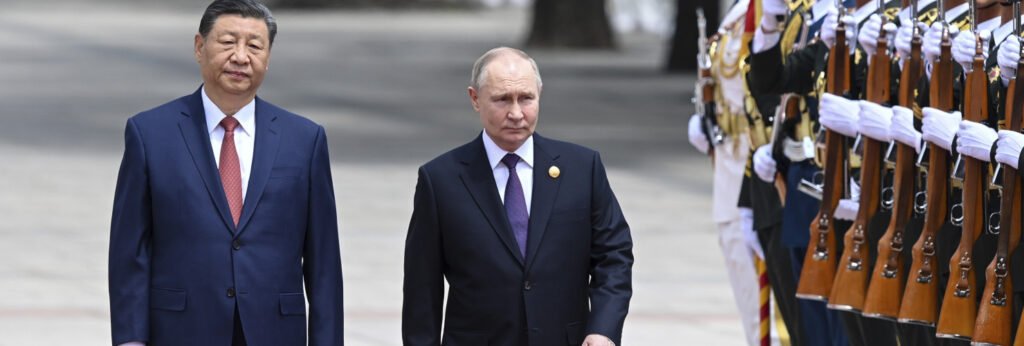
- China Russia Middle East Peace Iran War diplomacy accelerates with high-level talks
- Beijing reiterates ceasefire-first approach and political dialogue as only solution
- China backs Pakistan’s mediation efforts to end Iran war for the second time
- Strait of Hormuz crisis drives urgency amid global energy and security concerns
China has signaled a renewed diplomatic push to defuse the intensifying Middle East crisis, telling Russia it is ready to work jointly at the highest international level to cool tensions and steer the conflict toward negotiations. In a phone call on Sunday, Chinese Foreign Minister Wang Yi informed his Russian counterpart Sergei Lavrov that Beijing is prepared to deepen coordination at the United Nations Security Council to stabilize the region and prevent further escalation.
According to officials familiar with the exchange, the conversation focused heavily on the deteriorating security situation around the Strait of Hormuz, where rising military activity has threatened global shipping and energy supplies. Wang emphasized that the only sustainable solution lies in an immediate ceasefire, followed by structured political dialogue.
He reiterated China’s long-held position that conflicts must be resolved through negotiation rather than force, warning that continued escalation could trigger a broader regional crisis with global economic consequences.
U.S. Ultimatum to Iran Enters Critical Phase as Protests Erupt Across the Middle East
The call comes ahead of a crucial UN vote on a resolution aimed at protecting commercial shipping in and around the Strait of Hormuz, underscoring the urgency of coordinated diplomatic action. China’s outreach to Russia reflects a growing alignment between the two powers on the need to prevent the conflict from spiraling further out of control.
China ready to cooperate with Russia to ease Middle East tension, foreign minister says
This marks the second time Beijing has publicly committed itself to playing an active role in resolving the Iran war. Earlier, China had backed Pakistan’s diplomatic initiative, vowing to support Islamabad’s efforts to bring the conflict to an end. That support materialized in the form of a joint five-point peace proposal unveiled by China and Pakistan, which called for an immediate ceasefire, protection of civilians, and the launch of comprehensive peace talks.
Giorgia Meloni Pushes GCC for Iran War De-escalation Amid Global Energy Crisis
Pakistan’s role in the unfolding diplomacy has been both proactive and central. Led by Deputy Prime Minister and Foreign Minister Ishaq Dar, Islamabad has engaged in an intense round of regional and international consultations, positioning itself as a bridge between competing powers. Its efforts have included hosting multi-country meetings and facilitating indirect communication channels between Washington and Tehran.
Diplomatic sources indicate that Pakistan’s engagement has been instrumental in bringing China more firmly into the mediation process. Beijing’s willingness to not only support but actively shape the peace framework is widely viewed as a direct outcome of Islamabad’s sustained lobbying and coordination.
The broader backdrop to these diplomatic maneuvers is a rapidly escalating war that has now entered a dangerous phase. The conflict between the United States, Israel, and Iran has expanded beyond initial flashpoints, drawing in regional actors and threatening to destabilize the entire Middle East.
At the center of the crisis is the near shutdown of the Strait of Hormuz, a critical artery for global energy supplies. Iran’s actions in the waterway—seen as a response to military pressure—have disrupted shipping flows and sent oil prices surging, triggering inflationary pressures worldwide. In response, U.S. President Donald Trump issued a stark ultimatum demanding that Tehran reopen the strait and agree to a framework deal within 48 hours, warning of severe military consequences if it fails to comply.
Despite the mounting pressure, Iran has maintained a firm stance. While signaling openness to negotiations, Iranian officials have insisted that any agreement must include binding guarantees to prevent future violations. This demand reflects deep mistrust rooted in past diplomatic breakdowns and remains a key hurdle in ongoing efforts to reach a settlement.
Meanwhile, the conflict has spilled across borders. Iranian missile and drone strikes have targeted Israeli and Gulf-linked assets, while retaliatory actions have intensified across multiple fronts. Allied groups in the region have also become increasingly active, complicating the battlefield and raising the risk of a wider war.
Public unrest has further added to the volatility. Protests have erupted in several countries, including Iraq and Israel, where citizens have voiced opposition to the war and its consequences. The humanitarian toll continues to mount, with growing concerns over civilian casualties and damage to critical infrastructure, including energy facilities and nuclear sites.
Against this backdrop, China’s decision to coordinate closely with Russia and support Pakistan’s mediation efforts signals a significant shift in the diplomatic landscape. Analysts believe that Beijing’s dual-track approach—working through both Islamabad and Moscow—could enhance the chances of a negotiated outcome by bringing multiple stakeholders into a unified framework.
China’s emphasis on ceasefire, dialogue, and multilateralism aligns with broader international calls for de-escalation. However, the effectiveness of these efforts will ultimately depend on whether the warring parties are willing to step back from confrontation and engage in meaningful negotiations.
For now, the renewed diplomatic activity offers a glimmer of hope in an otherwise volatile situation. With China stepping up its role for the second time—first alongside Pakistan and now in coordination with Russia—the contours of a potential peace process are beginning to take shape.
Whether these efforts can translate into a lasting resolution remains uncertain, but they underscore a critical reality: as the war edges closer to a tipping point, the path to peace is increasingly being shaped not just on the battlefield, but in the corridors of global diplomacy.