


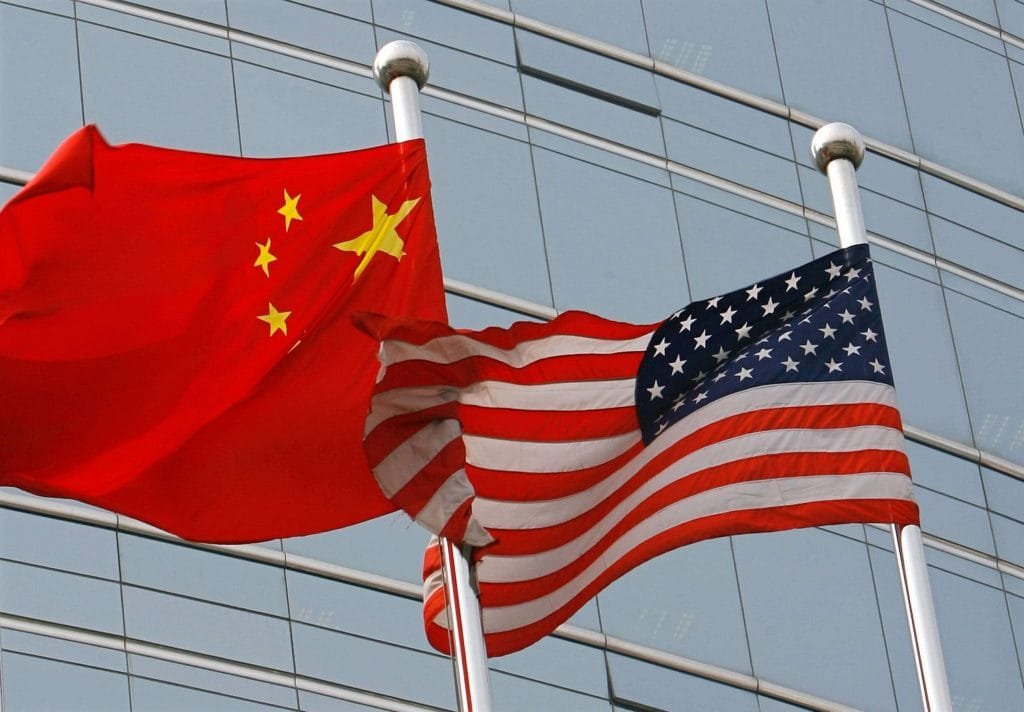
- China Imposes a 6-Month Cap on rare earth export licenses to U.S. firms, maintaining strategic leverage amid ongoing trade talks.
- Temporary Truce, Lasting Tensions: The deal offers short-term supply relief but reinforces long-term uncertainty for American manufacturers.
- High-Stakes Swap: U.S. agrees to ease export controls on jet engines and ethane in exchange for resumed rare earth shipments.
- Tariffs and Tech Still in Play: Broader issues like high-end chip controls and retaliatory tariffs remain unresolved, keeping trade tensions simmering.
In a move layered with strategic intent and diplomatic finesse, China has agreed to temporarily resume rare earth exports to the United States—but with a significant caveat. According to sources closely familiar with the matter, Beijing will impose a strict six-month cap on export licenses for rare earth elements (REEs), sending a clear signal: trade cooperation may be on pause, but the economic battlefield remains active.
The decision, emerging from tense high-level negotiations held in London this week, reflects a fragile détente between the world’s two largest economies. While both sides are publicly touting the outcome as a breakthrough—President Trump even declared the truce “done” on Truth Social—behind the scenes, it’s more of a ceasefire under constant surveillance than a peace treaty.
At the core of the agreement is China’s pledge to begin issuing REE export licenses to American manufacturers, including automakers, defense contractors, and renewable energy companies.
These licenses are essential for maintaining production lines for everything from electric vehicle motors and wind turbines to advanced weaponry. But the six-month duration underscores the ephemeral nature of the deal—Beijing is keeping the pressure valve within reach.
China U.S Trade Tensions with a Clock
The six-month timeline is not just a procedural formality. It’s a deliberate tactic. By forcing American companies to reapply for access to these critical materials before the year’s end, China is ensuring that trade leverage remains alive should tensions flare again.
“China is holding the sword of Damocles over the U.S. supply chain,” said a Washington-based trade analyst who advises multinationals. “This is a warning shot disguised as a goodwill gesture.”
This strategic maneuvering comes after the Trump administration accused Beijing of dragging its feet on REE licenses despite the Geneva truce in May. Beijing countered with accusations of Washington undermining the spirit of the agreement by targeting Chinese tech giant Huawei with fresh sanctions.
READ MORE: China Puts Six-Month Limit on Its Ease of Rare-Earth Export Licenses
Both sides escalated swiftly—China tightened its grip on REE shipments while Washington retaliated by banning the export of jet engines and components vital to China’s aviation industry. The trade war, it seemed, had shifted from the realm of tariffs to a battle over strategic inputs and supply chokepoints.
A High-Stakes Bargain
The London breakthrough rests on a precarious swap. In exchange for easing rare earth curbs, the U.S. agreed to temporarily loosen recent export restrictions on jet engines and related aerospace technology, along with ethane—a key petrochemical used in plastics manufacturing.
Sources close to the talks say that while the U.S. has agreed to drop some countermeasures, it remains steadfast in keeping restrictions on high-end semiconductor technology and AI-related components. “Those are not on the table,” one official familiar with the negotiations told this reporter. “But you know the Chinese will keep pushing.”
Indeed, Beijing has long viewed American controls on advanced chips and tech as a strategic blockade. Under the Biden administration, Washington’s position was to draw a “small yard, high fence” around critical technologies. Trump’s second-term administration has taken a more transactional approach—wielding controls not just for national security, but as trade bargaining chips.
That shift has alarmed some national security hawks but has opened a narrow window for diplomatic give-and-take, as evidenced by the current deal.
Business Relief, But No Certainty
For American industry, the short-term implications are clear: production can resume. Companies that rely heavily on rare earths—such as Tesla, Lockheed Martin, and General Electric—had faced growing concern that supply lines would dry up. Already, some firms had started looking to alternate sources in Australia, Vietnam, and even domestic mining operations, though none offer the scale or cost-efficiency of Chinese suppliers.
MUST READ: Analysis: A Fragile Thaw in U.S.-China Economic Cold War—But at What Cost?
“This deal offers breathing room,” said a procurement executive at a major U.S. EV manufacturer. “But with only six months, we’re not rewriting contracts—we’re hedging every bet.”
Financial markets responded positively to news of resumed talks, but analysts cautioned against assuming long-term stability. “This is a classic pattern in U.S.-China relations—escalate, retreat, and then reset with uncertainty baked in,” said a senior fellow at the Peterson Institute for International Economics. “There’s no trust, just calculated moves.”
Tariff Tensions Still Simmer
Though REEs and aerospace tech dominate the headlines, the underlying issue of tariffs remains unresolved. Trump claimed that the U.S. is now receiving a “total of 55% tariffs” on Chinese goods—an apparent reference to elevated duties implemented during his second term. China, meanwhile, is maintaining tariffs averaging 33% on U.S. imports, according to Peterson Institute estimates.
Neither side has indicated a willingness to roll back these duties as part of the current arrangement. With the August deadline for finalizing a broader agreement looming, tariffs are likely to resurface as a contentious issue.
Trump’s language suggests confidence in the current trajectory. “FULL MAGNETS, AND ANY NECESSARY RARE EARTHS, WILL BE SUPPLIED, UP FRONT, BY CHINA,” he posted on Truth Social. But experts warn that unless a more durable agreement is reached, the REE tap could be turned off just as swiftly.
The Strategic Stakes
China’s near-monopoly on rare earths—producing roughly 60% of global supply and refining nearly 90%—gives it a geopolitical trump card. These minerals are indispensable for next-generation military systems, green technologies, and high-end electronics. That makes them not just commodities, but tools of coercion.
During the Obama and Biden years, the U.S. attempted to diversify its supply chains but struggled against the economic efficiency of Chinese production. Recent moves by the Trump administration to invest in domestic mining and refining projects have yet to yield tangible alternatives at scale.
“This is a wake-up call for strategic autonomy,” said a former Pentagon official. “America can’t afford to have its industrial backbone held hostage.”
Outlook: Temporary Calm, Strategic Competition
As the world watches the two economic giants maneuver toward an August deadline for a broader trade pact, the mood remains one of wary optimism. Both Trump and Xi appear to want a calm market environment heading into the latter half of 2025, but their fundamental interests remain deeply misaligned.
Beijing wants tech parity and global market access. Washington wants to retain technological superiority while forcing China to play by a rules-based trade order it helped design. The rare earths reprieve, while valuable, does little to bridge that gap.
In the end, this six-month deal may be less of a breakthrough and more of a holding pattern. The true test will come not in whether the current licenses are approved—but in whether the leaders of both nations can transcend the cycle of economic brinkmanship that has come to define their relationship.