


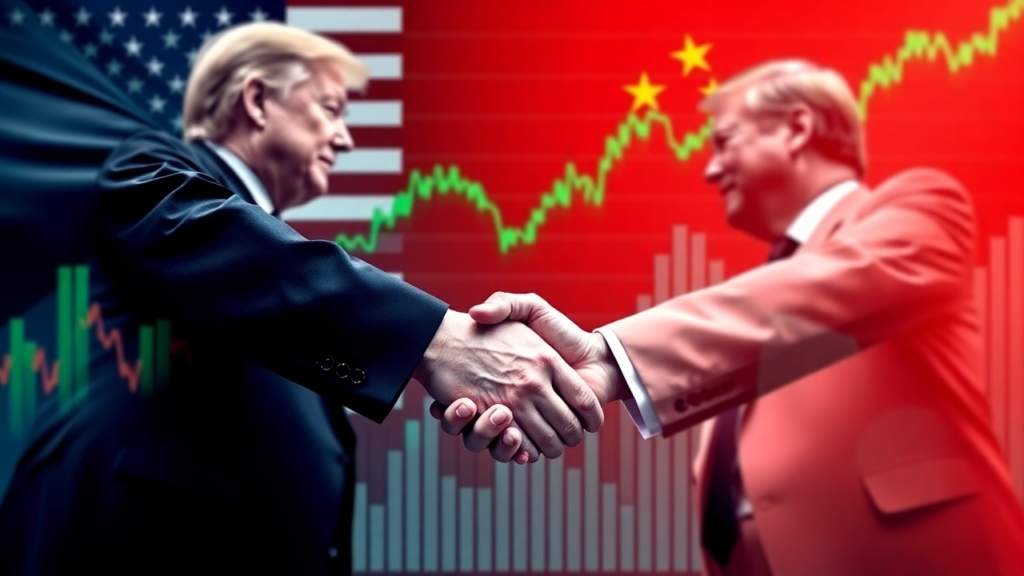
- China’s Trade Reset: How reviving the Phase 1 deal could reshape global markets.
- Economic Stability or Turmoil? The impact of China’s trade strategy on inflation, investments, and the dollar.
- Diplomacy Over Conflict: Can China’s cooperative approach ease U.S.-China tensions?
- Markets on Edge: Why investors are closely watching China’s next move in global trade.
China is stepping into the global spotlight, positioning itself as a stabilizing force for the world economy amidst escalating trade tensions and geopolitical strife. As the United States grapples with economic challenges and the ramifications of recent tariff impositions, China’s proposal for a renewed partnership is not just timely but essential for fostering a win-win scenario for both nations.
The recent imposition of tariffs by Trump—25% on imports from Mexico and Canada, and 10% on Chinese goods—has sent shockwaves through global markets. Investors reacted swiftly, leading to a sell-off in stocks and a surge in the dollar as uncertainty loomed. This reaction underscores the fragility of the current economic climate and the potential repercussions of a protracted trade war. However, China’s readiness to negotiate could provide a pathway to de-escalation and stability, benefiting not only the U.S. but also the global economy.
China Trade Game Plan:
According to a recent report from the Wall Street Journal, China’s strategy revolves around reinstating the “Phase 1” trade deal, originally signed during Donald Trump’s presidency in 2020. This deal aimed to alleviate the trade war that had been ongoing for nearly two years, which saw tariffs levied against a wide array of goods. The initial agreement required China to significantly increase its purchases of U.S. exports, a target that was never fully met due to the unforeseen impacts of the COVID-19 pandemic. Now, as the world emerges from the shadows of the pandemic, China is advocating for a return to this framework, emphasizing the importance of cooperation over confrontation.
Jiwani: The Strategic Maritime Advantage for Pakistan and China
In addition to restoring the trade deal, China’s proposal includes several key commitments that could reshape the economic landscape. These commitments encompass a pledge to avoid devaluing the yuan, a promise to enhance investments in the U.S., and a commitment to curtail the export of fentanyl precursors. The latter is particularly significant given the ongoing opioid crisis in the United States, which has been a point of contention in U.S.-China relations. By addressing these issues, China is signaling its willingness to engage in meaningful dialogue and collaboration, rather than escalating tensions.
The Trade War That Shook the World: A Battle of Economics and Diplomacy
While Canada has retaliated with its own tariffs, the broader implications of Trump’s trade policies have raised concerns among economists and market analysts. The fear of an extended trade conflict could hinder economic growth, increase inflationary pressures, and destabilize financial markets. In this context, China’s proposal emerges as a beacon of hope, advocating for a cooperative approach that could mitigate these risks.
China’s handling of the TikTok
Moreover, China’s handling of the TikTok situation illustrates its broader strategy of treating contentious issues as commercial matters rather than political battlegrounds. By allowing negotiations between ByteDance and potential U.S. buyers, China is demonstrating its willingness to facilitate dialogue and find mutually beneficial solutions. This approach contrasts sharply with the current U.S. stance, which has often leaned towards confrontation.
Chinese fashion giant Shein re-enters India five years after ban
As the world watches these developments unfold, the importance of diplomacy and collaboration cannot be overstated. China’s proactive stance in proposing a win-win deal is not merely a strategic maneuver; it reflects a recognition of the interconnectedness of the global economy. In an era where protectionism and isolationism are on the rise, China’s call for partnership stands out as a necessary counterbalance.
China’s initiative to revive the Phase 1 trade deal, coupled with its commitments to address critical issues such as currency devaluation and the opioid crisis, positions it as a key player in stabilizing the world economy. By advocating for a win-win scenario, China is not only seeking to enhance its economic standing but is also paving the way for a more cooperative international landscape. As we navigate these uncertain times, it is imperative for both the U.S. and China to embrace dialogue and collaboration, for the sake of their own economies and the global community at large.