


- China overcame Trump-era tariffs through global market diversification and strong domestic consumption.
- Exports to Europe, Africa, Southeast Asia, Russia, India and the Middle East surged as U.S.-bound shipments fell 29%.
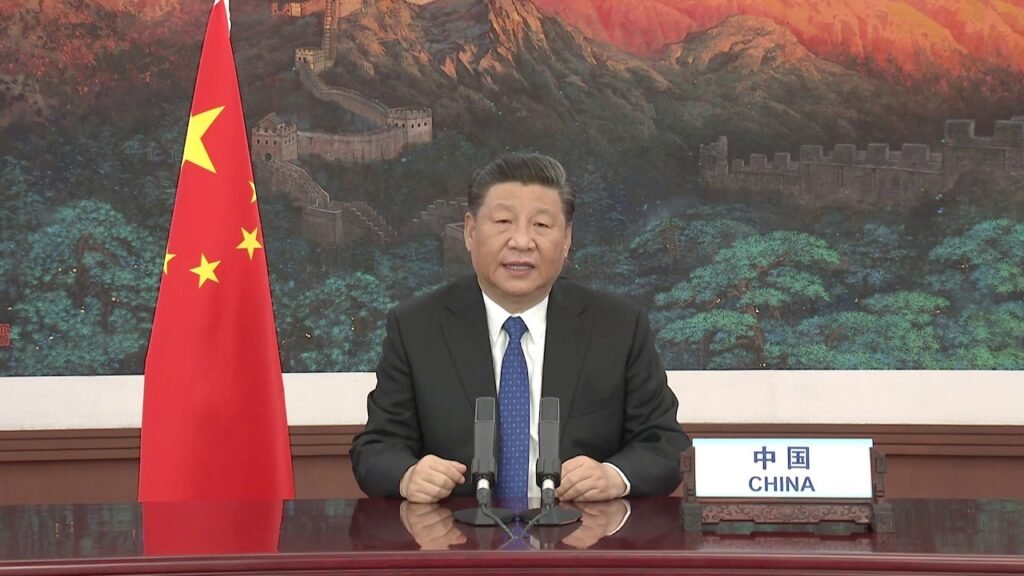
- Visionary leadership under Xi Jinping enabled innovation, resilience, and adaptive trade rerouting.
- China’s trade surplus crossed $1 trillion for the first time, proving the effectiveness of its long-term economic strategy.
When former U.S. president Donald Trump revived steep tariffs on Chinese goods — pushing average duties to a crushing 47.5% — many analysts predicted the beginning of China’s economic decline. For Washington, the tariff war was designed as a strategic chokehold; for Beijing, it was meant to be a defining moment of pressure. But under the calm, disciplined and far-sighted leadership of President Xi Jinping, China refused to bend, refused to retaliate emotionally, and refused to plead. Instead, it executed a remarkable, methodical, and largely quiet economic realignment that today stands as one of the most extraordinary trade success stories of the modern era.
By the end of the year, China had achieved what few thought possible during a tariff war with the world’s largest economy: a historic, record-breaking trade surplus exceeding $1 trillion for the first time. And it did so not by leaning on the U.S., but by reorienting global trade flows, strengthening domestic consumption, and diversifying export markets from Europe to Africa and Southeast Asia.
This is the story of a country that refused confrontation and chose innovation — a roadmap many developing nations are now looking to emulate.
New Markets, New Momentum: Trade After Trump’s Tariffs
As exports to the United States dropped nearly 29% year-on-year, Chinese exporters executed a massive trade rerouting strategy. Instead of fighting for shrinking space in the U.S. market, they turned outward — and the world responded.
Below is the post-tariff shift in China’s key trading regions, based on customs and market estimates:
- European Union: Exports surged by 14.8%, making Europe one of China’s most reliable partners after the tariff shock.
- Southeast Asia (Indonesia + ASEAN): Shipments rose 8.2%, with Indonesia becoming a critical hub for Chinese machinery, electronics, and infrastructure materials.
- Australia: Exports skyrocketed 35.8%, driven by machinery, electronics, and new energy products.
- Russia: China–Russia trade expanded significantly, crossing $240 billion annually, supported by energy cooperation, cars, machinery, and electronics.
- India: Despite political tensions, trade touched $136 billion, with Chinese exports dominating pharmaceuticals, electronics, and machinery.
- Middle East: Trade exceeded $260 billion, with growth led by Saudi Arabia, UAE, Iran, and Qatar — markets hungry for Chinese tech, automobiles, and infrastructure goods.
- Africa: Trade crossed $300 billion, as China expanded into raw materials, construction equipment, consumer electronics and automobiles.
- Latin America: Trade approached $500 billion, as Brazil, Mexico and Chile absorbed Chinese tech and machinery.
This sweeping diversification was not accidental. President Xi Jinping’s strategy was to deepen China’s global footprint, win new partners, and make sure no single market — not even the United States — could ever again become a point of vulnerability.
Domestic Demand: China’s Secret Weapon
Even as global shocks hit exports, China leaned on something no other developing country has at scale: a massive, consumption-ready domestic market of 1.4 billion people.
Beijing boosted internal economic engines by:
- supporting household consumption through subsidies,
- accelerating digital payment ecosystems,
- promoting e-commerce giants like Alibaba, JD.com and Pinduoduo,
- and investing heavily in infrastructure and high-tech manufacturing.
As exports to the U.S. fell, domestic retail spending contributed nearly 60% of China’s GDP growth. The Chinese consumer — young, digital, and ambitious — became a stabilizer during the tariff storm. That internal strength is what allowed China to avoid recession and keep factories running even when U.S. orders plummeted.
Western economists still underestimate how China’s domestic demand now rivals entire continents.
Leadership That Refused Panic
Under Xi Jinping, China adopted a posture rarely seen in modern trade disputes: patience and composure.
Rather than escalating the tariff war:
- It did not attack the United States rhetorically.
- It did not retaliate with extreme counter-tariffs.
- It did not allow panic in its markets.
- It quietly built alternative global supply chains.
- Chinese companies shifted production to Southeast Asia, Europe, and Africa to minimize tariff exposure. New industrial parks in Indonesia, Vietnam, and Mexico were partly funded by Chinese capital — allowing Chinese brands to reach global consumers even under tariff pressure.
Meanwhile, Beijing bet heavily on semiconductors, energy vehicles, electronics, machinery, and rare earths, positioning itself as the indispensable supplier for world industries.
This calm strategic realignment is what ultimately turned a challenge into a trillion-dollar triumph.
Innovation and Hard Work Behind the Surplus
By late 2025, several sectors became pillars of China’s export resilience:
- Electronics & semiconductors — boosted by global shortages
- Machinery & industrial equipment — demanded worldwide
- Electric vehicles (EVs) — now a major export category
- Rare earths & critical minerals — expanded after Xi–Trump’s mineral shipment understanding
- Digital products & smart devices — dominating emerging markets
While U.S. orders declined, Chinese manufacturers found willing buyers in Africa, Latin America, Europe, India, ASEAN, and the Middle East. The global south’s development needs aligned perfectly with China’s industrial strengths.
A $1 Trillion Surplus — And a Lesson for the World
China’s success story is not merely economic; it is strategic.
By November, China posted a record $111.68 billion monthly trade surplus, pushing the 11-month figure to over $1 trillion for the first time. Exports grew 5.9% year-on-year, recovering sharply from October’s slowdown.
This was resilience by design — and leadership by discipline.
China’s quiet victory over Trump’s tariffs leaves a powerful message for developing nations:
Don’t fear pressure. Diversify your markets. Strengthen your domestic economy. Invest in innovation.
And above all — maintain strategic stability.
China did not win the tariff war by fighting loudly.
It won by working harder, thinking smarter, and moving faster.
Today, the world is taking notes.