


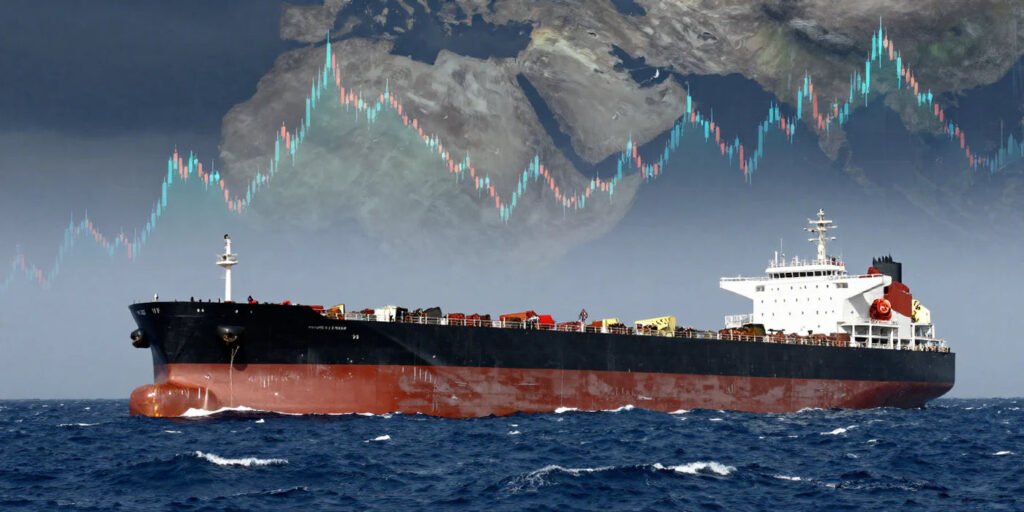
- Clean tanker market sees strong gains led by LR2 vessels shifting into dirty cargo trades
- LR1 rates rise, particularly on Middle East Gulf routes due to tightening supply
- Dirty tanker segments like VLCC and Suezmax face oversupply and weaker activity
- Regional imbalances persist, with Atlantic markets improving while Asia remains soft
The global tanker market is showing a clear divide between clean and dirty segments, as geopolitical tensions, shifting trade routes, and tightening vessel supply reshape freight dynamics. According to the latest weekly report by Alibra Shipping, the clean tanker sector led gains in Week 14 of 2026, driven largely by strong performance in larger vessel classes.
Long Range 2 (LR2) tankers remain at the center of this momentum. Rates are holding firm as many LR2 vessels are increasingly being used to transport dirty petroleum products such as fuel oil. This shift has reduced availability for clean cargoes, tightening supply and pushing rates higher. Analysts say this crossover trend reflects broader inefficiencies in global refining and shipping networks, compounded by geopolitical disruptions.
The impact is spilling over into adjacent segments. Long Range 1 (LR1) tankers are seeing improving rates, particularly on Middle East Gulf (MEG) routes, as they follow the upward trend set by LR2s. Increased export activity and limited LR2 availability are supporting this rise, highlighting how closely linked vessel segments respond to supply-demand pressures.
THE OIL TRAP: TRUMP, THE STRAIT OF HORMUZ, AND THE QUIET COLLAPSE OF THE PETROYUAN
The Medium Range (MR) tanker market, however, remains mixed. While the Atlantic basin is experiencing a modest rate uplift, other regions continue to see softer conditions. This reflects uneven cargo flows and vessel positioning. The Handysize segment is weaker overall, with limited cargo availability in both Atlantic and Asian markets keeping rates under pressure.
Market observers note that the clean tanker sector’s strength is not purely cyclical. Disruptions in key shipping lanes, changes in refinery output, and shifting trade patterns are all contributing to sustained demand. These factors are forcing shipowners and charterers to adapt quickly to evolving market conditions.
Short-Term Tanker Market Shaken by Geopolitics, Structural Forces Dominate Outlook
In contrast, the dirty tanker segment is experiencing a quieter week. Very Large Crude Carriers (VLCCs) have seen rates soften, with much of the available tonnage moving toward the Atlantic basin and the U.S. Gulf. Activity in traditional loading regions has slowed, with market attention focusing on cargo stems from Yanbu and Oman.
Suezmax tankers are also facing subdued conditions, particularly in Western markets. Although some inquiries are emerging for late April cargoes, an oversupply of vessels continues to limit rate recovery. Smaller vessel classes may see improved activity in the coming weeks, which could help stabilize the segment.
War in the Gulf, Reactors in Asia: How the Iran Crisis Is Driving Southeast Asia’s Nuclear Turn
The Aframax market presents a mixed regional picture. The North Sea remains slow, with softer sentiment due to limited cargo movement. In contrast, the Mediterranean market is relatively firm, supported by localized demand. However, the approaching Easter holiday could lead to a short-term slowdown and downward pressure on rates.
A key trend in the dirty tanker segment is the continued flow of vessels into the Mediterranean via the Cape of Good Hope and the Suez Canal. This movement is contributing to regional oversupply, particularly in the Atlantic basin, and is expected to influence rates in the near term.
Overall, the tanker market reflects a shifting global energy landscape. Clean tankers are benefiting from tighter supply and changing demand patterns, while dirty tanker segments struggle with oversupply and weaker activity. As geopolitical uncertainties persist, market conditions are likely to remain volatile, with freight rates closely tied to evolving trade flows and regional disruptions.
Forecast:
The clean tanker market is expected to remain strong through 2026, with LR2 and LR1 rates supported by tight vessel supply and sustained demand. Geopolitical tensions and shifting trade routes will continue to influence flows, while dirty tanker segments may face persistent pressure due to oversupply and uneven global demand.