


- Pakistan critical minerals diplomacy takes center stage as Islamabad joins over 50 nations at a historic U.S.-led summit in Washington
- The U.S. launches a coordinated strategy to weaken China’s grip on rare earth processing and strategic resource supply chains
- Federal Minister Ali Pervaiz Malik leads Pakistan’s delegation, signaling economic and geopolitical recalibration
- China quietly watches Pakistan’s participation amid rising global competition over mineral security
Pakistan’s decision to dispatch a high-powered delegation to Washington for the United States’ first-ever Critical Minerals Ministerial on February 4, 2026, signals a carefully calibrated diplomatic move amid intensifying global competition over strategic resources.
Led by Federal Minister for Petroleum and Natural Resources Ali Pervaiz Malik, Islamabad’s participation places it among more than 50 nations invited by U.S. Secretary of State Marco Rubio to coordinate efforts aimed at diversifying critical minerals supply chains and curbing China’s overwhelming dominance in processing and refining.
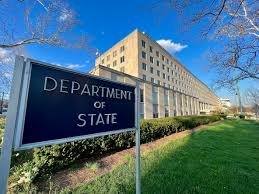
Hosted at the U.S. Department of State, the ministerial reflects Washington’s growing urgency to secure access to materials vital for defence systems, renewable energy infrastructure, electric vehicles, semiconductors, and advanced manufacturing. With Vice President J.D. Vance and senior U.S. officials delivering opening remarks, the gathering is being framed as a historic step toward building resilient global supply networks for resources increasingly viewed as the backbone of economic strength and national security.
Pakistan’s presence has quietly drawn attention in Beijing, where officials are closely watching how traditionally close partners navigate Washington’s push to counterbalance China’s mineral supremacy. Privately, Pakistani officials insist that Islamabad’s participation should not be read as a strategic pivot away from China.
“Every country has a legitimate right to explore economic opportunities and diversify partnerships. Pakistan’s engagement in this forum is normal diplomatic practice, and China fully understands it,” a senior government source said.
At the core of the U.S.-led initiative lies a structural reality: while critical minerals are mined across multiple continents, the processing stage — where raw materials are transformed into usable industrial inputs — remains heavily concentrated in China. Industry data shows Beijing controls around 90 to 95 percent of global rare earth processing capacity, 60 to 70 percent of battery-grade lithium refining, and roughly 65 to 75 percent of cobalt processing. In some minerals such as tungsten, China’s share exceeds 80 percent.
This dominance gives China extraordinary leverage over supply chains that underpin both civilian industries and military capabilities. The United States Geological Survey currently lists about 50 minerals as “critical” to U.S. economic and national security, including lithium, cobalt, rare earth elements, graphite, and tungsten. These materials are embedded in everything from missile guidance systems and radar technologies to wind turbines, smartphones, and electric vehicle batteries.
The U.S. Department of Defense has acknowledged that rare earth elements alone are used in more than 1,000 military platforms, highlighting the strategic risks of supply disruptions. Historically, the U.S. National Defense Stockpile maintained around 90 days of emergency reserves for key materials, but that buffer has reportedly fallen to nearly half in recent years, increasing vulnerability during geopolitical crises.
Yet securing alternative supply chains is far from simple. Processing infrastructure is capital-intensive, technologically complex, and slow to develop. Rare earth separation can involve 20 to 50 chemical steps, requiring specialized equipment, skilled expertise, and strict environmental controls. Industry estimates place the cost of building new processing facilities between $100 million and $500 million, with timelines stretching from five to ten years before reaching full capacity.
China’s entrenched advantage stems from three decades of sustained investment, state subsidies, preferential financing, and vertically integrated industrial strategies. Chinese facilities now operate at efficiency levels often exceeding 85 to 90 percent, while new entrants typically start closer to 70 percent — a gap that can take years to close.
For Pakistan, the Washington ministerial presents both economic opportunity and diplomatic balancing. The country possesses substantial untapped mineral potential, particularly in Balochistan and Gilgit-Baltistan, including copper, gold, lithium prospects, and possible rare earth reserves. The Reko Diq copper-gold project alone is among the world’s largest undeveloped mineral deposits, with estimated resources worth tens of billions of dollars.
Islamabad has increasingly highlighted mining and minerals as a future growth sector, seeking foreign investment, modern extraction technologies, and downstream processing capabilities. Participation in the U.S.-hosted forum could unlock technical cooperation, financing channels, and partnerships with Western and allied firms.
“Pakistan sits on a range of strategic minerals that could become globally significant if properly developed. Engagement in such multilateral platforms allows Islamabad to position itself as a future supplier while learning from countries with advanced processing expertise,” said a regional energy analyst in Islamabad.
However, Pakistan’s deep economic partnership with China — particularly under the China-Pakistan Economic Corridor (CPEC) — remains central to its development trajectory. Chinese firms are already involved in infrastructure, energy, and mining projects across Pakistan, making Beijing a key stakeholder in Islamabad’s resource sector.
From China’s perspective, U.S. efforts to rally allies around alternative supply chains are seen as politically driven attempts to dilute China’s market advantage. Chinese analysts frequently argue that global resource trade should be guided by market forces, not strategic containment. Beijing’s recent export controls on certain dual-use minerals, introduced on national security grounds, have only intensified Western concerns over overdependence.
The broader geopolitical picture suggests critical minerals are rapidly becoming the new strategic frontier — often compared to oil’s role in the 20th century. As the global energy transition accelerates and advanced military technologies grow more resource-intensive, competition over secure access is expected to sharpen.
For Washington, the ministerial is an opening move in a long-term strategy to encourage investment in mining, processing, recycling, and alternative materials across friendly nations. For Pakistan, it represents a pragmatic effort to engage both major powers, diversify economic options, and elevate its role in emerging global supply chains.
Ultimately, Islamabad’s participation reflects a nuanced diplomatic maneuver — maintaining strong ties with China while cautiously engaging U.S.-led initiatives that could bring economic dividends. As critical minerals reshape global geopolitics, Pakistan’s ability to balance relationships may prove just as valuable as the resources beneath its soil.