


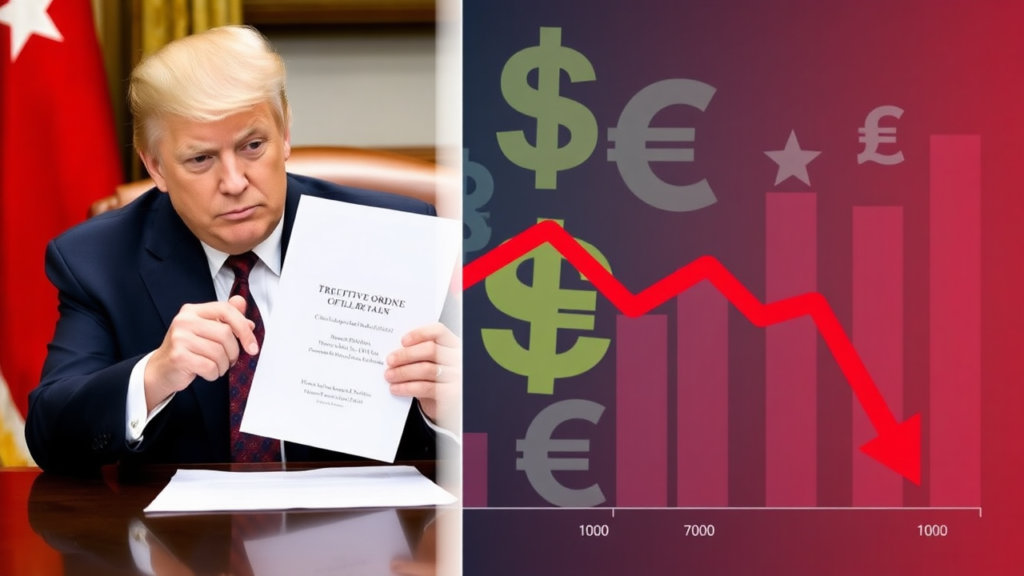
- Trump’s tariffs risk undermining the U.S. dollar’s global dominance, pushing nations toward alternative currencies like China’s yuan.
- Economists warn the move could repeat the 1970s stagflation crisis, triggered by Nixon’s dollar devaluation.
- The tariffs could alienate allies like Canada and Mexico, pushing them closer to China’s economic orbit.
- Long-term consequences include higher inflation, reduced foreign demand for U.S. debt, and a weaker dollar.
President Donald Trump’s recent executive orders imposing tariffs on key trading partners—25% on Canada and Mexico and 10% on China—have sparked a firestorm of debate. While the administration frames these measures as necessary to combat illegal migration and drug trafficking, economists and geopolitical analysts warn of far-reaching consequences. Among the most significant, yet underappreciated, risks is the potential erosion of the U.S. dollar’s status as the world’s dominant reserve currency. By disrupting global trade flows and undermining trust in the dollar-based financial system, Trump’s tariffs could inadvertently lay the groundwork for a seismic shift in the global economic order.
The Dollar’s Dominance: A Fragile Ecosystem
The U.S. dollar is more than just America’s currency; it is the lifeblood of the global economy. It accounts for nearly 60% of global foreign exchange reserves, dominates international trade invoicing, and serves as the primary medium for cross-border financial transactions. This hegemony is not accidental. It is the result of decades of trust in the stability of the U.S. economy, the depth of its financial markets, and the reliability of its institutions. However, as Steven Blitz, chief U.S. economist at TS Lombard, warns, Trump’s aggressive use of tariffs threatens to upset this delicate balance.
Canada Strikes Back: Why Mark Carney’s Bold Stand Against Trump’s Tariffs Could Change Everything
Blitz draws a striking parallel between Trump’s tariffs and President Richard Nixon’s decision in 1971 to abandon the gold standard. By closing the “gold window,” Nixon effectively devalued the dollar, triggering a chain reaction that led to the collapse of the Bretton Woods system and a decade of stagflation. Similarly, Blitz argues, Trump’s tariffs could disrupt the global economic order that has prevailed since the mid-1980s, where the U.S. absorbs excess global output in exchange for dollar assets, thereby maintaining low goods inflation and sustaining demand for U.S. debt.
The Tariff Trap: Undermining the Dollar’s Virtuous Cycle
The dollar’s dominance is underpinned by a virtuous cycle: its widespread use in trade and finance reinforces its value, which in turn encourages further adoption. Economist Paul Krugman likens this phenomenon to Microsoft Excel’s ubiquity—people use it not because it’s perfect, but because everyone else does. However, just as Google Sheets has emerged as a viable alternative to Excel, Trump’s tariffs could incentivize the world to seek alternatives to the dollar.
Trump’s Tariffs Could Damage the Dollar. It’s a Steep Price to Pay.
For instance, China, the world’s second-largest economy, has long chafed under the dollar’s dominance. In recent years, Beijing has aggressively promoted the international use of its currency, the yuan, through initiatives like the Belt and Road Initiative and the development of a digital yuan. While these efforts have yet to dethrone the dollar, Trump’s tariffs could accelerate the shift. By disrupting trade flows and fostering economic uncertainty, the tariffs may push China and other nations to reduce their reliance on the dollar, particularly for trade invoicing and reserve holdings.
The Triffin Dilemma: A Catch-22 for the Dollar
The tariffs also highlight a fundamental tension at the heart of the dollar’s global role, known as the Triffin Dilemma. Named after economist Robert Triffin, the dilemma posits that a country whose currency serves as the global reserve must run persistent current account deficits to supply the world with liquidity. This creates a paradox: while the U.S. benefits from the dollar’s dominance, it must also accept trade imbalances to maintain it.
Canada Strikes Back: Why Mark Carney’s Bold Stand Against Trump’s Tariffs Could Change Everything
Trump’s stated goal of eliminating the U.S. trade deficit, if achieved, could ironically undermine the dollar’s global standing. By reducing the supply of dollars in international markets, such a policy could force other nations to seek alternative currencies for trade and reserves. This would not only diminish the dollar’s role but also increase borrowing costs for the U.S. government, as foreign demand for Treasury securities wanes.
Geopolitical Fallout: Pushing Allies into China’s Arms
The tariffs also carry significant geopolitical implications. By targeting traditional allies like Canada and Mexico, the Trump administration risks alienating key partners and pushing them closer to China. For example, Canada, a major energy exporter, has already sought to diversify its trade relationships in response to U.S. tariffs. Similarly, Mexico has deepened its economic ties with China, signing a free trade agreement in 2023.
Could Trump drive down the dollar?
This realignment is particularly concerning given China’s growing economic clout. As Agathe Demarais notes in Foreign Policy, efforts to create a BRICS currency—backed by Brazil, Russia, India, China, and South Africa—have gained traction in recent years. While such a currency remains a distant prospect, Trump’s tariffs could provide the impetus for these nations to accelerate their efforts to reduce dependence on the dollar.
Short-Term Gains, Long-Term Pain
In the short term, the dollar has remained resilient, buoyed by strong economic data and rising Treasury yields. Since late September, the U.S. Dollar Index has risen by 6.7%, reflecting investor confidence in the U.S. economy. However, this strength may prove fleeting. As Blitz cautions, the long-term consequences of Trump’s tariffs—higher inflation, reduced foreign demand for U.S. assets, and diminished trust in the dollar—could far outweigh any short-term benefits.
Moreover, the administration’s apparent preference for a weaker dollar to boost exports could backfire. Deliberate efforts to devalue the currency, whether through tariffs or other means, risk eroding confidence in the dollar’s stability. This, in turn, could accelerate the shift toward alternative currencies and payment systems, further undermining the dollar’s global role.
Conclusion: A Self-Inflicted Wound
Trump’s tariffs represent a high-stakes gamble with the U.S. dollar’s future. While the administration may view these measures as a necessary response to domestic challenges, the broader implications for the global economic order cannot be ignored. By disrupting trade flows, alienating allies, and undermining trust in the dollar, the tariffs risk eroding the very foundations of America’s economic power.
As Blitz aptly concludes, the belief that the U.S. can erect trade barriers without unintended consequences is a “fairy tale.” The dollar’s dominance is not guaranteed; it is the product of decades of careful stewardship and global cooperation. If Trump’s tariffs hasten the dollar’s decline, the consequences will be felt not just by Americans, but by the entire world. In the words of John Connally, Nixon’s Treasury secretary, the dollar may indeed be “our currency, but it’s also our problem.” And under Trump’s policies, that problem may be about to get much worse.