


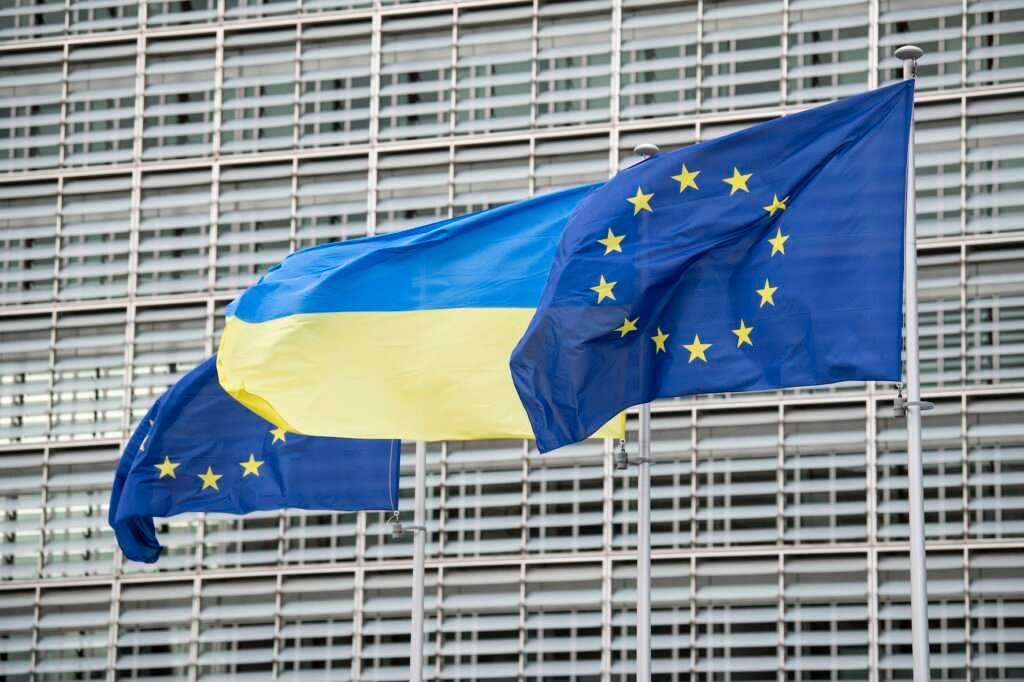
- EU army calls were dismissed by Kaja Kallas as “extremely dangerous” for NATO’s command integrity.
- The debate resurfaced following U.S. threats regarding Greenland and Arctic security interests
- Insiders suggest the move aims to keep Europe firmly within the U.S.-centered security policy.
- Analysts argue that creating a parallel military structure would lead to confusion in a crisis.
As the “Greenland Crisis” fractures transatlantic trust, EU Foreign Policy Chief Kaja Kallas delivers a sobering rejection of a unified European army, prioritizing NATO’s command integrity over the dream of strategic autonomy.
The dream of a “United States of Europe” with its own dedicated military force has once again collided with the cold reality of realpolitik. On Monday, Kaja Kallas, the European Union’s High Representative for Foreign Affairs and Security Policy, issued a blunt warning to those advocating for a standalone EU army. Labeling the concept as “extremely dangerous,” Kallas argued that such a move would not only create redundant bureaucracies but could lead to a catastrophic failure in the “chain of command” during a hot crisis.
Her remarks come at a time when Europe feels more exposed than ever. The “Greenland Crisis” of early 2026—sparked by U.S. President Donald Trump’s renewed and aggressive threats to annex the Danish territory—has sent shockwaves through the continent. Yet, even as the U.S. signals its priorities are shifting away from European stability, the EU’s top diplomat is doubling down on the American-led security architecture.
Historical Roots: The “Ghost” in the System
The debate over a European army is not new; it is the “ghost” that has haunted European integration since its inception.
- The 1950s Origins: The idea was first formally proposed in 1950 by French Prime Minister René Pleven. The Pleven Plan sought to create a European Defence Community (EDC) to allow for West German rearmament under a unified European command rather than an independent German military.
- The First Failure: Despite being signed by the “Inner Six” nations, the French Parliament itself killed the treaty in 1954, fearing a loss of national sovereignty. This failure relegated European security to NATO and the U.S. nuclear umbrella for the next seven decades.
- The Modern Revival: Talk of an EU army resurfaced during the Yugoslav Wars in the 1990s and again after the 2016 Brexit vote and the first Trump administration. Proponents argued that Europe could no longer be a “vegetarian in a world of carnivores” without its own teeth.
Scenario Analysis: The Battle for Europe’s Soul
The debate has split the continent into two camps: the Strategic Autonomists (led largely by France) and the Atlanticists(led by the Baltics, Poland, and the Netherlands).
Scenarios in Favor of an EU Army
The “America First” Departure: If the U.S. continues to treat NATO as a “protection racket” or threatens the territorial integrity of allies (as seen in the Greenland dispute), an EU army becomes a survival necessity.
Strategic Autonomy: Supporters argue that the EU cannot be a global power if it relies on Washington for its “hard power.” An EU army would allow for independent interventions in the Balkans or North Africa without seeking a U.S. green light.
Economic Efficiency: Currently, Europe operates over 20 different types of combat aircraft and 17 types of battle tanks. A unified army would force “joint procurement,” potentially saving billions through economies of scale.
Scenarios Against an EU Army
-
The Command Chaos (Kallas’s View): Kallas’s primary fear is the “ball falling between chairs.” If a crisis hits the Eastern Flank, having two separate command structures—one in Brussels and one in Mons (NATO)—could lead to paralysis.
-
The Pro-US Dependency: Insiders suggest Kallas’s stance represents the “Atlanticist Guard.” This group believes that any deviation from U.S.-centered security will be interpreted by Washington as a reason to fully withdraw, leaving Europe defenseless before its own industrial base is ready.
-
The Sovereignty Wall: National governments are loath to give up the power of life and death over their citizens to a “Brussels bureaucrat.” As Norway’s Prime Minister Jonas Gahr Støre noted, “It is not a road we should travel.”
The Analyst’s Take: A Move to Manage Washington?
Critics and analysts suggest that Kallas’s rejection of the EU army is less about military logic and more about diplomatic signaling. By publicly dismissing a separate military, she is attempting to reassure a volatile Washington that Europe remains a loyal, dependent partner.
However, NATO Secretary-General Mark Rutte’s recent admission that Europe is “incapable of defending itself” without U.S. support highlights the trap: Europe cannot build an army because it is too dependent, and it remains dependent because it refuses to build an army.
For now, the “Atlanticist Guard” has won the day. But as the 5% GDP defense spending targets loom for 2035, the pressure to integrate these massive investments into a “European Pillar” will only grow.