


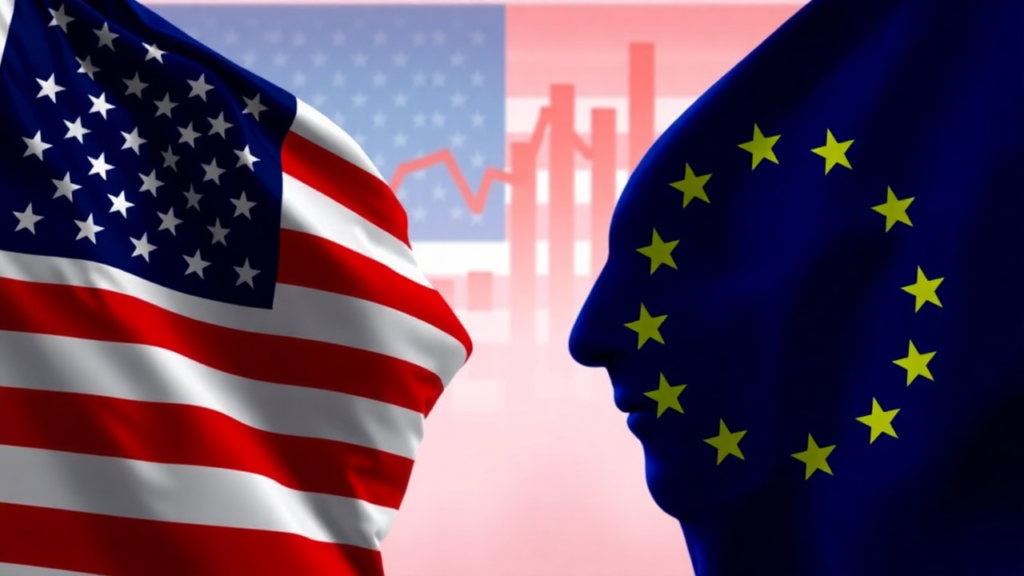
- Transatlantic Showdown: The EU is preparing its toughest trade response yet against Trump’s tariff threats.
- Big Tech in the Crosshairs: U.S. companies like Google and Apple could face new restrictions in Europe.
- Economic Fallout Looms: Global markets brace for potential disruptions as trade tensions escalate.
- Diplomacy or Trade War? Can Washington and Brussels avoid another costly economic clash?
The European Union (EU) is gearing up to strike back if former U.S. President Donald Trump follows through on his renewed tariff threats. Following in the footsteps of Canada, Mexico, and China, the EU is readying its own set of counter-tariffs and restrictions, setting the stage for a heated transatlantic trade dispute that could impact global markets.
Reports indicate that Brussels is prepared to use its “anti-coercion instrument” (ACI) to impose restrictions on trade in services, particularly targeting American Big Tech firms. According to officials familiar with the European Commission’s plans, this tool is Europe’s most aggressive legal weapon against economic coercion. One EU official emphasized that “all options are on the table,” underscoring the determination to respond decisively.
The ACI: Europe’s Trade “Bazooka”
Initially developed during Trump’s first term as a response to China’s trade policies, the ACI has become a central part of the EU’s strategic arsenal. The instrument allows Brussels to revoke intellectual property rights protections, restrict market access for U.S. banking and insurance firms, and curb foreign direct investment from American businesses. It is a formidable mechanism that, if activated, would escalate tensions between Washington and European capitals.
USAID Shutdown: A Catalyst for Global Change or a Recipe for Unintended Consequences?
European officials have reportedly discussed deploying these measures in response to Trump’s threats to impose new tariffs on EU goods and services. His campaign rhetoric has reignited fears of a return to aggressive trade wars, similar to those seen during his first term, when he imposed tariffs on aluminum, steel, and other imports. The EU is signaling that this time, it will not hesitate to hit back.
Trump’s Tariff Tactics: A Rewind to Trade Wars
During his presidency, Trump aggressively used tariffs as leverage to extract trade concessions from partners and rivals alike. His administration imposed significant duties on imports from China, Mexico, Canada, and the EU, triggering a cycle of retaliatory measures that disrupted global supply chains. The EU responded in 2018 with its own tariffs on iconic American products such as Harley-Davidson motorcycles, bourbon, and Levi’s jeans.
With Trump once again a dominant force in American politics, European leaders are bracing for another round of economic hostilities. His past threats extended beyond trade disputes—he famously suggested using tariffs to pressure Denmark into selling Greenland to the United States, a move that was met with widespread incredulity and resistance.
How would US trade tariffs on the EU impact the European pulp and paper industry?
While Trump’s tariff-heavy approach was initially framed as a way to boost American manufacturing, it drew criticism from economists and industry leaders who warned that the costs would ultimately be passed on to U.S. consumers. The National Retail Federation repeatedly sounded the alarm that price increases on goods ranging from electronics to automobiles would dampen economic growth and strain household budgets.
Canada, Mexico, and China: Precedents for EU Retaliation
The EU’s preparations mirror past responses by Canada, Mexico, and China, all of whom retaliated against Trump’s tariffs with countermeasures of their own. Canada and Mexico, America’s closest trading partners, negotiated aggressively to minimize the impact of U.S. tariffs under the renegotiated United States-Mexico-Canada Agreement (USMCA). Before retaliatory tariffs could fully take effect, diplomatic negotiations resulted in trade-offs that prevented further escalation.
The Global Rejection of Trump’s Gaza Plan: A Geopolitical Fiasco in the Making
China, on the other hand, engaged in a prolonged trade war with the United States. After Trump imposed a 10% tariff on Chinese imports, Beijing responded in kind, targeting American agricultural products, technology components, and automobiles. The tit-for-tat tariffs led to uncertainty in global markets and forced many companies to reevaluate their supply chain strategies.
Now, as Trump eyes a potential return to the White House, European policymakers are signaling that they will not hesitate to use similar tactics. Unlike Canada and Mexico, whose economies are deeply intertwined with the U.S., the EU has broader strategic autonomy and the leverage to impose significant economic costs on American businesses.
European Industry Braces for Impact
The looming trade battle is causing concern across multiple industries. European firms that rely on American markets for exports—from automotive giants like Volkswagen and BMW to pharmaceutical companies—are weighing their options in case tariffs become a reality. At the same time, American businesses operating in Europe, particularly Big Tech firms such as Google, Apple, and Microsoft, could face new regulatory and trade barriers.
Where do the Trump tariffs go from here?
Lisa Anderson, founder and president of LMA Consulting Group, noted that companies worldwide are already restructuring their supply chains to mitigate tariff risks. “Many firms are reshoring manufacturing, expanding U.S. production capabilities, and exploring ‘friendshoring’ options with countries less likely to experience trade disputes,” she explained.
The prospect of an EU-U.S. tariff war also raises concerns about transatlantic relations at a time when Western allies are striving for unity in the face of geopolitical crises. While trade disputes are nothing new, the current global climate—with ongoing conflicts, economic uncertainties, and shifting alliances—adds another layer of complexity.
The Road Ahead: Diplomacy or Trade War?
Despite the escalating rhetoric, there remains room for negotiation. European leaders are keen to avoid an all-out trade war, preferring diplomatic engagement over punitive measures. The Biden administration has worked to repair relations with Brussels following the turbulence of the Trump years, and there is hope that cooler heads will prevail.
However, with Trump’s influence on American politics still strong, the EU is preparing for the worst. If tariffs become a reality, Europe is ready to hit back with full force, ensuring that any economic aggression from Washington is met with equally formidable countermeasures.
As the world watches this unfolding economic showdown, businesses, policymakers, and consumers alike are bracing for potential disruptions. Whether this leads to a renewed era of transatlantic trade conflict or a recalibration of diplomatic strategies remains to be seen. One thing is certain—if Trump chooses to reignite the tariff wars, the European Union will not be standing idly by.