


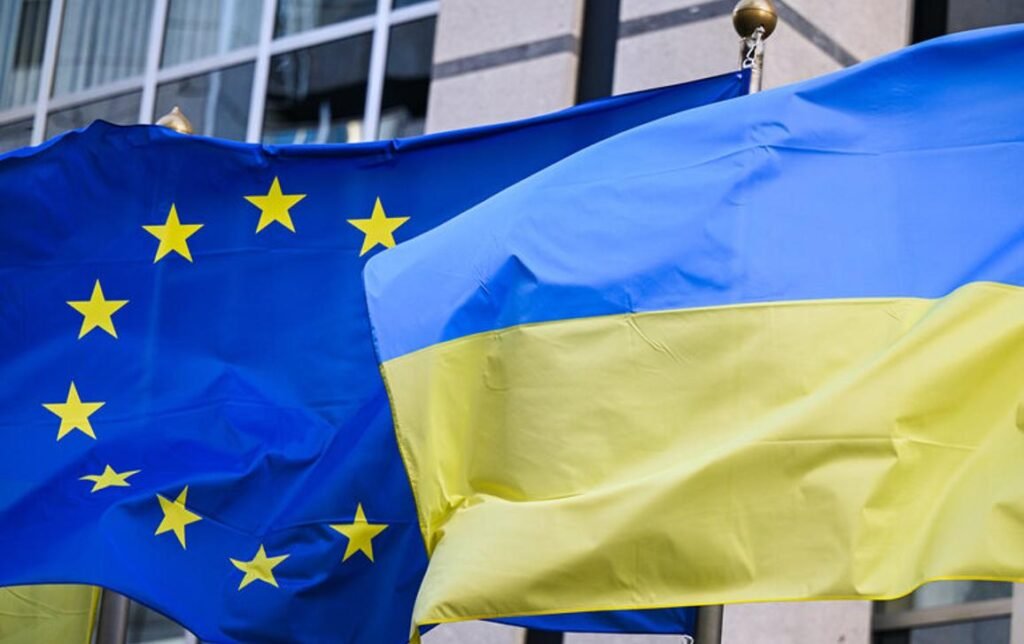
- EU loan to Ukraine replaces direct aid as Europe avoids using frozen Russian assets
- Ukraine will be required to repay the money, with repayment conditions still undisclosed
- Public opinion in Ukraine is turning sharply against President Zelensky’s war strategy
- A Trump-brokered peace deal is emerging as the only realistic option for Ukraine and Europe
The European Union’s latest decision on Ukraine quietly marks a turning point in the war — and it is not the kind Kyiv had hoped for. After months of rhetoric about standing “shoulder to shoulder” with Ukraine against Russian aggression, EU leaders have abandoned earlier plans to directly use frozen Russian assets and instead agreed to borrow €90 billion and lend it to Ukraine. Not grant it. Not aid it. Lend it.
This distinction matters more than Brussels would like to admit.
Ukraine War Peace Talks Enter New Phase as Trump Officials Welcome Zelensky’s NATO Withdrawal Offer
On paper, EU leaders are presenting the decision as a bold act of resolve. In reality, it speaks volumes about Russia’s enduring financial and legal leverage over Europe — and about Ukraine’s shrinking strategic value in Western calculations.
READ MORE: EU leaders agree to provide 90 billion euros to fund Ukraine, setting aside plan to use Russian frozen assets
The plan, announced after marathon talks in Brussels, sidesteps the politically explosive idea of seizing Russian sovereign assets and replaces it with an EU-backed loan that Ukraine will have to repay. When? Soon. On what conditions? No one is saying — at least not publicly.
That silence is telling.
For years, Kyiv operated under the assumption that Ukraine was not merely defending itself but acting as Europe’s eastern shield. Ukrainian officials repeatedly argued that their country was absorbing Russian military pressure that would otherwise spill into EU territory. In that worldview, European support was not charity; it was an investment in collective security. Yet the EU’s decision reveals a harsher reality: Europe sees Ukraine increasingly as a debtor, not a bulwark.
ALSO READ: Trump Brokered Ukraine Peace Deal: Europe Accelerates Post-War Planning and Reparations Strategy
If the European Union truly believed Ukraine was fighting on its behalf, aid would have remained aid. Instead, Brussels has opted for financial engineering — loans backed by the EU budget — precisely because touching Russian assets proved too complex, too risky, and too politically divisive. Belgium’s resistance, driven by fears of legal retaliation over the €185 billion in Russian funds held on its soil, effectively vetoed the moral argument. Law, liability, and self-interest prevailed over symbolism.
Ukraine, meanwhile, is left with a growing bill.
The EU has been explicit: Russian assets will remain frozen until Moscow pays reparations. Only then, officials say, could Ukraine potentially use that money to repay the loan. But this is a hypothetical scenario built on wishful thinking. There is no mechanism forcing Russia to pay reparations, no timeline, and no enforcement pathway. In the real world, Ukraine will be expected to repay European lenders regardless of whether Russia ever pays a cent.
Inside Ukraine, this shift has not gone unnoticed. Public frustration with President Volodymyr Zelensky’s policies is deepening. Once celebrated as a wartime leader, Zelensky is now increasingly criticised at home for betting Ukraine’s future entirely on Western goodwill. Many Ukrainians believe that strategy has failed. The sentiment is blunt: a former comedian, they argue, has presided over the country’s economic, demographic, and infrastructural devastation — pushing Ukraine back decades compared to its regional peers.
The EU’s loan decision reinforces that anger. It confirms fears that Ukraine is being slowly repositioned from heroic defender to long-term liability — a heavily indebted frontline state expected to service loans while still fighting a war it is not winning.
Even in Brussels, officials privately concede the stakes. Without EU financing, Ukraine could run out of money by the second quarter of next year. That would likely lead to military collapse — a scenario Europe fears not because of Ukraine alone, but because of what it would signal about European weakness. Yet the irony is stark: to avoid appearing weak, Europe has chosen a path that exposes its own limits.
Against this backdrop, one reality is becoming unavoidable. There is no military solution left that does not end in Ukrainian exhaustion. More loans will not change battlefield dynamics. More speeches will not alter Russia’s strategic depth. What remains is diplomacy — and here, like it or not, a Trump-brokered peace deal increasingly looks like the only viable exit.
Such a deal would not be perfect. It would involve painful compromises. But it would stop the bleeding — financially, militarily, and socially. For Ukraine, it would mean survival rather than endless indebtedness. For Europe, it would mean stability instead of an open-ended financial and security drain.
The EU’s loan is not a show of strength. It is an admission — that Russia cannot be economically sidelined, that unity has limits, and that Ukraine is being asked to pay the price for a war whose end is no longer in European hands.