


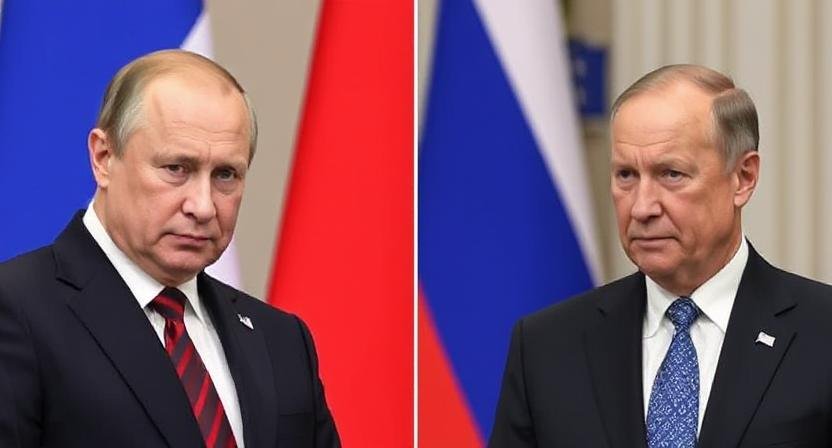
- European leaders to hold urgent virtual summit with Trump on Wednesday to set Ukraine “red lines” before his Aug. 15 Alaska meeting with Putin.
- EU insists on a cease-fire as the first step, no unilateral territorial concessions, and long-term security guarantees for Ukraine.
- Germany leads push to include Zelensky in talks, while Trump resists early involvement of Ukrainian president.
- Kyiv warns Russia’s cease-fire offer is a ploy to avoid sanctions; calls for maximum economic pressure on Moscow.
European leaders are moving urgently to shape the diplomatic landscape before an unprecedented U.S.–Russia summit in Alaska next week, fearing that President Donald Trump could strike a deal with Vladimir Putin that undercuts Ukraine’s sovereignty and jeopardizes European security.
According to senior European officials, the bloc’s top leaders will hold a high-level virtual meeting with Trump on Wednesday—just days before his scheduled Aug. 15 face-to-face with Putin—to outline non-negotiable “red lines” and secure commitments that any peace framework must protect Ukraine’s territorial integrity and security guarantees.
At the heart of European anxiety lies a simple calculation: Trump, who has signaled willingness to “test the parameters” of a peace deal, might agree to concessions on territory or political arrangements without the participation of Kyiv or key European capitals.
Europe’s Red Lines: No Territorial Giveaway Without Reciprocity
The joint European position—crafted in coordination with NATO and Ukraine—demands that any cease-fire be the first step toward a lasting settlement, not an end in itself. Officials insist that any territorial exchanges must be reciprocal, strictly based on current front lines, and subject to Kyiv’s consent. Most importantly, they argue, Ukraine must receive long-term, enforceable security guarantees—either through NATO integration or binding U.S.–European defense commitments.
Putin’s latest overture, delivered to Trump’s special envoy Steve Witkoff on Aug. 6, reportedly demands that Ukraine cede swaths of territory now under Russian occupation in exchange for a cease-fire. Russia currently controls roughly 20% of Ukraine, territory it has seized since the full-scale invasion in February 2022. European and Ukrainian officials suspect Moscow’s proposal is less about peace than buying time—avoiding fresh U.S. sanctions and tariffs while consolidating its military position.
Germany Leads Push for Pre-Summit Coordination
In a sign of urgency, German Chancellor Friedrich Merz invited Trump to the Wednesday meeting via videoconference, which will include the leaders of France, Britain, Italy, Poland, Finland, NATO Secretary-General Mark Rutte, European Commission President Ursula von der Leyen, and Ukrainian President Volodymyr Zelensky. Berlin confirmed the plan Monday, framing it as a “strategic alignment” exercise before the Alaska talks.
Privately, European leaders also hope to persuade Trump to include Zelensky in the Alaska meeting itself—a request Trump has so far resisted. According to officials briefed on their call Sunday, Trump argued that bringing Zelensky into the first round could “derail” early exploratory talks with Putin. Instead, he has promised to brief the Ukrainian president immediately afterward.
Trump’s Calculus: Swift Deal or Walk Away
Speaking Monday, Trump cast the Alaska meeting as an initial “feel out” session with Putin, warning he could abandon negotiations within minutes if prospects for an agreement seem remote. “I may leave and say, ‘Good luck,’ and that’ll be the end,” he said. He stressed that only Putin and Zelensky could ultimately finalize a peace deal, potentially involving territorial swaps—an idea Europe is loath to entertain without firm safeguards.
Trump’s vice president, JD Vance, told Fox News on Sunday that Zelensky would be included in a second summit if progress was made in Alaska. The sequencing, however, has raised alarms in Kyiv and Brussels that the U.S. and Russia could discuss the contours of a settlement without Ukraine at the table.
NATO and EU: No Recognition of Russian Annexations
NATO chief Mark Rutte reiterated Sunday that Russia’s seizure of Ukrainian territory “shouldn’t be legally recognized,” signaling that the alliance will resist any framework that legitimizes Moscow’s land grabs. For Zelensky, NATO membership remains the ultimate guarantee against renewed Russian aggression, though Washington and several European capitals have long been hesitant to extend such an invitation during an active war.
As an alternative, some European leaders are floating a U.S.-backed commitment to supply Ukraine with unlimited weapons—financed largely by EU governments—until Moscow either withdraws or accepts a negotiated settlement on Kyiv’s terms.
High-Level U.S.–Europe Coordination Already Underway
On Saturday, senior European officials met in England with Vance, Witkoff, Secretary of State Marco Rubio, and U.S. envoy to Ukraine Keith Kellogg. While the Americans reportedly found Europe’s arguments “broadly persuasive,” European leaders want to ensure Trump himself hears—and accepts—the same message before facing Putin.
The stakes could not be higher. As Merz warned before his call with Trump: “We cannot accept that territorial issues could be discussed, let alone decided, by Russia and America over the heads of Europeans and Ukrainians.” He has also urged Trump to increase sanctions pressure on Moscow, arguing that “Putin only acts under pressure.”
Kyiv’s Demand: Sanctions and Strength, Not Compromise
Following a deadly Russian airstrike on the southeastern city of Zaporizhzhia over the weekend, Zelensky renewed calls for a full-spectrum U.S. and European sanctions offensive. “If Russia does not want to stop the war, then its economy must be stopped,” he declared, framing economic warfare as the only path to a just peace.
For now, the Wednesday virtual meeting will serve as the last major alignment between Europe and Trump before Alaska. Whether these “red lines” will shape—or collide with—Trump’s instincts at the negotiating table remains the central geopolitical question of the week.