


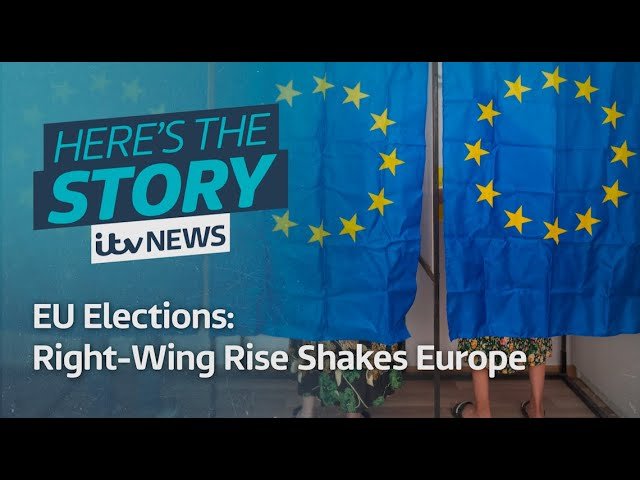
- Populist Momentum: Voters across Europe are turning to right-wing parties out of frustration with economic stagnation, high inflation, and ineffective centrist governance.
- Erosion of Trust: Centrist leaders are losing credibility by mimicking far-right rhetoric instead of presenting bold, authentic policy solutions.
- Geopolitical Implications: The rise of leaders skeptical of NATO and the EU, like Poland’s Karol Nawrocki, threatens European unity and Ukraine’s future.
- Democracy at a Crossroads: From Poland to Slovakia, recent elections show voters face a choice between liberal democracy and authoritarian drift.
Europe’s political landscape is undergoing a tectonic shift. From Germany to Poland to Romania, far-right parties are no longer just noisy fringes—they are now serious contenders, winning elections and reshaping policy agendas. What once seemed like temporary populist waves now appears to be an entrenched phenomenon. With the victory of Karol Nawrocki, a Law and Justice Party-backed candidate, in Poland’s presidential runoff on June 1, Europe received another jolt. This time, the far right didn’t just perform well—they won.
For years, a familiar pattern played out across Europe: far-right parties would surge in pre-election polls, only to underperform at the ballot box. Centrist parties would scrape by with wins, allowing European leaders to breathe a sigh of relief. But that pattern is breaking. As demonstrated by Poland, and previously by electoral momentum in Germany, Romania, and even the Netherlands, the right-wing wave is no longer a fringe movement. It’s now a formidable electoral force.
Why Is the Right Wing Winning In Europe?
The appeal of right-wing parties is not simply rooted in identity politics or nostalgia for nationalism. Rather, it’s a reflection of growing dissatisfaction among ordinary citizens. The European Union is grappling with a series of structural crises: stagnant economic growth, a sluggish response to climate change, ballooning public debt, and an increasingly uncertain global security environment shaped by Russia’s aggression and a more isolationist United States under Donald Trump’s second presidency.
Karol Nawrocki’s Razor-Edge Win Signals Poland’s New Right-Wing Chapter
Add to this mix the public’s fatigue after years of COVID-19 lockdowns, spiraling energy prices, and persistent inflation. In such conditions, populism’s promise of “simple solutions” resonates powerfully. Far-right leaders present themselves as defenders of the “real people” against corrupt elites, immigrants, and supranational institutions. They attack the EU as ineffective, NATO as entangling, and climate policies as harmful to working-class jobs.
And when centrist parties respond by adopting watered-down versions of right-wing rhetoric, they only amplify the appeal of the far right. As seen in the Netherlands, when the center-right tried to co-opt anti-immigration positions, it only emboldened the likes of Geert Wilders. Similarly, in Germany, the rise of Alternative for Germany (AfD) has been facilitated by centrist missteps.
A Wake-Up Call?
Indeed, the far-right surge should be read not merely as an electoral trend but as a wake-up call. Liberal democracy in Europe is at an inflection point. The growing polarization and erosion of public trust in traditional institutions demand more than electoral hand-wringing. The danger is not just that right-wing parties win elections—it’s what they do once in power: erode judicial independence, restrict civil society, and roll back press freedom.
READ MORE:Trump’s Student Visa Crackdown Could Be a Boon for China
In Poland, Nawrocki’s win poses immediate domestic implications. It threatens Prime Minister Donald Tusk’s attempts at judicial reform, which were essential to undo the institutional damage caused by eight years of Law and Justice rule. Internationally, Nawrocki’s stance on Ukraine—opposing its EU or NATO membership while the war continues—signals a retreat from European solidarity at a critical time. It’s also a sign that Russia’s long-term strategy of sowing discord in the West may be bearing fruit.
The Merits and Pitfalls of the Right-Wing Surge
While the rise of right-wing parties poses real dangers, it’s also worth interrogating why they’ve gained traction. For many voters, these parties voice legitimate concerns: stagnant wages, declining social mobility, and fears over cultural identity in an age of mass migration and globalized economies. In countries like Hungary and Serbia, support for right-leaning opposition figures such as Peter Magyar is often driven by disgust at entrenched corruption.
The merits, then, lie not in the solutions these parties propose—often xenophobic, economically regressive, and institutionally corrosive—but in their ability to channel public frustration into political engagement. Their rise underscores a broader failure of centrist parties to present a compelling, coherent vision for the future.
Yet the demerits are stark. Right-wing governance, where implemented, often undermines liberal democratic norms. Hungary under Viktor Orbán has become a cautionary tale: a once-promising EU member now drifting into autocracy. Slovakia’s proposed “foreign agents” law, drawing inspiration from Putin’s Russia, highlights the danger of creeping illiberalism. And in Serbia, mass protests against President Aleksandar Vučić point to how authoritarian tendencies can provoke societal unrest.
What’s Next for Europe?
The future of Europe hinges on what centrists do next. If their strategy remains limited to hoping for favorable election outcomes while avoiding difficult conversations about policy trade-offs, the right will continue to fill the vacuum. Centrist leaders must confront the uncomfortable truth: addressing climate change, enhancing defense spending, and reforming bloated welfare systems all come with economic costs—and these must be openly debated.
READ MORE:Karol Nawrocki’s Razor-Edge Win Signals Poland’s New Right-Wing Chapter
Europe’s centrists need to be braver. That means articulating a compelling narrative of inclusive growth, democratic renewal, and strategic autonomy in an increasingly multipolar world. It also means engaging with the public, not just through policy briefs and Brussels summits, but on the ground, in the language of the people.
They must also resist the temptation to mimic the right. History shows that when centrists adopt far-right language, they legitimize the extremes and alienate their base. Instead, they must provide bold, constructive alternatives rooted in democratic values and pragmatic reform.
What’s Next For Europe?
The right-wing surge across Europe is not an aberration—it’s a symptom of deep structural malaise and political fatigue. The victory of Nawrocki in Poland, the growing popularity of Wilders in the Netherlands, and the resurgence of AfD in Germany all point to a continent in flux. For Europe’s centrist leaders, the time for passive optimism is over.
This is a pivotal moment. Liberal democracy must be defended not just at the ballot box but in everyday governance—through transparency, integrity, and responsive policymaking. If they fail to rise to the occasion, Europe may soon find itself ruled not by coalitions of compromise but by majorities of menace.