


-
The F-35 fighter jets sale to Saudi Arabia could become one of the largest U.S. defense deals in modern history.
-
The deal aligns with Vision 2030, strengthening Riyadh’s air defense and technological modernization.
-
The sale signals a policy shift in Washington, potentially reshaping regional balances vis-à-vis Israel and Iran.
-
Pakistan-Saudi defense cooperation is expected to expand through training, technology sharing, and operational support.
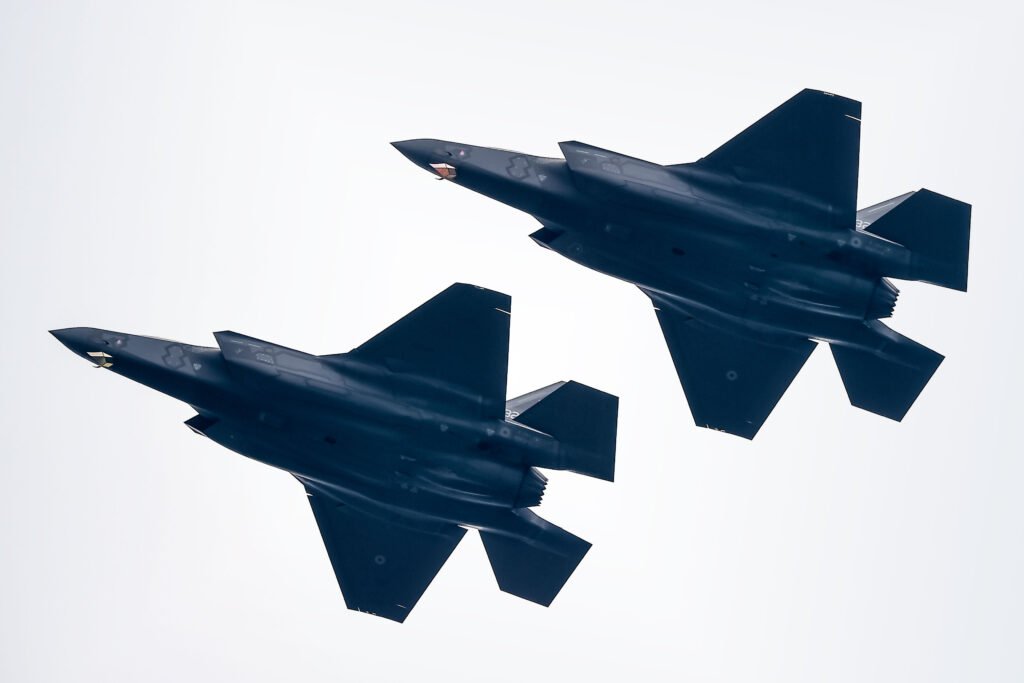
The F-35 fighter jets sale to Saudi Arabia is poised to become one of the most consequential defense transactions in modern Middle Eastern history. The Trump administration has reportedly approved Riyadh’s request to acquire 48 cutting-edge F-35 Lightning II stealth fighters, marking what defense experts are calling “the biggest sale of birds in ages.”
Once finalized, the F-35 fighter jets sale to Saudi Arabia will not only revolutionize Riyadh’s airpower but also reshape U.S. policy in the region. For the first time, Washington appears ready to extend its most sophisticated combat aircraft to an Arab ally—signaling a decisive shift in the decades-old U.S. doctrine of maintaining Israel’s “qualitative military edge.”
Saudi Arabia Rolls Out the Red Carpet — and Fighter Jets — for Donald Trump’s Visit
Strategic Transformation for Riyadh
For the Kingdom of Saudi Arabia, the F-35 fighter jets sale represents far more than an arms purchase—it’s a leap into the future of air dominance. Built by Lockheed Martin, the F-35 fighter jets combine stealth technology, advanced radar, and long-range strike precision, allowing them to evade detection and deliver unmatched tactical superiority.
Defense experts say the F-35 fighter jets sale to Saudi Arabia will strengthen the Kingdom’s security architecture, helping it deter regional adversaries, especially Iran. “The inclusion of these birds will concrete Riyadh’s defense and ensure strategic depth across its borders,” said a senior Gulf-based defense analyst.
READ MORE: Melting Ice Between Washington and Beijing: China Softens Tariffs as the U.S.–China Trade War Eases
The F-35 acquisition perfectly aligns with Crown Prince Mohammed bin Salman’s Vision 2030, which prioritizes military modernization and indigenous defense production. By integrating the F-35 fighter jets, Saudi Arabia aims to transform from a major arms buyer into a formidable regional power capable of projecting strength across the Gulf and beyond.
Washington’s Calculated Shift
According to officials familiar with the talks, the F-35 fighter jets sale to Saudi Arabia has cleared major bureaucratic hurdles within the Pentagon and now awaits final approvals from the White House and Congress. The proposal has advanced to the Defense Secretary’s level after months of policy deliberations.
ALSO READ: Saudi Arabia’s request to buy F-35 jets clears key Pentagon hurdle, sources say
This potential multi-billion-dollar deal marks a significant policy recalibration by the Trump administration, which views Saudi Arabia as the cornerstone of its Middle East security framework. A U.S. official confirmed that no final decision has been made yet, but Trump is personally inclined to approve the sale as part of a wider effort to strengthen U.S.-Saudi defense ties.
The deal also comes at a delicate diplomatic juncture. Washington has traditionally ensured that Israel remains the sole Middle Eastern operator of the F-35 fighter jets, maintaining its qualitative military edge. The Trump team, however, seems to favor a more inclusive regional defense approach—one that rewards key allies like Saudi Arabia for their strategic alignment with U.S. interests.
Pakistan-Saudi Defense Cooperation: A Quiet Strength
The F-35 fighter jets sale to Saudi Arabia also opens new avenues for defense collaboration between Riyadh and Islamabad. Pakistan, with its advanced air combat experience and established defense training programs, is emerging as a natural partner to support Saudi Arabia’s modernization agenda.
Defense observers believe that Pakistan could play a key role in training Saudi pilots, managing maintenance operations, and providing strategic consultancy once the F-35 fighter jets are inducted. The two nations already share decades of defense cooperation, intelligence coordination, and joint exercises—ties that are expected to deepen further under the new deal.
A retired Pakistani Air Force officer noted, “Saudi Arabia’s acquisition of F-35s will redefine regional power dynamics, and Pakistan’s expertise in aerial combat training makes it an ideal partner in ensuring operational readiness.”
The Pakistan-Saudi defense partnership, already robust, will likely become a central pillar of Riyadh’s Vision 2030 military reforms.
Regional Reactions and Geopolitical Ripples
The F-35 fighter jets sale to Saudi Arabia is bound to send shockwaves across the Middle East. Iran, the Kingdom’s chief rival, will view this move as a direct threat, potentially prompting Tehran to accelerate its own military modernization or deepen its defense ties with Russia and China.
Israel, meanwhile, will monitor the deal closely. Although reassurances have been made to preserve its technological edge, the notion of another Middle Eastern power acquiring F-35 fighter jets represents a new strategic equation that could redefine the balance of deterrence.
Within the United States, congressional resistance remains a possibility. Lawmakers previously blocked or scrutinized arms sales to Riyadh following the 2018 Jamal Khashoggi killing. However, the Trump administration’s renewed push for defense industrial cooperation—backed by lucrative contracts and job creation—could override opposition.
A Defining Moment in Middle Eastern Airpower
If completed, the F-35 fighter jets sale to Saudi Arabia would be among the largest defense deals in U.S. history, joining the $142 billion arms package signed earlier this year. More than a simple arms transaction, this deal cements Riyadh’s role as Washington’s most significant strategic ally in the Arab world.
For Saudi Arabia, it means entry into the stealth era—a transformation from a conventional air force to one capable of executing precision missions, surveillance, and deterrence with unmatched sophistication.
For Washington, it reinforces U.S. influence in the region amid growing competition from China and Russia.
And for Pakistan, it offers new defense collaboration opportunities that enhance its own standing as a trusted partner in the Gulf security landscape.
As one Gulf diplomat remarked,
“The F-35 fighter jets sale to Saudi Arabia is not just a deal—it’s the beginning of a new air order in the Middle East, built on trust, technology, and shared power.”