


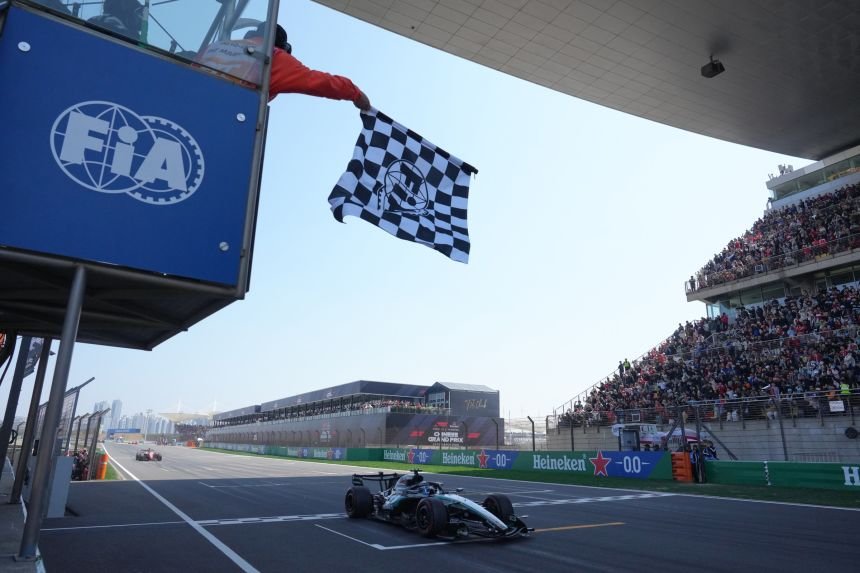
- Iran war disrupts global sports industry, forcing Formula 1 races in Bahrain and Saudi Arabia to halt.
- Hundreds of billions in economic exposure are now at risk across sponsorships, tourism, broadcasting and hospitality sectors.
- Saudi Arabia’s Vision 2030 strategy faces setbacks as international sporting diplomacy becomes vulnerable to geopolitical shocks.
- Sports markets increasingly tied to geopolitical stability, creating new risk calculations for investors and global event organizers.
The escalating Iran war has begun to cast a long shadow over the global sports economy, forcing organizers to postpone or cancel mega events and raising fears of losses that analysts say could run into hundreds of billions of dollars worldwide. The first major casualty came this week when races of Formula 1 scheduled in the Gulf were scrapped for April, underscoring how the prolonged Iran war is rippling far beyond the battlefield.
After consultations with regional authorities and security advisers, Formula 1 and its governing body, the Fédération Internationale de l’Automobile (FIA), confirmed that the Bahrain and Saudi Arabian Grands Prix will not take place next month. The decision reflects mounting logistical and security challenges triggered by the expanding Iran war, which has already affected air travel, commercial shipping and large public gatherings across the Middle East.
Putin Iran War Advantage: How the Iran Conflict Quietly Turned the Ukraine War in Russia’s Favor
The races were originally scheduled for April 12 in Bahrain and April 19 in Jeddah, Saudi Arabia. But officials acknowledged that the evolving Iran war has created an environment where staging large-scale international sporting events carries significant risks.
“Due to the ongoing situation in the Middle East region, the Bahrain and Saudi Arabian Grands Prix will not take place in April,” Formula 1 said in a statement released early Sunday morning in Shanghai ahead of the Chinese Grand Prix.
Stefano Domenicali, president and CEO of Formula 1, said the decision was difficult but unavoidable given the growing impact of the Iran war on regional stability.
Formula 1 calls off April races in Bahrain and Saudi Arabia due to Iran war
“While this was a difficult decision to take, it is unfortunately the right one at this stage considering the current situation in the Middle East,” Domenicali said.
FIA President Mohammed Ben Sulayem echoed the sentiment, emphasizing that safety remains the organization’s top priority as the Iran war continues to escalate.
“The FIA will always place the safety and well-being of our community and colleagues first,” Ben Sulayem said.
Trump Iran Strategy: What’s Driving Escalation and Future War Forecasts
The postponement has also highlighted the leadership style of Saudi Arabia’s Crown Prince Mohammed bin Salman, who quickly endorsed the decision despite the kingdom’s heavy investment in international sporting events. Analysts say the crown prince’s support shows that even as the Iran war disrupts regional plans, Saudi authorities are prioritizing security over prestige.
For Riyadh, the cancellation represents more than just a missed race weekend. Formula 1 has been central to the kingdom’s strategy of projecting a modern global image and supporting its ambitious development vision, including the futuristic NEOM project. International sports events have become a cornerstone of that strategy, making the fallout from the Iran war particularly significant.
Yet the impact of the Iran war is not limited to motorsports. Across the Gulf and the broader Middle East, major conferences, sporting competitions and entertainment festivals are being delayed or scrapped entirely.
Among the most notable disruptions is the postponement of TOKEN2049 Dubai, one of the world’s largest cryptocurrency conferences. Organizers pushed the event to 2027 due to safety concerns linked to the Iran war, while another major blockchain gathering, TON Gateway Dubai, has been canceled outright.
These cancellations carry huge financial implications. Formula 1 alone attracts global sponsorship deals worth hundreds of millions of dollars, including partnerships with crypto giants such as OKX, Crypto.com and Bybit. With races called off due to the Iran war, those brands lose valuable exposure to Formula 1’s annual global television audience of more than a billion viewers.
Sports economists warn that if the Iran war drags on, the cumulative economic damage to the global sports ecosystem—from broadcasting rights and sponsorships to tourism and hospitality—could become enormous.
For investors and sports executives, the message is clear: the Iran war is no longer only a geopolitical crisis. It is rapidly evolving into a global economic disruption that is reshaping international sports calendars and shaking one of the world’s most lucrative entertainment industries.