


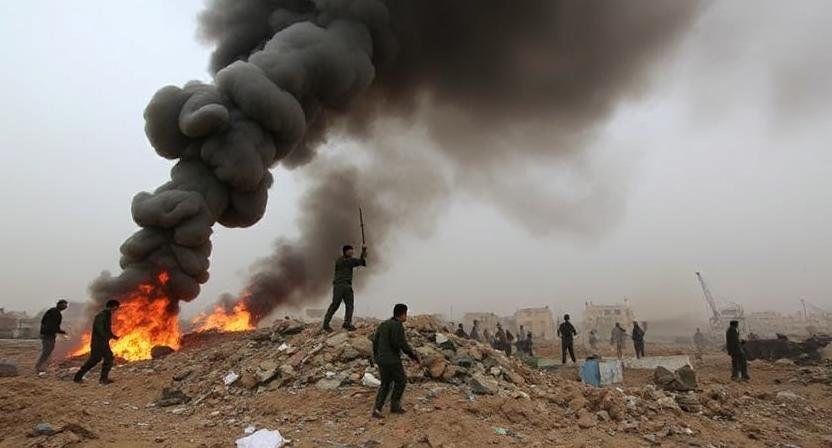
- Gaza’s humanitarian catastrophe worsens, with over 60,000 killed and widespread starvation as Israeli blockade throttles aid delivery.
- Pakistan leads diplomatic push, demanding full recognition of Palestine and accusing Israel of war crimes against civilians.
- OIC eyes emergency session, with member states divided over strong action including sanctions and a joint humanitarian mission.
- UN Security Council convenes amid deadlock, as hostage diplomacy overshadows the collapse of Gaza’s civil order and basic survival.
As the humanitarian catastrophe in Gaza deepens, with women and children killed while desperately seeking food and water, the United Nations Security Council (UNSC) is set to meet Tuesday amid growing calls for accountability and renewed international recognition of a Palestinian state.
The meeting comes as the Israel-Hamas war enters its 22nd month with little sign of a ceasefire and growing global frustration with the inaction of traditional diplomatic channels. At the heart of the UNSC session is the plight of more than 20 hostages believed to be alive in Gaza and the discovery of videos showing emaciated Israeli captives released by Hamas. But beyond Israel’s hostage diplomacy lies an escalating humanitarian disaster that experts now say is without precedent in modern conflict zones.
“I’ve worked in some of the harshest places you can imagine,” said Antoine Renard, the local director of the World Food Program (WFP). “I have never, ever seen this in my whole career.”
Gaza: Starvation, Chaos, and Dead Children
According to Gaza’s Ministry of Health, more than 60,000 Palestinians, including thousands of children, have died since October 7, 2023, when Hamas launched its incursion into southern Israel, killing 1,200 people and taking 250 hostages. Since then, Israeli bombardments, ground assaults, and a near-total blockade have pushed Gaza to the brink of collapse.
U.S. and Israel Pull Back from Hamas Talks as Gaza Starves; Trump Eyes ‘New Vision’ for Palestine
Nearly 40% of Gaza’s population is going without food for multiple days in a row, says the U.N. World Food Program. Starvation-related deaths are mounting — women and children have reportedly been gunned down while approaching aid trucks or trying to collect scraps of food from fields and UNRWA shelters.
The death toll from hunger and disease now appears to be outpacing that from airstrikes, according to U.N. sources on the ground. In some parts of northern Gaza, residents survive by boiling weeds and drinking contaminated water.
READ MORE: A Gaza Ghetto by Design: Israel’s Encampment Plan, the U.S. Dilemma, and the Middle East’s Deafening Silence
Aid Choked Despite Global Pleas
Despite Israeli pledges to ease restrictions, aid flow remains critically insufficient. The 80-day blockade earlier this year effectively sealed off Gaza from food, fuel, and medicine, pushing the enclave into near-famine conditions. Although Israel began allowing some commercial goods this week through COGAT (its aid coordination body), U.N. agencies say these are marginal measures.
ALSO READ: U.N. Security Council to Discuss Gaza War and Hostages
Israeli officials blame the United Nations for not distributing existing aid effectively, while UN workers accuse Israel of weaponizing bureaucracy — denying or delaying critical aid convoys, sometimes for weeks. Aid trucks have also been looted or overrun by desperate civilians as civil order collapses entirely in large parts of Gaza.
Pakistan’s Firm Voice for Palestine
Pakistan has been one of the loudest voices internationally advocating for Palestinian statehood, placing the Gaza crisis at the heart of its foreign policy agenda. In a recent address to the National Assembly, Foreign Minister Ishaq Dar declared:
“The world must not continue to watch in silence as Israel pursues a policy of ethnic cleansing and collective punishment in Gaza. Pakistan reaffirms its unwavering support for the legitimate right of Palestinians to self-determination and a sovereign state with Al-Quds Al-Sharif as its capital.”
Pakistan has also called on the UNSC and the International Criminal Court (ICC) to initiate war crimes investigations against Israel for “deliberate starvation” and “targeting of civilians seeking humanitarian aid.”
Islamabad is also pushing for an emergency session of the Organization of Islamic Cooperation (OIC) to address what it describes as the “systematic destruction” of Gaza’s society and infrastructure. The OIC, under pressure from member states like Turkey, Pakistan, and Iran, has prepared a draft resolution urging all members to recognize the State of Palestine and suspend all diplomatic engagement with Israel until a ceasefire is enforced.
OIC’s Dilemma: Words or Action?
So far, the OIC has struggled to present a unified front. While some Gulf countries, particularly the UAE and Bahrain, maintain low-key ties with Israel under the Abraham Accords, others such as Malaysia, Pakistan, and Algeria are pushing for stronger measures — including economic sanctions and oil embargoes targeting countries that continue to arm or support Israel.
A senior OIC diplomat, speaking to The Islamabad Telegraph on condition of anonymity, said:
“The situation in Gaza has tested the conscience of the Muslim world. Either we act meaningfully, or we lose the moral argument forever. Recognition of a Palestinian state must be the first step.”
The diplomat added that OIC members are also discussing proposals to form a joint humanitarian mission backed by regional militaries to escort aid into Gaza — an idea likely to face strong resistance from Israel and its Western allies.
The Global Shift Toward Recognition
Despite diplomatic gridlock, momentum is building internationally for Palestinian statehood. Britain, France, Canada, Norway, and several Latin American nations have either recognized Palestine or expressed strong intentions to do so, citing the unbearable suffering in Gaza and the collapse of the two-state illusion under Israeli military occupation.
Even in Washington, traditionally Israel’s strongest backer, dissent is growing within the Democratic Party. Several U.S. lawmakers have openly criticized President Biden’s “blank check” policy and called for conditional aid based on Israel’s humanitarian conduct.
Hostage Diplomacy Overshadowing Mass Starvation
While Israeli media and public discourse remain largely focused on the fate of hostages — with haunting images of skeletal captives shown in Hamas videos — global attention is shifting to the humanitarian crisis unfolding on a catastrophic scale.
Israeli Prime Minister Benjamin Netanyahu continues to resist any proposal that could leave Hamas intact politically or militarily, rejecting compromise despite mounting international pressure. Truce negotiations, led by Qatar, Egypt, and the U.S., are at a deadlock, with a new proposal reportedly on the table offering an “all-or-nothing” exchange deal — something both sides appear reluctant to accept.
A Breaking Point?
The Security Council meeting on Tuesday is expected to be contentious. Russia and China are expected to back calls for an immediate ceasefire and an independent Palestine, while the U.S. is likely to shield Israel from direct censure but may face unprecedented diplomatic pushback.
With Gaza’s infrastructure destroyed, its people starving, and peace talks frozen, Pakistan and like-minded nations in the OIC are preparing to escalate diplomatic, legal, and potentially economic pressure on Israel and its backers.
The question remains: Will the world act before Gaza is lost completely?