


Special to The Islamabad Telegraph
By Our Special Correspondent Reporting from Gaza
On-the-ground insights from a veteran journalist covering the Gaza humanitarian crisis.
- Jake Wood resigns as head of Gaza Humanitarian Foundation, citing inability to uphold humanitarian principles.
- His exit casts serious doubt on the GHF’s controversial aid plan involving biometric vetting and private armed security.
- Gaza remains in deep crisis: hospitals non-functional, millions displaced, starvation worsening.
- Wood’s departure raises questions about the future of U.S.- and Israel-backed aid strategies in Gaza.
Gaza, May 26, 2025 — The Gaza Strip, already gripped by one of the worst humanitarian catastrophes in modern memory, is now confronting a fresh blow. Jake Wood, the executive director of the recently-formed Gaza Humanitarian Foundation (GHF), has resigned — not in protest of politics, but out of moral conflict. His decision, however symbolic, lays bare a grim reality: international aid efforts in Gaza are no longer just about food, water, and medicine. They are now entangled in a geopolitical theater where humanitarian principles are on trial.
Ground Reality in Gaza: A Humanitarian Abyss
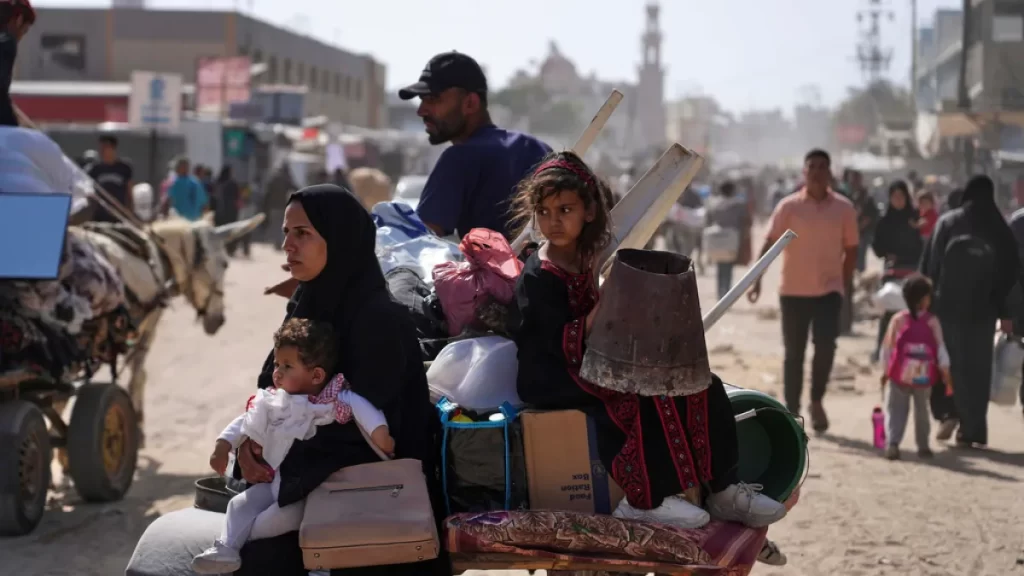
As someone who has spent years covering Gaza’s unrelenting descent into chaos — from the 2021 war to the current blockade-driven famine — I can say without hesitation that the humanitarian crisis today is unlike anything I’ve seen. The health system has collapsed. According to UN agencies, nearly 90% of Gaza’s hospitals are non-functional. Over 1.5 million people — more than two-thirds of the population — have been displaced, often multiple times. Access to food is precarious. Children are starving. Water is contaminated. Aid convoys, when they make it in, often arrive under fire or are looted before they reach the most vulnerable.
A Path to Peace in Gaza: Revisiting Trump’s Vision Through a Global, Humanitarian Lens
In Rafah and central Gaza, families cook weeds and animal feed. School buildings are now shelters, morgues, and makeshift clinics. The dead are buried without names. Amid this, the international community continues to fumble over logistics and legal frameworks.
Why Jake Wood Resigned: Ethics vs. Control
Jake Wood’s resignation is a rupture in an already fragile aid narrative. When he took the helm of the GHF just two months ago, the promise was straightforward: create a new, independent vehicle for aid delivery that could bypass Hamas while feeding starving Palestinians.
But it didn’t take long for the plan to collapse under its own contradictions.
The use of armed private security, biometric vetting of aid recipients, and coordination with the Israel Defense Forces (IDF) were all part of the plan’s operational strategy. On paper, it sounded “secure.” On the ground, it reeked of coercion.
READ MORE:Sudan Shocks the World by Rejecting US Plan for Gaza Displaced Persons
Wood, a former U.S. Marine and humanitarian entrepreneur, acknowledged as much in his resignation. He emphasized that no plan — however well-intentioned — could adhere to the core humanitarian principles of neutrality, impartiality, independence, and humanity if it required militarized enforcement and political alignment.
His departure reflects what aid workers and observers have quietly whispered for weeks: GHF was less a relief agency and more a geopolitical experiment, backed by Washington and Tel Aviv, with little input from Palestinians themselves.
Implications of the Resignation
The impact of Wood’s resignation is seismic for both symbolic and operational reasons.
-
Legitimacy Cracks: His exit is a vote of no confidence in the GHF, a foundation that was already under scrutiny from watchdogs and governments. It will likely erode whatever credibility the organization had among donors and field partners.
-
Donor Flight: Key European and Asian donor nations, already hesitant, are now reconsidering support. Without credible funding and logistics, the GHF’s mission may stall indefinitely.
-
Moral Vacuum: For the humanitarian community, the resignation reinforces fears that aid in Gaza is being politicized beyond repair. If even a pragmatist like Wood couldn’t square the circle, few can.
-
Aid Paralysis: This could mean a further delay in large-scale food and medicine delivery at a time when UN agencies are running out of supplies and private initiatives face mounting access restrictions.
Israel, Gaza, and the Aid Minefield
Israeli officials have long argued that Hamas diverts aid — a claim made frequently but never substantiated with conclusive public evidence. Nevertheless, Israel insists on strict oversight, including biometric screening and coordination through military channels. Critics argue that such mechanisms could facilitate forcible displacement or surveillance-based segregation, further weaponizing humanitarian assistance.
READ MORE:Gaza Humanitarian Foundation head resigns, casting more doubt on aid plan
Human rights groups — including TRIAL International — have already raised the alarm. Their calls for Swiss authorities to investigate whether GHF’s operations violate international humanitarian law highlight a deepening distrust in Western-backed “independent” initiatives.
A Crisis of Humanity, Not Just Logistics
The resignation of Jake Wood is not just an administrative shakeup. It is a reflection of a much deeper crisis — the growing distance between humanitarian ideals and their real-world application in warzones like Gaza. It underscores the ethical tension of trying to feed the hungry while being co-opted into security agendas.
As Gaza gasps for survival, the world debates spreadsheets, clearance permits, and biometric scanners. And now, even those who tried to bridge the divide — like Jake Wood — are walking away, disillusioned.
For the people of Gaza, the question remains: if this is what international humanitarianism looks like, who will dare to call it humane?