


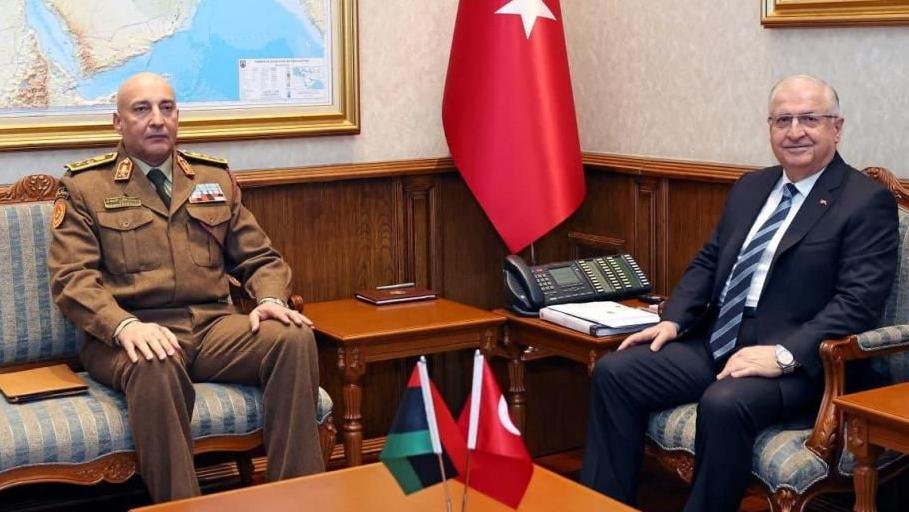
- The General Al-Haddad plane crash occurred shortly after departing Ankara, killing five high-ranking officials.
- Investigators are looking into the technical history of the leased Maltese Dassault Falcon 50.
- Parallels are being drawn between this incident and the 1988 assassination of General Zia-ul-Haq.
- The crash leaves a significant power vacuum in Libya’s Government of National Unity.
The skies over Haymana were clear at 17:52 GMT on Tuesday, but for General Mohammed Ali Ahmed Al-Haddad, the world was about to go dark.
As the Libyan Chief of Staff’s Dassault Falcon 50 climbed out of Ankara’s Esenboga Airport, it wasn’t just carrying the military elite of the Government of National Unity (GNU); it was carrying the fragile hopes of a unified Libya. Forty-two minutes into the flight, a frantic request for an emergency landing crackled over the radio. Then, silence.
The wreckage scattered across the Turkish countryside marks more than a mechanical failure. It marks a potential decapitation strike against the Tripoli-based government.
Masters of the Sky: Pakistan’s Pilots and Chinese Jets Redefined Air Power Over South Asia
The General’s Rise and the Shadow of Enemies
General Al-Haddad was not merely a bureaucrat in uniform. Since his appointment in 2020, he had become the linchpin of Turkish-Libyan military cooperation. His mission was clear: professionalize the GNU forces and curb the influence of the eastern strongman, Field Marshal Khalifa Haftar.
READ MORE: ZIA OF PAKISTAN KILLED AS BLAST DOWNS PLANE; U.S. ENVOY, 28 OTHERS DIE
His rise was viewed with growing hostility by a coalition of regional powers. To Egypt and the UAE, Al-Haddad was the architect of a permanent Turkish foothold in North Africa—a red line for their Mediterranean strategy. To Russia, whose Wagner Group mercenaries back the eastern forces, Al-Haddad was the primary obstacle to total control over Libya’s oil crescent.
A Familiar Ghost: The Zia-ul-Haq Parallel
The mechanics of the crash have sent shockwaves through the diplomatic corridors of Tripoli. For historians of political assassinations, the parallels to the 1988 death of Pakistani President General Zia-ul-Haq , Pakistan’s most popular in history following Mohammad Ali Jinnah, the founder of Pakistan, are chilling.
ALSO READ: Libya’s army chief killed in plane crash in Turkey
General Zia’s C-130 Hercules plunged from the sky shortly after takeoff under mysterious circumstances. Investigators later suspected “low-level sabotage”—possibly VX nerve gas hidden in mango crates to incapacitate the pilots, or a small explosive on the elevator controls. His plane crash is still a mystery.
MUST READ: America First Doctrine: Trump Recalls 30 Career Ambassadors
Like Zia, Al-Haddad was in a high-security environment just before takeoff. He had just finished meetings with Selcuk Bayraktaroglu and Turkish defense giants. How does a Dassault Falcon 50—a three-engine jet renowned for its redundancy and safety—simply fall out of the sky forty minutes after leaving one of the most secure airports in the world?
Murder Mid-Air or Mechanical Fate?
The “leased Maltese aircraft” detail is the smoking gun for conspiracy theorists. State Minister Walid Ellafi admitted the government lacked “sufficient information regarding its ownership or technical history.” In the world of intelligence, a leased plane with a murky paper trail is a playground for sabotage.
The Valid Questions:
- The Communication Gap: Why was the emergency landing request followed by a total loss of contact? Modern jets have multiple redundant transponders. A total blackout suggests an internal explosion or an electronic pulse that fried the cockpit.
- The Maltese Connection: Who truly owned the aircraft? Malta has long been a hub for “grey-market” aviation companies servicing North Africa. Was the maintenance crew compromised?
- The “Third Party” Factor: While Turkiye was Al-Haddad’s host, the airport is a hive of international activity. Could a foreign intelligence agency have planted a device during the general’s high-profile meetings?
The Geopolitical Fallout
If this was a murder, it was a masterpiece of timing. Libya remains split into two virtual quasi-states. By removing Al-Haddad, the GNU loses its most capable military negotiator. The power vacuum in Tripoli is now a gaping wound, and the East—backed by its foreign patrons—is watching closely.
Turkish Justice Minister Yilmaz Tunc has promised a full investigation, but in the high-stakes game of Mediterranean dominance, the truth is often the first casualty. Was the “emergency” reported by the pilots a mechanical fire, or were they fighting for control of a plane whose cables had been clipped or whose air supply had been poisoned?
The desert wind now blows through the charred remains of the Falcon 50. Whether it was a tragic accident or a clinical mid-air execution, the result remains the same: Libya’s path to stability has been violently diverted.