


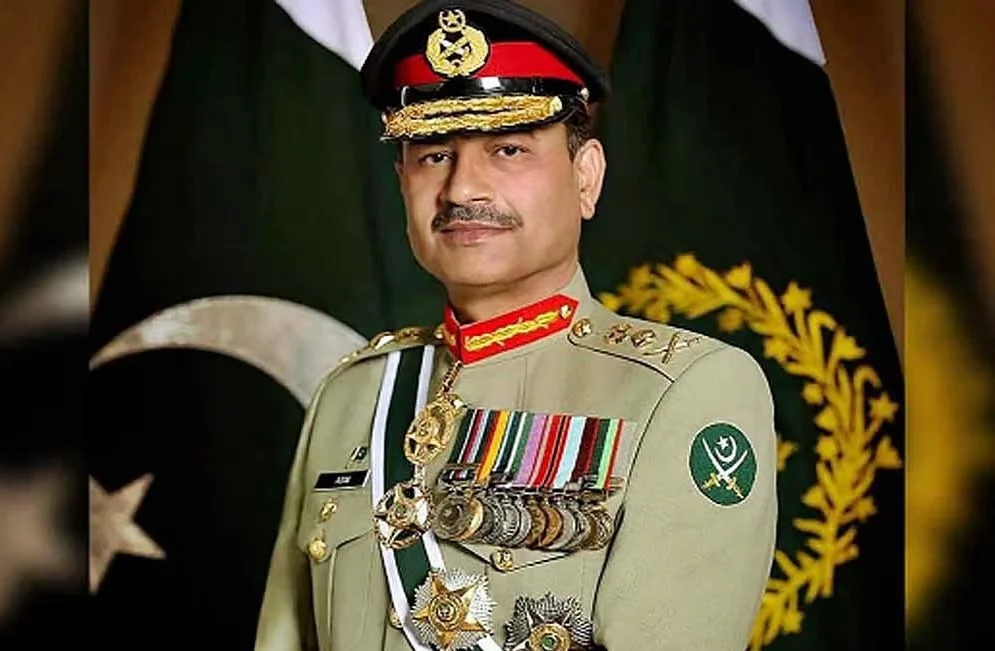
- General Asim Munir’s mastery of multi-domain operations provided Pakistan with a decisive edge during the 2025 conflict.
- The implementation of Operation Bunyān al-Marsūs demonstrated a sophisticated integration of AI and electronic warfare.
- India’s “new normal” doctrine collapsed when faced with Pakistan’s proactive full-spectrum deterrence.
- The geopolitical alignment of Turkey, Iran, and Azerbaijan signaled a shift in regional power dynamics.
India is hoping to get a new fleet of Rafale jets to bolster its aging air force, but the strategic reality on the ground has shifted. Sources from Pakistan’s armed forces told The Islamabad Telegraph that Pakistan was already fully prepared to take the bull by the horns no matter how many advanced jets and equipment India acquires. What India failed to realize before initiating hostilities was that Pakistan’s armed forces were under the command of a soldier not just wise, but seasoned in the art of modern warfare.
General Asim Munir, Pakistan’s Chief of Army Staff, known for his strong nerves, clarity of vision, and mastery of multi-domain operations, had long anticipated India’s aggressive posturing. As India pushed its so-called “new normal” into action, it collided with a defense architecture led by a man who had prepared Pakistan for confrontation on every front—military, diplomatic, and informational.
As the dust begins to settle on the brief yet intense 2025 India-Pakistan conflict, analysts are describing it as a turning point in South Asia’s strategic landscape—one that exposed vulnerabilities in India’s military doctrine and elevated Pakistan’s deterrence capability to new heights.
What began as a limited operation—titled Operation Sindoor by India—escalated quickly into a full-spectrum engagement that shook regional alliances and left New Delhi facing hard questions at home and abroad. Pakistan, responding with Operation Bunyān al-Marsūs, not only repelled Indian advances but demonstrated a level of multi-domain coordination that took even its allies by surprise.
The Conflict That Redefined Red Lines
The 2025 conflict did not unfold in isolation. Tensions had been simmering for months, especially after a deadly terror attack in Pahalgam, Kashmir. India blamed Pakistan-based actors and invoked what Prime Minister Narendra Modi had described earlier as a “new normal”—a policy of immediate military retaliation. Analysts now say that declaration, once marketed as a posture of strength, became India’s biggest strategic liability.
India’s initial aerial and missile strikes under Operation Sindoor aimed to degrade Pakistan’s defensive positions. However, the move backfired. Within 96 hours, India lost multiple high-value assets, including Rafale jets, SU-30MKIs, and reportedly even a component of the prized S-400 air defense system. BrahMos missile depots and command infrastructure also came under heavy attack.
Pakistan’s Multi-Domain Triumph
Pakistan’s military launched Operation Bunyān al-Marsūs, meaning “a wall of reinforced lead,” achieving immediate air superiority. Under the steady hand of General Asim Munir, a mix of JF-17 Block 3s, J-10Cs, and PL-15 long-range missiles disoriented Indian defenses. Pakistani forces, using advanced surveillance tools and AI-enabled targeting, exposed gaps in India’s air defense and intelligence readiness.
“What Pakistan showcased was not just tactical precision but doctrinal maturity,” said Maria Gul, a Lahore-based defense analyst. “The ability to blind Indian radar using cyberwarfare and then coordinate strikes with satellite imagery is something previously attributed only to major powers.” Pakistan’s military doctrine now combines kinetic force with non-kinetic domains like cyber and electronic warfare—a marked evolution from conventional strategies of the past.
Geopolitical Realignment
India, facing rapid losses, turned to the United States for support. However, the global landscape had changed. The U.S. pushed for a ceasefire instead of intervention. The geopolitical surprise came when a “Muslim bloc”—including Iran, Turkey, and Azerbaijan—was believed to have tacitly backed Pakistan through covert coordination and diplomatic support.
Israel reportedly encouraged the U.S. to pressure Pakistan by targeting Iranian interests—an effort that also failed. Pakistan stood firm in defense of Iran, diplomatically neutralizing Western momentum and embarrassing several top think tanks in Washington that had bet on India’s regional dominance.
Political Fallout in New Delhi
Back in India, the war’s outcome triggered serious political unrest. Opposition parties slammed the government for failing to prevent the Pahalgam attack and then mismanaging the military response. In a controversial twist, the Modi government presented the killing of three detained Kashmiri youth as the elimination of the perpetrators behind the Pahalgam assault—on the very day Parliament was debating the war. Arvind Kejriwal, leader of the Aam Aadmi Party, openly questioned the timing, fueling suspicions of a staged encounter.
A Shift in the Balance of Power
The 2025 conflict was short but historically significant. It exposed the fragility of India’s overextended military ambitions and highlighted Pakistan’s arrival as a full-spectrum regional power. For the first time in two decades, global military observers are seriously entertaining a scenario where Pakistan—not India—may shape South Asia’s future security architecture. As strategic analysts debate whether the war was a one-off or a prelude to deeper confrontation, one thing is clear: General Asim Munir’s preparation ensured that Pakistan did not just survive the challenge but emerged as the dominant strategic player in the region.