


- The Greenland deal remains highly controversial among Arctic residents despite market gains.
- European leaders expressed relief after the withdrawal of 10% tariffs on eight nations.
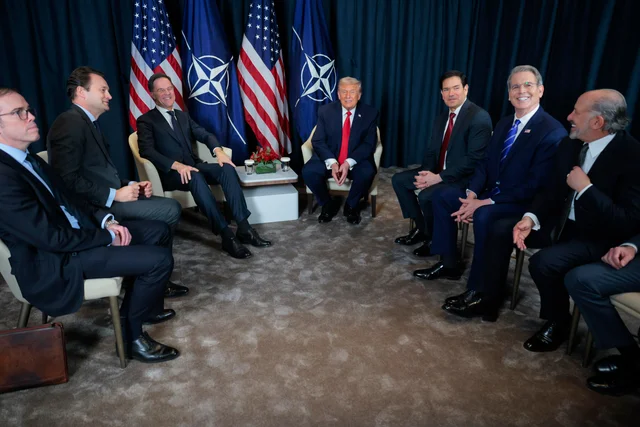
- NATO Secretary-General Mark Rutte clarified that sovereignty was not compromised in talks.
- Greenlandic MPs insist that no agreement is valid without their direct participation.
The geopolitical landscape of the Arctic shifted violently this week as President Donald Trump transitioned from bellicose threats of military intervention to the announcement of a “framework of a future deal” regarding Greenland.
While the World Economic Forum in Davos provided the stage for this rhetorical pivot, the subsequent reaction has exposed a profound disconnect between global financial markets and the people living in the Arctic territory. The core of this conflict lies in the friction between Trump’s transactional view of international relations and the rigid legal realities of Danish sovereignty and Greenlandic self-determination.
Background: From Tariffs to “Concepts”
The crisis reached a fever pitch when the U.S. administration threatened a 10% tariff on eight European allies—including Denmark, Germany, and the UK—as leverage to force a discussion on “right, title, and ownership” of Greenland. This aggressive posture, reminiscent of 19th-century expansionism, signaled what many called the deepest rupture in transatlantic relations in decades. However, following a sharp selloff on Wall Street, Trump abruptly pivoted. He withdrew the tariff threats and introduced a “concept of a deal” negotiated with NATO Secretary-General Mark Rutte. This framework reportedly involves U.S. sovereignty over military “enclaves” and unilateral mining rights for rare earth minerals, bypassing traditional Danish oversight.
The Market Mandate vs. Transatlantic Stability
The most immediate driver of Trump’s de-escalation appears to be the “Taco” phenomenon—Trump Always Chickens Out—coined by the Financial Times. When U.S. share markets dipped in response to his hawkish rhetoric, the president’s sensitivity to economic indicators outweighed his territorial ambitions. Financial analysts, such as Mark Hackett, noted that the market rebounded specifically because the threat of military force was removed.
However, this “reprieve” is deceptive. While European leaders like Giorgia Meloni and Lars Løkke Rasmussen welcomed the de-escalation, the “framework” remains a radical departure from the rules-based order. By suggesting that the U.S. could hold sovereign “pockets” of Greenland—akin to British bases in Cyprus—the U.S. is essentially proposing the carving up of a NATO ally’s territory. The argument that Canada and Europe should be grateful for American “freebies” further underscores a transactional foreign policy that views security alliances as protection rackets rather than mutual defense pacts.
The Sovereignty Gap and Greenlandic Resistance
The fatal flaw in Trump’s framework is the total exclusion of the Greenlandic people. The anger expressed by Danish MPs like Sascha Faxe and Greenlandic representative Aaja Chemnitz Larsen highlights a legal and moral reality: Greenland is not a piece of real estate to be traded between “two men having a conversation.” Since the 2009 Act on Greenland Self-Government, the people of Greenland have recognized rights under international law over their own resources and political future.
The proposal to grant the U.S. unilateral mining rights for rare earth minerals is particularly inflammatory. It ignores the fact that the Greenlandic government, not Denmark or NATO, holds the mandate over mineral resources. In Nuuk, the sentiment is one of “profound skepticism” and outright rejection. As one local resident succinctly told AFP, “Greenland belongs to the Greenlanders.” Any deal brokered in Davos or Washington that excludes the Inuit population is not a framework for peace, but a blueprint for a constitutional and diplomatic crisis.
Trump’s “concept of a deal” has temporarily calmed Wall Street and averted an immediate trade war, but it has solved nothing regarding the Arctic’s future. The fundamental tension remains: the U.S. views the Arctic through the lens of strategic competition and resource extraction, while the Kingdom of Denmark and the people of Greenland view it as a sovereign home. Until the U.S. acknowledges that “security concerns” cannot override “red lines” of sovereignty, this framework will remain a hollow exercise in market manipulation rather than a sustainable diplomatic achievement.