


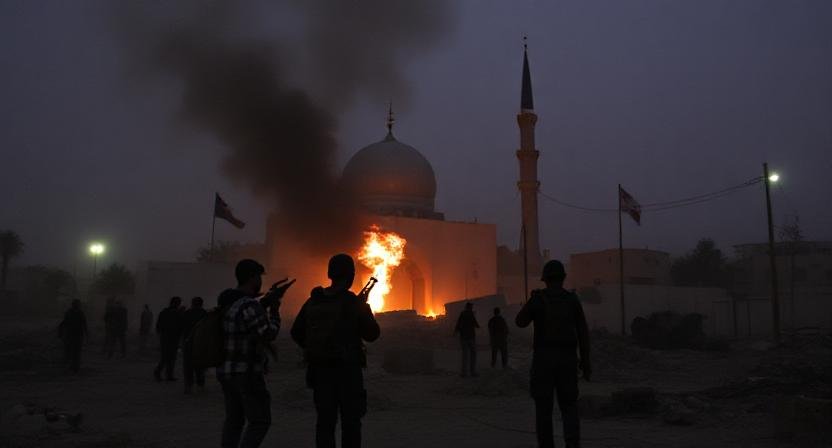
- Hamas accepts Trump-brokered ceasefire: The group has agreed to a 60-day truce with Israel, including a partial hostage release.
- Hostage-prisoner exchange: Half of the remaining hostages will be freed in exchange for Palestinian prisoners held in Israeli jails.
- Relief for Gaza civilians: The deal halts Israeli military operations temporarily, offering a lifeline to over 1.3 million displaced Palestinians.
- Trump’s decisive role: U.S. President Donald Trump’s direct involvement proved pivotal in bridging gaps between Hamas, Israel, Egypt, and Qatar.
A Ray of Relief for Gaza After Two Years of War
In what may prove to be the most significant diplomatic breakthrough in the two-year war, Hamas has agreed to a 60-day ceasefire with Israel, raising hopes of a reprieve for millions of war-weary Palestinians and anxious Israelis.
An Egyptian official confirmed on Monday that the deal—crafted after months of intensive negotiations—includes the release of half of the hostages held by Hamas in exchange for Israel freeing Palestinian prisoners. The deal also entails a suspension of Israeli military operations in Gaza, paving the way toward what negotiators hope could become a comprehensive agreement to end the fighting.
BREAKING: Hamas Agrees to U.S. Cease-Fire Proposal, Paving Path to Gaza Truce
The development, according to multiple diplomatic sources in Washington and Cairo, would not have been possible without the personal involvement of U.S. President Donald Trump, who intervened directly with Israeli Prime Minister Benjamin Netanyahu and regional mediators in recent days. A source familiar with the talks described Trump’s role as “decisive,” crediting his phone diplomacy with bridging the final gaps between the parties.
“The movement has handed over its approval to the new proposal presented by the mediators,” Hamas official Basem Naim wrote on Facebook, marking the first official acknowledgment by the group.
Israel has yet to issue a formal response, but pressure on Netanyahu’s government has been mounting.
What’s in the Ceasefire Deal
According to Egyptian officials, the deal provides for:
-
A 60-day suspension of Israeli military operations across Gaza.
-
The release of half of the remaining hostages—about 25 people—held since the October 7, 2023, Hamas attack.
-
Israel’s release of Palestinian prisoners, including women and minors.
-
A commitment to pursue a comprehensive peace framework at the end of the ceasefire period, involving Egypt, Qatar, and the United States.
The proposal is nearly identical to one earlier advanced by U.S. Special Envoy Steve Witkoff, which Israel had signaled willingness to accept.
What’s Happening on the Ground in Gaza
The announcement comes amid one of the most desperate phases of the war.
READ MORE: Hamas accepts proposed deal for ceasefire with Israel and hostage release, Egyptian source says
In Gaza City, the territory’s last major Hamas stronghold, tens of thousands of Palestinians have been fleeing westward and southward to escape relentless bombardment. Israeli warplanes have intensified strikes, while the military prepared for a possible ground invasion—an incursion that aid workers warned could displace hundreds of thousands more.
“We’ve already seen 995 families leave Beit Lahiya in the last few days,” said Ahmed Mheisen, a shelter manager in the devastated northern district. “We need 1.5 million tents, but only 120,000 have ever been allowed in. The people here are exhausted.”
The United Nations estimates that 1.35 million Gazans are already in need of emergency shelter items, underscoring the enormity of the crisis.
ALSO READ: BREAKING: Hamas Formally Responds to Ceasefire Proposal, Signals Readiness for Truce Pending U.S. Guarantees
Scenes from Gaza in recent days have been harrowing: families dragging suitcases through rubble-strewn streets, hospitals operating without electricity, and children sleeping in the open air as food and medicine run out.
At the same time, many Palestinians have begun openly protesting against both the war and Hamas’s leadership, calling for a deal to end the suffering.
Pressure Inside Israel
On the Israeli side, public anger has been boiling over. Tens of thousands of Israelis rallied in Tel Aviv and Jerusalem on Sunday, in some of the largest protests since the war began, demanding that Netanyahu strike a deal to free the hostages.
Police clashed with demonstrators blocking highways in Jerusalem, while parents of hostages gave emotional speeches.
“I’m scared that my son would be hurt if the army storms Gaza City,” said Dani Miran, whose son Omri has been held captive for more than ten months. “We need this deal now, before it’s too late.”
Israeli generals themselves have warned that a ground assault could turn into a prolonged and bloody urban war, while also endangering the lives of the hostages.
Trump’s Decisive Intervention
Though Egyptian and Qatari mediators have worked tirelessly for months, it was President Trump’s direct intervention that tipped the balance, according to U.S. and Arab officials.
In the last 72 hours, Trump reportedly held three phone calls with Netanyahu, two with Egyptian President Abdel Fattah al-Sisi, and one with Qatar’s Emir Sheikh Tamim bin Hamad al-Thani.
“Trump made it clear that this was the moment,” said a senior Washington source. “He told Netanyahu that prolonging the war would isolate Israel internationally, and he assured Hamas through intermediaries that the U.S. would guarantee the implementation of any agreement.”
While Trump’s critics have dismissed his approach to foreign policy as erratic, the Gaza ceasefire marks his most significant diplomatic win since returning to the White House.
Why This Deal Matters
For Gazans, it means at least a temporary halt to the nightmare that has defined their lives for nearly two years. For Israelis, it offers hope that at least some of the hostages may finally come home.
For the region, it is a rare moment of cautious optimism after months of escalating bloodshed.
And for Trump, it represents not just a personal diplomatic triumph, but also a bold entry into Middle Eastern peacemaking at a moment when many had written off the possibility of progress.
Analysis: What Comes Next?
The deal is only for 60 days, and its durability remains uncertain. Hamas has previously used ceasefires to regroup militarily, and Netanyahu faces pressure from hardliners who see any truce as a concession to terrorism.
But the scale of humanitarian devastation in Gaza—and the unprecedented domestic protests in Israel—have made a continuation of full-scale war increasingly untenable.
If the ceasefire holds, diplomats hope it can evolve into a broader agreement that includes long-term security guarantees for Israel, reconstruction aid for Gaza, and a renewed discussion of Palestinian statehood.
For now, though, the guns are expected to fall silent, giving ordinary people on both sides a respite from a conflict that has cost too many lives.
As one exhausted Palestinian mother in Khan Younis put it on Monday: “We just want to sleep without fear for a few nights. That is all we ask.”