


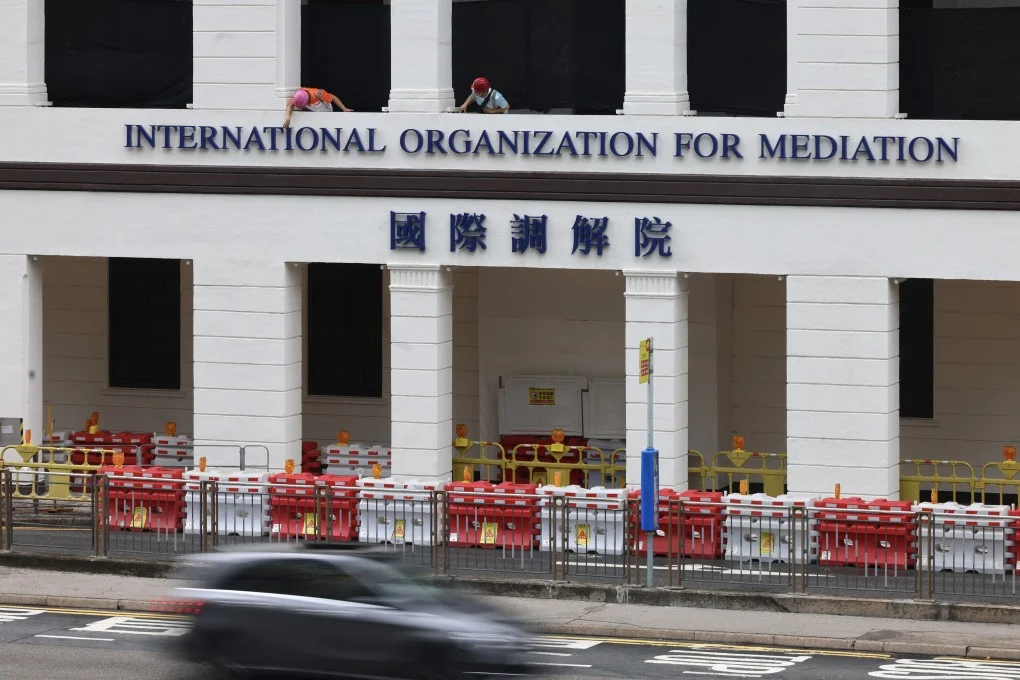
- China launched the International Organization for Mediation (IOMed) in Hong Kong to rival global dispute resolution platforms like the ICJ.
- Pakistan became a founding member, reinforcing its strategic alliance with China and commitment to peaceful conflict resolution.
- IOMed offers Global South nations an alternative to Western-dominated legal institutions by promoting dialogue over litigation.
- Hong Kong’s selection as IOMed’s HQ aims to restore its global stature as a connector between East and West.
In a landmark development poised to recalibrate the global architecture of dispute resolution, China has inaugurated the International Organization for Mediation (IOMed) in Hong Kong—a move Beijing hopes will place the city at the heart of international diplomacy and elevate IOMed to a level comparable with the International Court of Justice (ICJ). Pakistan, underscoring its strategic alignment with China and commitment to multilateralism, became one of the first co-signatories to this new convention on Friday.
What is IOMed?
The International Organization for Mediation (IOMed) is designed as a global platform for peaceful conflict resolution, offering an alternative to arbitration and judicial litigation by emphasizing diplomacy and dialogue. Based in Hong Kong, IOMed is not merely a symbolic gesture—its formation reflects Beijing’s ambition to reshape the global order by promoting multipolar, non-Western mechanisms for international governance.
Trump’s ‘Liberation Day’ Tariffs Struck Down: Legal Setback, But Not End of Protectionist Push
With participation from over 30 countries, including Pakistan, Laos, Cambodia, and other members of the Global South, IOMed signals China’s growing soft power and institutional outreach beyond its economic and military clout.
Hong Kong: From Financial Hub to Diplomatic Nexus
Choosing Hong Kong as IOMed’s headquarters is a strategic masterstroke. Once known mainly for its role as a financial hub, the city is now being positioned by Beijing as a “super-connector” where East meets West—not just in trade and finance, but now in diplomacy. It offers China a semi-autonomous platform with global visibility and infrastructure suitable for managing international legal and diplomatic engagements.
MORE READ:Pakistan becomes co-signatory to China’s global mediation body
The move also comes amid Western skepticism regarding Hong Kong’s autonomy. By situating IOMed there, Beijing hopes to reassert Hong Kong’s international relevance while simultaneously challenging the narrative that the city has lost its global standing post-2019.
Pakistan’s Role: A Calculated Commitment to Multilateralism
Speaking at the IOMed signing ceremony, Deputy Prime Minister and Foreign Minister Senator Ishaq Dar articulated Pakistan’s deep-rooted commitment to diplomacy, mediation, and international law. Drawing parallels between IOMed and the Asian Infrastructure Investment Bank (AIIB), Dar emphasized that China’s leadership in launching IOMed reflects a new era in global mediation—just as AIIB reshaped development financing.
READ MORE:News Analysis: Court of International Trade Halts Trump’s ‘Liberation Day’ Tariffs in Stinging Legal Defeat
Pakistan’s support for IOMed is both practical and symbolic. As a founding member, Islamabad reaffirms its strategic trust in China, while projecting itself as a principled advocate for peaceful conflict resolution, especially in unresolved disputes like Kashmir and Palestine.
Dar’s speech took a sharper turn when he criticized unnamed “eastern neighbors”—a clear reference to India—for their “unprovoked and unjustified military aggression” and violations of international treaties such as the Indus Waters Treaty. By situating IOMed as a counterweight to unilateralism and “hegemonic ambitions,” Pakistan hopes to make international mediation a stronger tool in the discourse on long-standing conflicts like Jammu and Kashmir.
Why IOMed Matters
-
A New Institutional Voice for the Global South:
IOMed challenges the Western monopoly on international dispute resolution bodies like the ICJ and PCA (Permanent Court of Arbitration). It opens doors for smaller and developing nations to seek impartial mediation outside the traditional Western-led frameworks. -
China’s Strategic Institutionalization of Soft Power:
Through IOMed, China is exporting its model of governance and diplomacy—quietly and cooperatively—as an alternative to coercive or interventionist models associated with some Western powers. -
Pakistan’s Mediation Aspirations Gain Visibility:
With its International Mediation and Arbitration Center (IMAC) already in place, Pakistan is seeking to position itself as a regional leader in conflict resolution, particularly in commercial and cross-border disputes. -
Revitalization of the UN Charter’s Principles:
Both China and Pakistan emphasized the UN Charter in their statements. At a time when multilateralism is under strain from populism, nationalism, and military aggression, IOMed represents an effort to restore diplomacy and legal norms to the center of international affairs.
The Road Ahead
While IOMed’s operational details remain to be unveiled, its long-term success will depend on widespread international participation, perceived impartiality, and procedural transparency. To rival the ICJ or even regional courts, IOMed must build legitimacy through successful mediation cases and a demonstrated commitment to fairness.
For now, the optics are clear: China is building a new international order, and Pakistan is firmly on board.
As Senator Dar concluded, “Let us commit to empower this organization, allowing it to fulfill its potential in the service of peace, equity and justice.” If IOMed lives up to its promise, it could become one of the most important diplomatic innovations of the post-pandemic world—a quiet revolution in the way the global community resolves its deepest disputes.
This article was prepared with reference to official statements and recent developments in international diplomacy.