


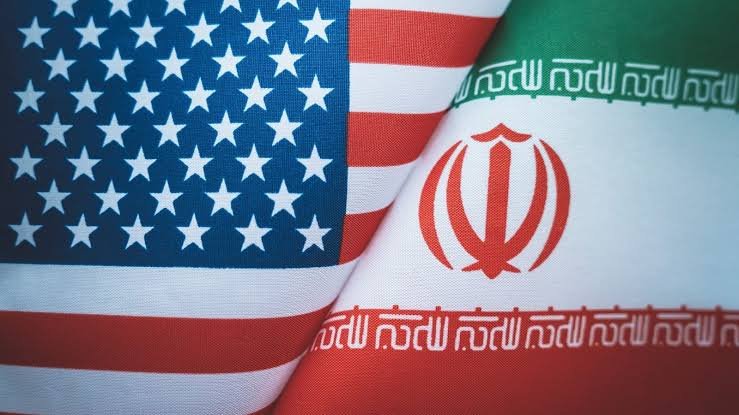
- Hormuz deal talks stalled after Washington ordered Iran’s UN delegation to leave the United States.
- Hormuz deal negotiations could focus first on commercial shipping, maritime security and reciprocal de-escalation.
- Deal implementation would require verification, designated transit routes and step-by-step commitments from both Washington and Tehran.
The expulsion of Iran’s diplomatic delegation from the United States was less a rupture of diplomacy than a signal that Washington had run out of patience with negotiations producing no movement. Secretary of State Marco Rubio ordered Foreign Minister Abbas Araghchi and his delegation to leave New York after U.S.-Iran discussions mediated by Qatar stalled. U.S. officials said the delegation had overstayed its welcome after the UN General Assembly ended, while Iranian officials said Araghchi had already been scheduled to depart.
The New York talks were not simply about reopening the Strait of Hormuz. They linked three difficult files: ending the war, restoring navigation through the world’s critical energy chokepoint and returning to negotiations over Iran’s nuclear programme. Washington has insisted that any settlement address the nuclear issue, while Tehran has sought a reduction in military and economic pressure before making concessions. That sequencing dispute has become the central obstacle.
Iran’s latest proposal attempted to break the deadlock through a seven-day confidence-building process. Tehran offered to reopen Hormuz and resume nuclear discussions if Washington lifted its naval blockade, eased oil sanctions and met other conditions connected to the wider conflict. President Donald Trump rejected the proposal publicly, arguing that Iran was under pressure and should agree to a broader settlement. Qatari mediators have nevertheless continued carrying messages between the sides, and Iran has received a U.S. response through Doha.
Red Sea Houthi Crisis: Why the World Should Fear a New Global Trade Shock
The practical question is whether Hormuz can be separated from the larger confrontation. It probably has to be. A grand bargain covering nuclear policy, sanctions, regional armed groups, war termination and maritime security would be difficult to negotiate and harder to implement. A narrower Hormuz agreement could create the first functioning off-ramp.
Such an agreement would likely begin with a temporary maritime corridor rather than an immediate return to unrestricted traffic. Iran and Oman have already discussed a framework involving a temporary navigational corridor, mine clearance, information-sharing and traffic management.
That distinction matters because commercial navigation can be negotiated without resolving every dispute between Washington and Tehran. It would give mediators room to build confidence around a limited objective: keeping ships moving safely while political negotiations continue.
The essential element is reciprocity. Iran would need to stop attacks, interference, compulsory diversions and other actions against commercial shipping. The United States, in return, would need to scale back blockade operations against qualifying commercial vessels and establish clearly defined transit rules.
Escaping the Hormuz trap: What should an agreement to reopen the Strait look like?
A credible agreement would also require verification. Ships would use designated lanes and agreed communications. Iran, Oman, U.S. naval authorities and international maritime bodies could establish an incident-reporting mechanism. Mine-clearance teams would work under agreed safety procedures, with information about cleared areas transmitted to commercial operators. A multinational monitoring mechanism could document violations.
Sequencing would be crucial. Tehran is unlikely to open Hormuz fully in exchange for promises that Washington might later reverse. Washington is equally unlikely to lift all pressure before seeing measurable Iranian compliance. The structure is therefore step-for-step: limited Iranian maritime de-escalation followed by limited U.S. relief; expanded safe passage followed by further economic measures; and, after sustained compliance, movement toward broader nuclear and sanctions negotiations.
This explains why Rubio’s decision matters but does not necessarily mean diplomacy is finished. The delegation’s departure demonstrates that the political atmosphere has deteriorated, yet Qatar remains engaged and Iran has received a U.S. response.
The danger is that both governments interpret the stalemate as evidence that pressure works better than compromise. That could return the conflict to military escalation, with Hormuz again becoming the principal battlefield.
A deal therefore is unlikely to resemble a sweeping peace treaty. It would more likely be a tightly engineered maritime operating agreement backed by reciprocal political commitments and external monitoring. The June memorandum’s collapse showed the weakness of broad commitments without implementation mechanisms. The next attempt will need precision: who moves first, what happens next, who verifies compliance and what each side receives if the other performs.
For Washington and Tehran, that architecture may offer a practical bridge between confrontation and diplomacy. For the global economy, reopening Hormuz would be the immediate prize.