


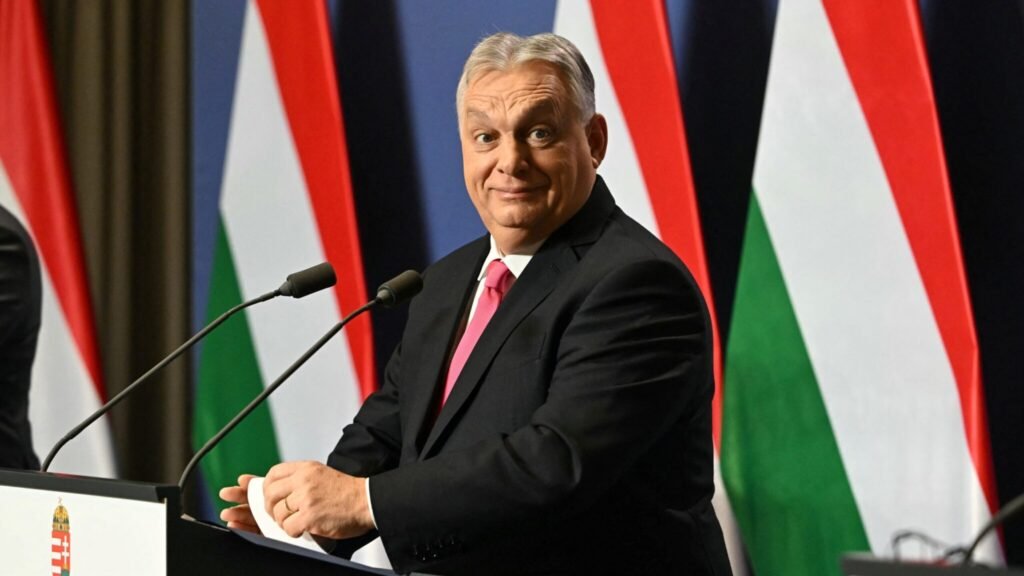
- Hungary Elections 2026 seen as a referendum on war in Ukraine and EU alignment.
- Viktor Orbán likely to win, but with his weakest margin in 16 years.
- Péter Magyar’s Tisza Party surges among youth, challenging Fidesz dominance.
- EU closely watching as Hungary could block key decisions on Ukraine funding and Russian assets.
As Hungary heads toward its pivotal April 12, 2026 parliamentary elections, the political atmosphere feels less like a routine democratic exercise and more like a defining national moment. After sixteen years in power, Viktor Orbán stands on the edge of what could be his most fragile victory yet—one that may secure his leadership, but with a significantly reduced mandate. The Hungary Elections 2026, Hungarian parliamentary election April 2026, and Viktor Orbán election campaign are dominating global political discourse.
This election is widely being framed not merely as a contest between political parties, but as a referendum on Hungary’s place in Europe and its stance on the Ukraine war. Orbán’s campaign has centered on a singular, powerful message: keeping Hungary out of war. He has repeatedly accused Brussels and the European Union of advancing “war plans,” positioning himself as a defender of Hungarian sovereignty. The Hungary EU tensions 2026, Hungary Ukraine war stance, and EU Hungary relations crisis have become defining keywords shaping international analysis.
Hungary Elections 2026: Viktor Orbán Faces His Toughest Challenger in 14 Years of Rule
For many voters, this narrative resonates. If Orbán wins again—even by a narrow margin—it will signal that a substantial portion of the Hungarian electorate prefers a leader who resists deeper involvement in the Ukraine conflict and maintains an independent foreign policy. In that sense, the ballot becomes a geopolitical statement, linking Hungary foreign policy 2026, Europe elections trends 2026, and Ukraine war European politics.
Yet, Orbán’s path to victory is far from assured. His main challenger, Péter Magyar, has rapidly transformed the political landscape through the Tisza Party, energizing younger voters and urban populations. The Tisza Party Hungary, Péter Magyar campaign 2026, and Hungary opposition surge have emerged as key election themes. Polls throughout March 2026 indicate a tight race, with Magyar leading among voters under 30, while Orbán retains dominance among older and rural voters.
Orban’s Hungarian government accused of mass voter intimidation ahead of election
This generational divide could prove decisive. Hungary’s youth, historically less engaged, are showing increased political mobilization through digital platforms and grassroots activism. Meanwhile, Orbán’s base remains deeply rooted in rural Hungary, where Fidesz has built long-standing patronage networks. The Hungary youth vote 2026, rural vs urban voting Hungary, and Fidesz voter base are central to election forecasting.
However, the election is also overshadowed by serious allegations. A controversial investigative documentary has accused the government of widespread voter intimidation, particularly in poorer rural regions. Claims include vote-buying, coercion through local officials, and misuse of state resources. These developments have fueled trending concerns such as Hungary election fraud allegations, voter intimidation Hungary, and democracy concerns Hungary 2026. Government officials have denied wrongdoing, but the controversy has intensified scrutiny.
Trump NATO Paper Tiger Moment: Europe Now Inside Iran’s Expanding Strike Envelope
Beyond domestic politics, the stakes extend across Europe. Hungary under Orbán has frequently clashed with the European Union over rule-of-law issues, judicial independence, and democratic standards. Billions in EU funds remain frozen, tied to reforms demanded by Brussels. The EU rule of law Hungary, EU funds Hungary freeze, and European Commission Hungary dispute remain critical policy flashpoints.
At the same time, the EU is advancing plans to redirect profits from frozen Russian assets to support Ukraine—an initiative Orbán has resisted. A renewed Orbán mandate could complicate these efforts, potentially forcing structural changes such as qualified majority voting or a “multi-speed Europe.” These debates are captured in Russian assets EU Ukraine funding, EU sanctions Russia Hungary veto, and Europe geopolitical strategy 2026.
The global dimension is equally significant. Allies and adversaries alike are watching closely. Critics argue Orbán’s government maintains close ties with Moscow, while supporters describe his approach as pragmatic. Allegations of Russian interference—strongly denied by Hungarian authorities—have further amplified Russia Hungary relations, election interference Europe 2026, and NATO concerns Hungary.
Ultimately, the Hungary Elections 2026 are about more than leadership in Budapest. They will determine whether Hungary continues along a sovereignty-driven path or shifts toward deeper European integration. Even if Viktor Orbán secures victory, the narrow margin expected would mark a turning point—highlighting voter dissatisfaction, generational change, and the erosion of political dominance.
At the same time, it would confirm that a significant segment of Hungarian society supports a leader committed to avoiding entanglement in the Ukraine war, even at the cost of friction with Brussels.
In that sense, the Hungary Elections 2026 are not just a national vote—they are a strategic signal to Europe, NATO, and the wider international system about the future direction of Hungarian politics and its role in a rapidly shifting geopolitical order.