


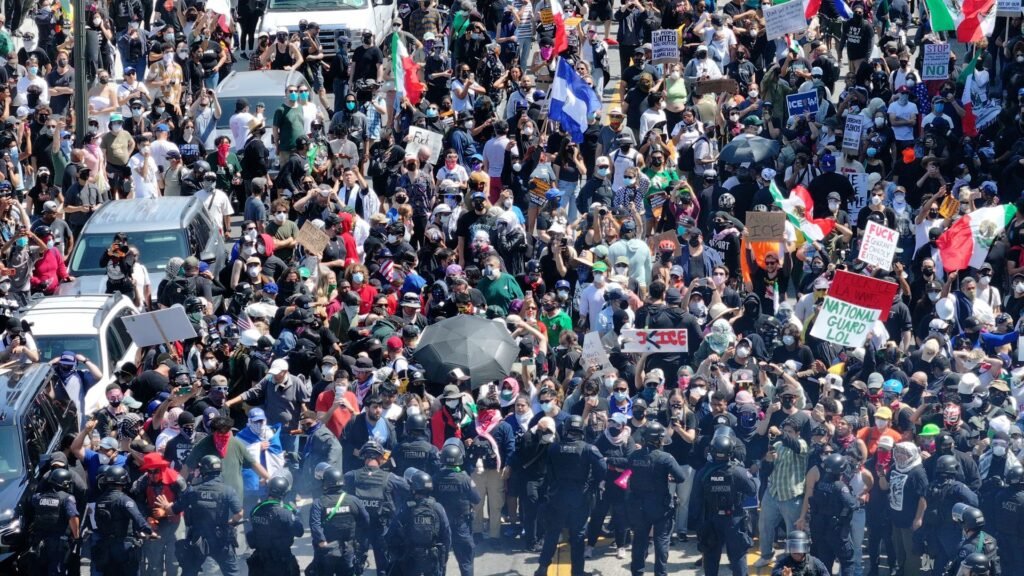
- ICE protests in United States erupted after fatal shootings during immigration enforcement operations in Minneapolis
- Public support for ICE has sharply declined as civilians increasingly block and resist federal raids
- Lawmakers across states demand investigations and legal limits on ICE authority
- Trump administration insists ICE will continue operations to stop illegal migration
WASHINGTON — What began as a high-profile federal crackdown on illegal immigration has rapidly transformed into one of the most significant public backlashes against U.S. Immigration and Customs Enforcement (ICE) in decades, with ordinary Americans turning against an agency they once broadly supported. The shift underscores growing fears that aggressive enforcement is undermining civil liberties and escalating violence rather than advancing public safety.
Nationwide protests, walkouts, and strike actions on January 30 were triggered by two fatal shootings involving federal agents in Minneapolis — including the deaths of Renée Good and Alex Pretti, both U.S. citizens. Graphic videos of the encounters spread rapidly, feeding public outrage and calling into question ICE’s use of force in routine enforcement operations.
The national response has cut across traditional political lines. Democratic lawmakers have been among the sharpest critics of the federal enforcement surge, arguing it reflects unchecked power and a failure of accountability. Several state legislatures are advancing laws to allow lawsuits against ICE agents, aiming to provide civilians legal recourse for alleged abuses.
EXCLUSIVE: Elon Musk Set to Shake Up Chipmaking Industry With $12 Billion xAI Gamble
In Minnesota, home to the Minneapolis shootings, state leaders have been especially vocal. Governor Tim Walz and Minneapolis Mayor Jacob Frey have repeatedly denounced ICE tactics as “reckless” and urged a reduction in federal presence, warning that the deployment has sparked fear and instability in local communities.
https://www.reuters.com/world/us/nationwide-protests-walkouts-planned-over-fatal-ice-shootings-minneapolis-2026-01-30/
Thousands demonstrate in Minnesota and across US to protest ICE
At the federal level, the backlash has spilled into budget battles. The violent confrontations have helped turn Department of Homeland Security funding into a partisan fight in Congress, with some lawmakers threatening to block or condition funding for immigration enforcement until reforms are adopted.
Even within the Republican Party, divisions have emerged. While many conservatives continue to support strict immigration enforcement, some Republican lawmakers are calling for oversight hearings and limits on ICE authority, acknowledging that the political cost of continued clashes with protesters and local officials could be high.
Trump’s Controversial Choice for Intelligence Chief: Tulsi Gabbard’s Nomination Sparks Alarm
In states like Colorado, legislators are confronting angry crowds and facing pressure to respond to constituents outraged by federal actions against civilians. These interactions reflect broader tensions between state political leaders and federal enforcement priorities.
The Justice Department has launched a civil rights investigation into Alex Pretti’s killing, signaling official concern about possible misconduct even as the administration defends its policies.
Public opinion, once supportive of robust immigration enforcement, has shifted sharply. Recent surveys show the administration’s immigration policy at record lows in approval, as Americans question whether current tactics are worth the social and political cost.
As the protests continue and lawmakers debate legislative responses, the crisis may redefine U.S. immigration policy — highlighting a larger struggle over federal power, civil liberties, and the role of enforcement in a democratic society.