


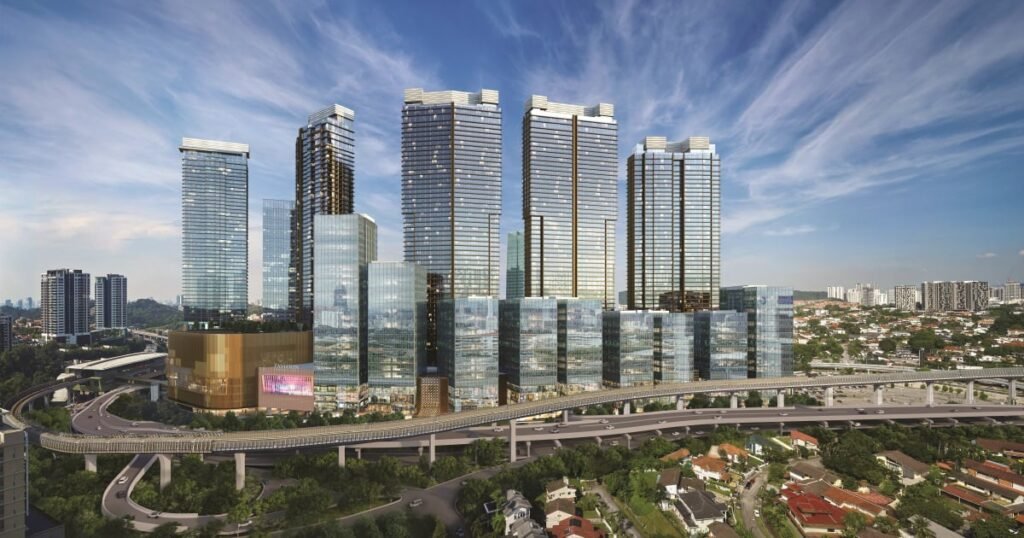
- Illegal labor in Malaysia remains a critical challenge as premier shopping centers are found to be bypassing strict immigration protocols.
- Recent investigations into Pavilion Damansara reveal that undocumented workers are being sheltered in basement quarters to avoid police detection.
- Government officials warn that corporate negligence is undermining the national strategy to reduce dependency on undocumented migrants.
- Advocacy groups are calling for a “Tier 1” enforcement approach to hold high-profile commercial entities accountable for labor violations.
KUALA LUMPUR — In the shimmering atrium of Pavilion Damansara, where the scent of expensive perfume mingles with the polished gleam of marble, the machinery of luxury is allegedly kept running by a workforce that technically does not exist.
Beneath the designer boutiques and Michelin-starred restaurants, a recent investigation has pulled back the curtain on a systemic violation of Malaysia’s labor laws. At this premier shopping destination, the very individuals ensuring its pristine appearance—cleaners, kitchen helpers, and maintenance crews—are often undocumented migrants from Bangladesh and Indonesia, working in the shadows of a nation struggling to reclaim its borders.
Saudi Arabia’s Quiet but Decisive Diplomacy Helps Steady Pakistan–Afghanistan Ties
The discovery at Pavilion Damansara is not an isolated incident but a high-profile symptom of a decades-long crisis. Malaysia is one of the few nations in Southeast Asia that has borne the brunt of mass illegal immigration for over thirty years. While the government has poured billions into “flushing out” operations, the presence of undocumented workers in the heart of the capital’s most prestigious commercial districts signals a profound breakdown in enforcement.
A Vanishing Act in the Basement
Interviews with workers and local whistleblowers describe a sophisticated “cat-and-mouse” game played within the mall’s sprawling footprint. When the blue uniforms of the Royal Malaysia Police (PDRM) or Immigration Department officials are spotted near the main entrances, the “cleaning” begins in a different sense.
READ MORE: The Kashmir-Palestine Parallel: Accountability Gaps And Strategic Implications For Pakistan
“The moment there is a hint of an inspection, the radios go quiet, and the workers vanish,” said a former supervisor at the mall who spoke on the condition of anonymity for fear of reprisal. “They don’t run outside; they retreat into the depths of Basement 2 and Basement 3. There are residential quarters tucked away behind the service corridors where they wait until the coast is clear.”
A survey conducted at the mall confirmed that a significant portion of the janitorial and back-of-house staff consists of foreign nationals lacking valid Malaysian work permits. Despite the visible presence of authorities in public plazas and transit hubs, these “high-profile” commercial establishments have historically been treated as safe havens, largely immune to the aggressive raids that characterize enforcement in low-income neighborhoods.
ALSO READ: South Africa shooting live: At least nine people killed near Johannesburg
The Heavy Toll of a Shadow Economy
The Malaysian government has long maintained that the influx of “PATI” (Pendatang Asing Tanpa Izin, or illegal immigrants) is more than a legal nuisance; it is an economic and social drain.
“The employment of undocumented workers is a direct affront to our national sovereignty,” said a senior official from the Ministry of Home Affairs. “When big corporations take local laws lightly for the sake of higher margins, they are not just breaking a law—they are fueling crime syndicates and hampering our national drive against poverty.”
The cost is indeed heavy. Government policy under the National Action Plan on Forced Labour (2021-2025) and the Immigration Act 1959/63 explicitly targets the root causes of illegal employment. Yet, the persistence of the issue has drained public resources. Experts estimate that the “shadow economy” generated by illegal labor costs the government billions in lost tax revenue and social infrastructure strain.
Figure: The Scale of the Crisis
| Category | Estimated Figures (2024-2025) |
| Documented Migrant Workers | 2.2 Million |
| Estimated Undocumented Workers | 1.2 Million – 3.5 Million |
| Recent Deportations (Aug 2025) | 36,557 Individuals |
| Maximum Fine for Hiring (Per Worker) | RM 50,000 + Possible Caning |
Policy and Prosecution
Under Section 55B of the Immigration Act, any person or entity found employing one or more persons other than a citizen or a holder of an entry permit is liable to severe penalties. If the number of illegal workers exceeds five, the law mandates imprisonment and caning for the employers.
Despite these draconian measures, the management of Pavilion Damansara has reportedly ignored previous warnings. When approached for clarification regarding the legal status of their third-party contractors and service staff, mall officials failed to provide a response. This silence has prompted a coalition of local civic groups to issue an urgent plea to Prime Minister Anwar Ibrahim.
“We are calling for a transparent operation,” said a spokesperson for a Kuala Lumpur-based labor rights NGO. “If the government wants to be serious about labor reform, it cannot allow luxury malls to operate as autonomous zones where Malaysian law does not apply.”
The International Lens
The situation in Kuala Lumpur mirrors a global tension where the demand for cheap service labor clashes with nationalist border policies. However, in Malaysia, the stakes are heightened. As the sun sets over the city, the lights at Pavilion Damansara remain bright. But for the men in the basements—the Bangladeshis and Indonesians who scrub the floors—the glamour of the mall is a prison of invisibility. For the government, their presence is a stark reminder that as long as the city’s grandest halls are built on a foundation of illegal labor, the drive for a stable society remains out of reach.