


-
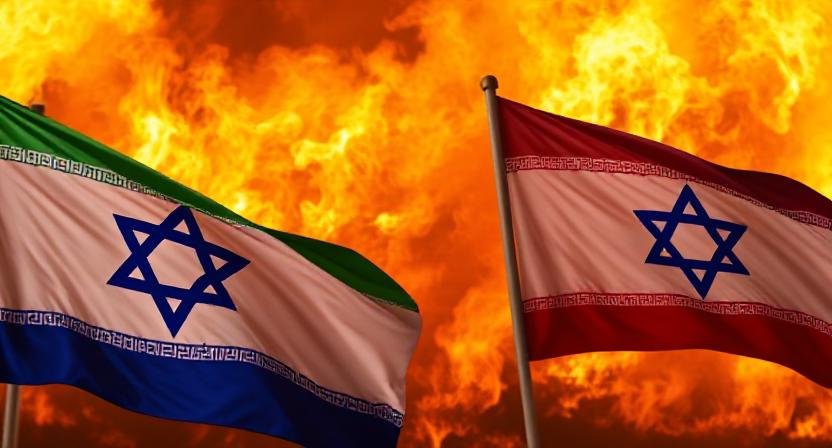
Israel’s Natanz Strike Escalates Tensions: In a dramatic move, Israel bombed Iran’s main nuclear facility in Natanz, marking a turning point in their covert conflict.
-
Iran Retaliates with Drone Strikes: Tehran launched drones at Israeli targets, signaling the beginning of direct and potentially sustained military exchanges.
-
Global Markets in Turmoil: Oil prices surged over 6%, gold jumped to $3,440/oz, and stock futures sank as investors fled to safe-haven assets amid fears of a broader war.
-
Hospitals on High Alert: Medical facilities in both Iran and Israel are preparing for casualties, indicating expectations of further escalation.
By striking the heart of Iran’s nuclear infrastructure and assassinating key military leaders, Israel has crossed a dangerous threshold. The overnight escalation — culminating in a precision attack on the Natanz enrichment facility and retaliatory drone strikes from Tehran — has sent global markets into a tailspin, placed hospitals in both nations on high alert, and pushed an already unstable region closer to a broader war.
A Calculated Strike — or a Costly Miscalculation?
Israeli Prime Minister Benjamin Netanyahu confirmed Thursday night that the Israeli Air Force had successfully hit Iran’s “main enrichment facility in Natanz.” This was not just another shadow operation — it was a full-throttle kinetic blow to the epicenter of Iran’s nuclear ambitions. The message was unmistakable: Israel intends not just to delay, but to dismantle Iran’s nuclear capability.
Natanz is where Iran has enriched the vast majority of its uranium over the past decade. And in recent years, it’s where Iran pushed enrichment to 60% — just a short sprint from weapons-grade. The stakes were high. But the consequences of striking are proving even higher.
Iran Retaliates — and the Region Holds Its Breath
Iran responded within hours, launching a volley of drones at Israeli targets. Though most were intercepted by Israel’s advanced air defenses, a few caused structural damage near key military installations. The retaliatory barrage was limited — for now.
Middle East on the Edge: Israel Kills Iran’s Top Generals in Devastating Strikes on Nuclear Sites
But Iranian officials have promised “further action at a time and place of our choosing.” That’s a dangerous promise in a region where proxy forces — from Lebanon to Iraq to Yemen — stand ready to escalate on Iran’s behalf.
Hospitals in Tehran and major Israeli cities have been placed on high alert, preparing for mass casualty events amid fears that additional attacks — whether retaliatory or preemptive — may be imminent.
Iran, Israel Tension: Markets Reel from the Shockwaves
Global financial markets felt the tremors immediately. Brent crude futures surged by over 6%, peaking above $73 a barrel — a clear signal that traders are now pricing in long-term regional instability. Gold, the traditional safe haven in times of geopolitical stress, jumped 1% to above $3,440 a troy ounce. Meanwhile, stock futures tied to the S&P 500, Dow, and Nasdaq all tumbled more than 1%, and the Israeli shekel fell over 1% against the dollar.
The CBOE Volatility Index (VIX), often called Wall Street’s “fear gauge,” surged above 21 — crossing the threshold that typically indicates investor panic.
READ MORE: Israel strikes Iran; Tehran launches drones in retaliation, IDF says
For average Americans, this may soon mean more than jittery headlines: higher fuel prices at the pump and inflationary pressure on consumer goods. Early signs suggest consumer sentiment was already weakening — and if the conflict deepens, economic pessimism could intensify rapidly.
The United Nations and Regional Powers Respond
UN Secretary-General António Guterres issued a stern condemnation Friday morning, warning that “military escalation in the Middle East must stop.” He noted the attack on nuclear facilities comes amid sensitive backchannel talks between Tehran and Washington over the future of the Iranian nuclear program — negotiations that may now be dead on arrival.
Saudi Arabia, long wary of both Iran’s ambitions and Israel’s assertiveness, took an unusually strong stance. A Foreign Ministry statement condemned the Israeli action as a “blatant aggression” and a “violation of international law and norms.” Riyadh’s tone is noteworthy: this is no mere diplomatic concern — it’s a public signal that Arab capitals may not quietly tolerate a full-scale war in their neighborhood, even if it involves their longtime adversary, Iran.
A Risky History Repeats Itself
This is not the first time Israel has acted decisively to stall Iran’s nuclear program. The Stuxnet cyberattack, developed jointly with the U.S., famously crippled thousands of Iranian centrifuges in 2009–2010. It delayed enrichment, but only temporarily. Subsequent years saw Israel shift tactics — assassinating scientists, sabotaging infrastructure, and even blowing up advanced centrifuge workshops.
Yet despite these efforts, Iran’s program endured. Only the 2015 Joint Comprehensive Plan of Action (JCPOA) truly curtailed uranium production, capping enrichment and exporting 97% of Iran’s fuel stockpile. But that deal unraveled in 2018 when President Donald Trump pulled the U.S. out, triggering Iran’s slow, steady return to high-level enrichment.
MUST READ: Exclusive: China Slaps 6-Month Limit on Rare Earth Exports to U.S. Amid Fragile Trade Truce
In many ways, Thursday’s attack is a direct consequence of that unraveling. By abandoning diplomacy, Washington may have cleared the path for Israel’s bombs to fall.
What Lies Beneath the Mountain
Still unanswered is whether Israel struck Fordow — the fortified enrichment facility buried nearly half a mile underground. According to U.S. and IAEA officials, Fordow is protected by layers of stone and concrete that even the most powerful bunker-busting munitions struggle to penetrate. If Fordow remains intact, so too may the core of Iran’s nuclear infrastructure.
Brett McGurk, a key U.S. Middle East envoy under multiple presidents, put it bluntly: “If you don’t get Fordow, you haven’t eliminated their ability to produce weapons-grade material.”
The Real Cost of Deterrence
Netanyahu’s calculus is clear: stop Iran now, before it’s too late. His government believes that Tehran’s breakout window — the time it would take to produce a nuclear weapon — had narrowed to less than a year. In his televised address, he cited intelligence suggesting Iran now has enough enriched uranium for nine bombs.
But even if the strike proves tactically successful, the strategic consequences could be dire. Iran may now exit the Nuclear Nonproliferation Treaty entirely, expel inspectors, and move its program underground — not just figuratively, but literally. And with its nuclear scientists now targeted, the regime has every incentive to accelerate covert weaponization efforts in defiance of international oversight.
The Edge of the Abyss
The Middle East stands on a knife’s edge. Israel’s boldest operation yet against Iran’s nuclear program has shattered years of uneasy status quo. What comes next could reshape the region for a generation — for better, or for far worse.
If Iran retaliates with full force — or activates its proxies across Syria, Lebanon, Iraq, and Yemen — a regional war could engulf U.S. allies and shipping routes, spike global oil prices, and fuel a new refugee crisis. If diplomacy somehow survives this crucible, it will require extraordinary restraint and creativity from Washington, Brussels, Riyadh, and yes — even Tehran.
But for now, the only certainty is volatility — on the battlefield, in the markets, and across a region haunted by history and driven by high-stakes ambition.