


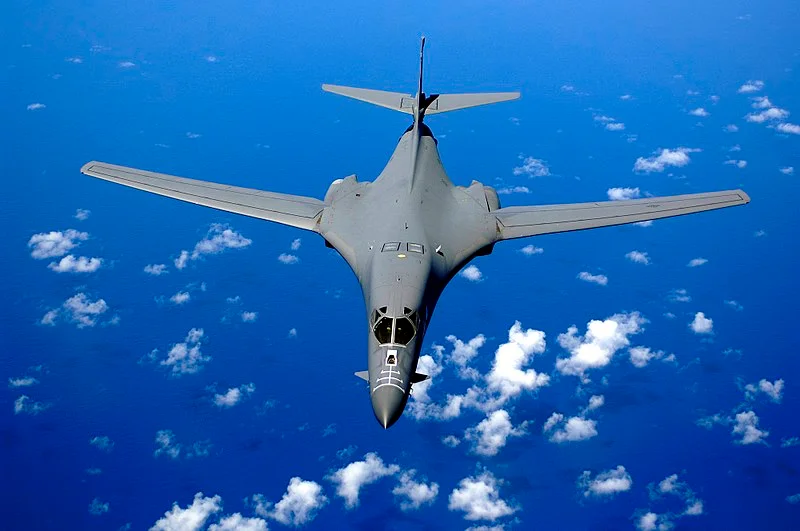
- U.S. Military Deployment: Seven stealth bombers are stationed in the Indian Ocean, raising concerns about imminent strikes on Iran.
- Iran Nuclear Deal Crisis: Trump’s pressure campaign has led to Iran rejecting key terms, heightening tensions between Washington and Tehran.
- Regional Fallout: A potential U.S.-Iran conflict could destabilize Iraq, Afghanistan, and Pakistan, while disrupting global oil markets.
- Russia’s Role: Putin may counter a U.S. attack on Iran through diplomatic pushback, military aid, cyberwarfare, or oil market manipulation.
The world stands at a precipice. In the vast waters of the Indian Ocean, seven U.S. stealth bombers sit ominously, fully armed and within striking range of Iran. It is a chilling display of power—one that has sent ripples of anxiety across Tehran, Washington, and beyond. President Donald Trump, known for his high-stakes brinkmanship, has issued an ultimatum: agree to a tougher nuclear deal or face the consequences. But with Iran rejecting key U.S. demands, the question looms—how far is Trump willing to go?
This is not just a test of American resolve. A U.S. attack on Iran could trigger a regional conflagration, drawing in Israel, Saudi Arabia, and Iranian proxies from Yemen to Lebanon. Russia, Tehran’s staunch ally, has warned against military intervention, raising the stakes of a geopolitical showdown. Meanwhile, Iran’s neighbors—Pakistan, Afghanistan, and Iraq—brace for the fallout.
As tensions soar and military assets shift into position, the world watches in suspense. Will diplomacy prevail at the eleventh hour, or are we witnessing the first moves of a war that could reshape the Middle East? The countdown has begun, and history is poised on the edge of a knife.
The Shadow of War: U.S. Bombers Docked in the Indian Ocean
Of all the U.S. stealth bombers, seven are now docked in the Indian Ocean—fully equipped, engines primed, their payloads meticulously calculated. Their presence alone is a statement, a reminder of America’s air superiority and its willingness to act. As news of Trump’s possible war plans ripples across Tehran and beyond, shock waves are already being felt from Islamabad to Baghdad. Is this the overture to war, or just another high-stakes round of brinkmanship?
A Military Maneuver or a Prelude to Conflict?
The Pentagon insists this is routine deployment, but history suggests otherwise. Strategic positioning of bombers in forward bases has often been a precursor to military action. The B-2 Spirits and B-52 Stratofortresses, stationed within strike range of Tehran, could rain destruction over Iranian military facilities, nuclear sites, and infrastructure within hours.
For now, the White House remains silent. Trump, whose presidency was defined by unpredictability, has long viewed Iran as the cornerstone of his hardline foreign policy. The question is whether this show of force is designed to push Iran into accepting a U.S.-drafted nuclear deal—or if it signals something far more ominous.
Trump’s Last Gambit: A New Nuclear Deal or War?
Trump’s animosity toward the Iran nuclear deal has been well documented. Since unilaterally withdrawing from the Joint Comprehensive Plan of Action (JCPOA) in 2018, he has sought to forge a stricter agreement, one that shackles Iran’s missile program and its regional proxy network. The economic war waged through sanctions aimed to force Tehran’s hand, yet Iran remained defiant.
US Deploys B-2 Spirit Stealth Bombers to Diego Garcia in Indian Ocean in a Strong Signal to Iran.
Recently, Iran issued a formal response to Trump’s latest offer, rejecting key terms. Iranian officials cite sovereignty concerns and the right to nuclear development for peaceful purposes. Trump, known for his penchant for decisive action, now faces a pivotal choice—accept the diplomatic impasse or escalate militarily. Given his track record, the latter seems increasingly likely.
The Middle East on Edge: A War Waiting to Ignite?
Iran has been preparing for such a moment for years. The Islamic Revolutionary Guard Corps (IRGC) has strengthened its missile defenses, expanded its cyber warfare capabilities, and reinforced its network of militias stretching from Iraq to Lebanon and Yemen. A U.S. strike would not be met with silence. Retaliation could come in many forms—ballistic missile salvos on U.S. bases in the Gulf, cyberattacks on American infrastructure, or direct confrontations via Hezbollah and Houthi fighters.
A war between the U.S. and Iran would not be contained. It would ripple across the Middle East, with Saudi Arabia, Israel, and Turkey inevitably drawn into the conflict. The Strait of Hormuz, through which a fifth of the world’s oil flows, could become a battleground, sending energy markets into chaos.
Already, the region is on edge. A recent attack on U.S. military outposts—allegedly carried out by Iranian-backed forces—has only added fuel to an already combustible situation.
Israel’s Masterful Strategy: Navigating Relations with Russia Amid Global Tensions
Putin’s Dilemma: Will Russia Intervene?
The Kremlin has long viewed Iran as a strategic ally, a counterweight to U.S. influence in the region. Russian President Vladimir Putin has warned against military action, calling it a “catastrophic miscalculation.” But would Moscow step in if Washington moves forward with an attack?
Several possibilities loom:
- Diplomatic backlash: Russia could rally the United Nations and align with China to isolate the U.S. on the world stage.
- Military support: While unlikely to engage in direct conflict, Russia could supply Iran with advanced air-defense systems, intelligence support, and weaponry.
- Cyberwarfare: Russian and Iranian cyber units could coordinate digital strikes against U.S. infrastructure, targeting energy grids, financial institutions, and military assets.
- Oil leverage: A U.S.-Iran war could trigger Russia to manipulate oil markets, either by restricting supply or forming a stronger alliance with Saudi Arabia to control pricing.
How Will Iran’s Neighbors React?
A U.S. assault on Iran will not occur in a vacuum. Its consequences will reverberate across South Asia and the Middle East, forcing key players—Pakistan, Afghanistan, and Iraq—to take sides.
- Pakistan: Straddling a delicate balance between the U.S., Saudi Arabia, and Iran, Pakistan finds itself in a precarious position. While its military has longstanding ties with Washington, Pakistan also shares cultural, religious, and economic links with Iran. Islamabad could attempt to mediate, but a full-scale war could push it into an unavoidable diplomatic crisis.
- Afghanistan: Still reeling from decades of war, Afghanistan remains vulnerable to external instability. A U.S.-Iran conflict could see Tehran backing anti-U.S. factions within the country, complicating an already fragile situation.
- Iraq: Perhaps the most affected, Iraq hosts both American troops and powerful Iran-backed militias. A U.S.-Iran war could turn Baghdad into a war zone, with Shia militias launching attacks on American installations and further destabilizing the country.
What’s Next? A Last Chance for Diplomacy
With the deadline approaching, Trump stands at a crossroads. He can push for last-minute diplomacy, seeking to extract concessions from Iran in exchange for sanctions relief, or he can take the more aggressive path—military confrontation. Iran, for its part, remains defiant. Supreme Leader Ayatollah Ali Khamenei has vowed that any attack would be met with “unprecedented” retaliation.
Back-channel negotiations remain a faint glimmer of hope. But with bombers already positioned, one miscalculation—one rogue attack, one misunderstood maneuver—could be all it takes to ignite the most dangerous conflict in the Middle East in decades.
The World Holds Its Breath
Trump’s deadline for Iran is more than a policy decision—it is a defining moment in global geopolitics. The world watches as Washington, Tehran, and Moscow engage in a dangerous game of power and provocation. Whether the crisis ends in diplomacy or devastation will depend on the next move—one that could either prevent a war or plunge the Middle East into chaos.
As the countdown continues, one question remains: Will Trump press the button? Or will the art of the deal triumph over the art of war?