


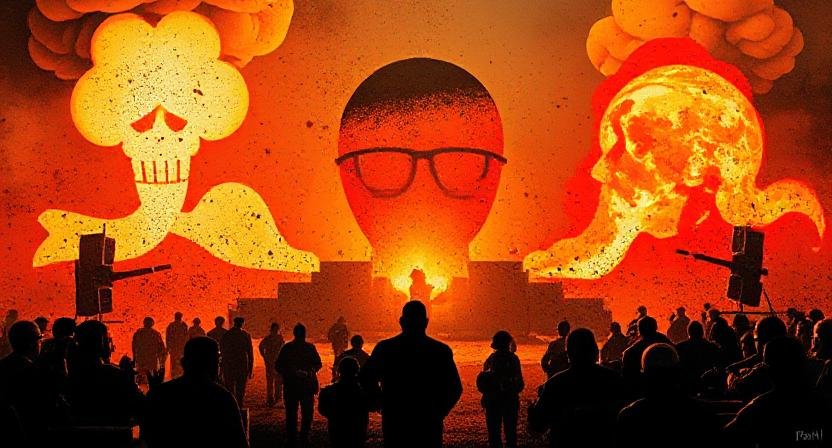
- Intercepted communications reveal Iran’s top officials downplaying the damage from Iran nuclear strikes.
- Trump administration insists Iran nuclear strikes dealt a severe blow to Tehran’s capabilities, but experts disagree.
- Intelligence sources suggest Iran nuclear strikes may have set back Iran’s program by months, not years.
- Regional tensions rise as Iran nuclear strikes spark fears of further escalation or nuclear acceleration.
In the smoldering aftermath of the United States’ audacious Iran nuclear strikes, a complex and dangerous new phase in the decades-long confrontation between Washington and Tehran is quietly taking shape.
Iranian officials, while visibly angered and vowing strategic revenge, have privately acknowledged that the damage inflicted by President Donald Trump’s Iran nuclear strikes—hailed by the White House as a “total obliteration”—was far less severe than publicly claimed. This revelation, confirmed through intercepted Iranian communications shared with The Islamabad Telegraph by senior intelligence sources, suggests that Iran’s nuclear ambitions, though bruised, remain far from extinguished.
Iran Expected More Devastation From Iran Nuclear Strikes
“We were prepared for far greater devastation,” a senior Iranian official told The Islamabad Telegraph in a background briefing from Tehran, requesting anonymity. “The Iran nuclear strikes caused some damage but our key capabilities, our knowledge, and our determination remain intact.”
In exclusive background interviews with both Iranian and U.S. officials, The Islamabad Telegraph has learned that the damage assessment is far murkier than President Trump’s celebratory declarations suggest. According to four sources familiar with classified U.S. intelligence, intercepted signals from Iranian leadership revealed surprise at the limited scope of destruction at the nuclear facilities in Fordow, Natanz, and Isfahan—sites that have long been at the heart of Iran’s uranium enrichment program.
“We believe they moved sensitive material beforehand, possibly as part of standard precautionary procedures,” said a senior Western intelligence official, speaking on condition of anonymity.
US Intelligence Divided Over Iran Nuclear Strikes Impact
While the Trump administration boasts that the use of 30,000-pound “bunker buster” bombs and Tomahawk missiles decimated Iran’s enrichment capacity, some within the U.S. intelligence community remain cautious. CIA Director John Ratcliffe reportedly told lawmakers in classified briefings that although some facilities were destroyed, others may have survived, and Iran’s nuclear knowledge base is “untouchable.”
READ MORE: Mideast on Edge as Trump and Netanyahu Prepare Critical Talks Amid Iran-Israel Tension
“The real issue isn’t just infrastructure—it’s expertise,” said Dr. Mahdi Rostami, a former nuclear negotiator now based in Vienna. “You cannot bomb scientific knowledge. Iran’s technical personnel, the intellectual architecture—those remain.”
This nuanced assessment has sparked unease in Washington and among America’s allies. Sen. Chris Murphy (D-Connecticut), speaking to reporters after a classified briefing, warned: “The president is misleading the public. Iran’s capabilities were set back by months, not years. And the door to diplomacy is rapidly closing.”
Tehran’s Response to Iran Nuclear Strikes: Anger and Restraint
On the streets of Tehran, anger simmers. In interviews with The Islamabad Telegraph, ordinary Iranians voiced a mixture of frustration, fury, and grim determination in response to the Iran nuclear strikes.
“We will rebuild,” said Ali Reza, a student at Tehran University. “We’ve faced war, sanctions, assassinations. This is nothing new. America cannot break us.”
ALSO READ: Iran Retaliates and Israel Vows More Strikes After Devastating Attack
Supreme Leader Ayatollah Ali Khamenei echoed this defiance, calling Trump’s claims of “obliteration” a dangerous exaggeration. “They attacked our nuclear facilities, but they achieved nothing important,” Khamenei said in televised remarks.
Tehran, insiders suggest, is carefully weighing its next steps. Senior Iranian diplomats privately acknowledge that a hasty response to the Iran nuclear strikes could trigger wider regional war—a scenario both Iran and the U.S. are keen to avoid.
“The strike has angered decision-makers but it hasn’t broken their strategic patience,” said a senior European diplomat involved in backchannel talks.
Global Stakes of Iran Nuclear Strikes: Diplomacy or Escalation?
In a surprising twist, Trump announced that U.S. and Iranian officials might meet to discuss the resumption of nuclear negotiations following the Iran nuclear strikes. But Iran’s Foreign Minister Abbas Araghchi swiftly rejected the prospect, telling The Islamabad Telegraph that “no meaningful dialogue can take place under bombardment.”
Critics warn that Trump’s military gamble may have made diplomacy even harder. “You don’t build trust through airstrikes,” said Trita Parsi, Executive Vice President of the Quincy Institute. “Iran may now accelerate its nuclear program as an insurance policy against future attacks.”
Indeed, intelligence reports suggest Iran had not yet decided to pursue an actual nuclear weapon before the strike. The question now is whether this military escalation has hardened Tehran’s resolve to cross that threshold.
Regional Fallout of Iran Nuclear Strikes: Tensions on a Knife’s Edge
The ripple effects of the Iran nuclear strikes extend beyond Iran’s borders. Israel, widely believed to have assisted in preliminary air defense suppression, remains on high alert. Saudi Arabia and the UAE have quietly welcomed the strike but fear becoming collateral damage in any Iranian retaliation.
“The region is a powder keg,” said Dr. Hassan Moazami, an Iranian defense analyst. “If Tehran decides to respond kinetically, we could see tit-for-tat escalation from Syria to the Persian Gulf.”
At the International Atomic Energy Agency, Director General Rafael Mariano Grossi offered a cautious assessment: “Serious damage was inflicted, but not total destruction. Some capabilities remain.”
Bigger Picture of Iran Nuclear Strikes: Shadows of Past Conflicts
Veteran observers see echoes of the 2010 Stuxnet cyber sabotage and the 2020 assassination of Qassem Soleimani in this latest chapter of Iran nuclear strikes. Each time, short-term tactical victories have failed to translate into long-term strategic change.
“The West keeps making the same mistake,” said Dr. Vali Nasr, professor of International Politics at Johns Hopkins University. “Without a diplomatic pathway, military action only reinforces Iran’s narrative of victimhood and resistance.”
Conclusion: Iran Nuclear Strikes Push Region to Dangerous Crossroads
As Iran sifts through the rubble and the U.S. basks in a fleeting military triumph, the world stands at a dangerous crossroads following the Iran nuclear strikes. With both sides publicly posturing but privately wary of uncontrolled escalation, the future of the Middle East’s fragile balance now hangs by a thread.
For now, Tehran’s nuclear program has suffered a blow—but the spirit of resistance, and the technical knowledge to rebuild, remain defiantly alive.