


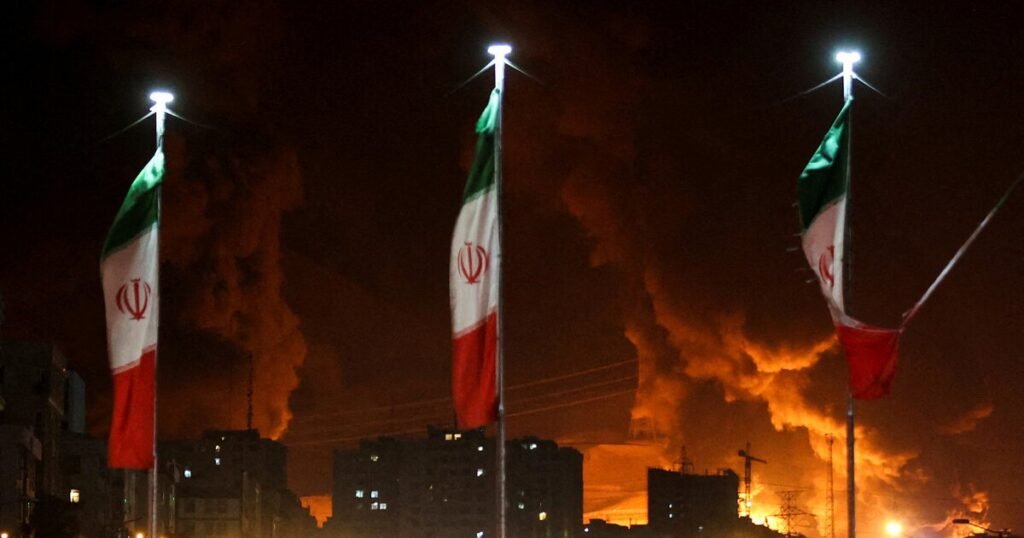
- Iran Regime Is Caught Between the Fire at Home and the Fury Abroad, facing unprecedented economic collapse alongside direct military threats from Washington.
- Domestic protests have morphed from economic grievances into a direct challenge to the state’s legitimacy.
- President Trump’s recent warnings of potential strikes on Iranian soil have escalated the risk of a two-front conflict.
- Despite the internal chaos, the IRGC and security apparatus remain unified, though international pressure is mounting.
Iran’s Regime Is Caught Between the Fire at Home and the Fury Abroad
Iran currently stands at its most dangerous crossroads since the Islamic Republic emerged from revolution nearly half a century ago. The country is burning—quite literally—as swelling crowds pour into the streets of major cities and provincial towns to rail against hyperinflation, joblessness, and the skyrocketing cost of living. Just as domestic fury pushes the system to the brink, Washington has intensified the pressure.
U.S. President Donald Trump—following last year’s targeted bombing campaign—has issued a stark warning that the United States may “hit targets inside Iran soon.” For Tehran’s rulers, the signal is unmistakable: strike lists are finalized, targets are identified, and the planes are ready for departure.
Suddenly, the Iranian leadership is sandwiched between two existential threats—one rising from within, and the other from the world’s most powerful military.
The Street Is Speaking—and the Regime Isn’t Listening
The protests engulfing Iran did not begin as a revolution. They started as a cry for help from a population buckling under intolerable economic weight. Inflation has surpassed the levels predicted by even the most pessimistic economists; the currency has collapsed, and ordinary Iranians now find themselves unable to afford basic groceries or rent.
However, what began as complaints over bread prices has morphed into a direct assault on the state itself. From Tehran to Mashhad, the world is witnessing scenes unseen since 2019: burning tires, shuttered markets, and security forces firing into crowds.
Rights groups, including HRANA, have documented at least 62 deaths—48 civilians and 14 security personnel—though the true tally is likely much higher. To stifle the flow of information, the Ministry of ICT has imposed widespread internet blackouts, leaving families in agony and cut off from the world.
Despite the chaos, the establishment views the threat as contained. These protests are powerful but remain fragmented and leaderless. The ruling system has survived decades of sanctions, assassinations, and cyber warfare. While last year’s U.S.–Israel strikes were intended to fracture the republic, the security apparatus—specifically the IRGC—remains loyal to Ayatollah Ali Khamenei.
Enter Donald Trump, Again
The American president’s rhetoric has added a volatile new layer to the crisis. “You better not start shooting because we’ll start shooting too,” Trump declared, using language more akin to a barroom challenge than traditional diplomacy.
This is not empty rhetoric. Having authorized strikes last summer, Trump has kept military planners on high alert. For Tehran, this transforms a domestic crisis into a national security emergency. It creates a vicious cycle: the more violently the regime cracks down on its people, the more Washington justifies intervention. Conversely, the more Washington threatens, the more Tehran feels it must use force to prove it still controls its own streets.
Trump’s decision not to meet with the exiled Crown Prince, Reza Pahlavi, suggests a strategic “wait-and-see” approach. Washington is observing whether the fire burns itself out or ignites a genuine political transition.
Iran Regime Stands Firm—and Trembles Quietly
The Supreme Leader has vowed not to budge, dismissing protesters as puppets of foreign interests. Meanwhile, the judiciary is threatening death sentences for those captured in the streets. Despite this, the chants of “Death to Khamenei!” continue to echo through metro stations and public squares.
European leaders and the United Nations have condemned the use of deadly force, and international airlines are canceling flights to the region. The world is watching, and Tehran is acutely aware of its isolation.
Will the Regime Survive?
For now, the answer is likely yes. The Iranian government is battered but far from broken. The protests, while vast, lack the organizational structure necessary to topple a sophisticated security state.
However, history teaches us that revolutions rarely happen overnight. They simmer, fracture the system from within, and strike when the state is at its weakest. Trump’s warnings have introduced a hovering variable that could strike the moment Washington deems the situation “ripe.”
Iran has survived wars and insurrections before, but no regime can indefinitely ignore the combined weight of an angry populace and a hostile superpower. Tehran stands at a precipice; the question is no longer whether it can survive this moment, but whether it can survive the many more like it that are sure to come.