


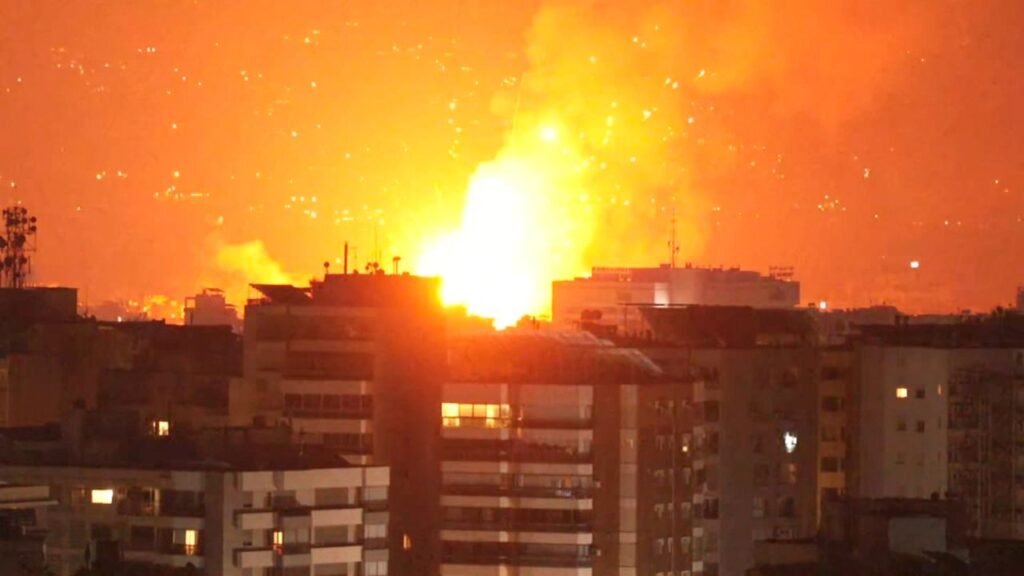
- Israel launches massive pre-emptive strike on Iran’s nuclear sites, killing top generals and targeting missile infrastructure.
- Iran vows “harsh punishment” as explosions rock Tehran; civilian casualties reported, including children.
- Middle East braces for escalation as U.S. bases go on alert, oil prices spike, and Hezbollah threatens retaliation.
- Global leaders scramble to prevent wider war; U.S. denies involvement, Russia and China condemn Israeli actions.
Headline: “Middle East on the Brink: Israel Launches Massive Strikes on Iran, Killing Top Generals and Hitting Nuclear Sites”
By [Your Name], International Desk | June 13, 2025
Jerusalem/Tehran — A rapidly escalating military confrontation erupted across the Middle East on Friday after Israel launched a sweeping and unprecedented series of airstrikes deep inside Iran, targeting its nuclear infrastructure, top military commanders, and missile production facilities. The strikes, codenamed Operation Rising Lion, triggered chaos on the ground in Iran, sent oil markets into a tailspin, and plunged the region into a state of extreme volatility.
The Israeli military claimed the operation was a pre-emptive move to dismantle Iran’s nuclear capability and degrade its ability to wage war. Iranian officials vowed a crushing retaliation, raising fears that the long-standing cold conflict between the two regional adversaries could spiral into a full-scale war engulfing neighboring states.
“We are at a decisive moment in Israel’s history,” Israeli Prime Minister Benjamin Netanyahu declared in a televised address shortly after dawn. “This operation will continue for as many days as it takes to remove the Iranian threat to Israel’s very survival.”
Death from the Sky: Israel Targets Iran’s Strategic Nerve Centers
Israeli jets reportedly penetrated Iranian airspace from multiple vectors, evading defenses to hit high-value targets including the Natanz uranium enrichment facility—considered the crown jewel of Iran’s nuclear program. Other reported targets included ballistic missile factories in Isfahan, underground weapons labs, air defense systems, and the homes and offices of senior Iranian officials.
Iranian state media confirmed the death of several top generals in what may be the most devastating single blow to its military leadership since the 1980s Iran-Iraq War. Among those killed were:
-
Gen. Mohammad Bagheri, Iran’s Chief of the Armed Forces and second only to the Supreme Leader in military authority.
-
Gen. Hossein Salami, Commander of the Islamic Revolutionary Guard Corps (IRGC).
-
Gen. Gholamali Rashid, Deputy Commander-in-Chief of Iran’s military operations.
Explosions rocked the capital, Tehran, and videos broadcast on Iranian state television showed smoke plumes rising from bombed-out buildings, some in residential areas. Officials reported civilian casualties, including the deaths of children in a strike near a school in central Tehran.
READ MORE: Israel Launches Attack on Iran’s Nuclear Facilities: Live Updates
“Israel and its American allies will receive a forceful slap,” warned a spokesman for the Iranian Armed Forces. In a message read on national television, Iran’s Supreme Leader Ayatollah Ali Khamenei promised “a harsh punishment” and vowed that “Zionist cities will not sleep soundly again.”
Panic in Israel: Bracing for Iran’s Retaliation
In anticipation of Iranian missile and drone attacks, Israel declared a national state of emergency. Air raid sirens wailed across northern Israel, and Iron Dome batteries were repositioned around strategic assets. Hospitals in Tel Aviv and Jerusalem were ordered onto emergency footing. The Hadassah Medical Center said it was discharging stable patients and suspending elective procedures.
Schools, malls, and offices across much of Israel remained shuttered. Bomb shelters were opened in major cities, and thousands of Israelis rushed to stock up on essentials, fearing days or weeks of incoming fire.
MUST READ: Analysis: A Fragile Thaw in U.S.-China Economic Cold War—But at What Cost?
Defense analysts warned that Iran’s response may not be limited to Israeli territory. With proxy networks in Iraq, Syria, Lebanon, and Yemen, Tehran could activate Hezbollah or mobilize its allies to target U.S. bases and Israeli interests across the Middle East.
Regional Flashpoints on Edge
The strike and the potential for Iranian retaliation sent shockwaves across the region:
-
Iraq: The U.S. Embassy in Baghdad was evacuated, and American forces stationed at Al Asad Airbase were put on high alert. Reports indicated rocket fire had already begun targeting U.S.-linked facilities in the Green Zone.
-
Lebanon: Hezbollah’s Secretary General Hassan Nasrallah called Israel’s action “an act of war against all of us,” signaling that the Iran-backed militia may join the conflict.
-
Yemen: Houthi rebels in Sana’a threatened to launch missile attacks against both Israel and American naval assets in the Red Sea.
-
Gulf States: Saudi Arabia and the UAE called for de-escalation but moved to increase security around oil facilities and key infrastructure. Bahrain, home to the U.S. Fifth Fleet, raised its threat level.
Global Reactions: Diplomacy on the Ropes
World leaders scrambled to contain the fallout.
-
United States: Secretary of State Marco Rubio said Israel had acted “unilaterally” and without direct U.S. participation. He warned Iran not to attack U.S. troops or facilities. “This is Israel’s decision for its own survival, but we will defend our personnel if necessary,” Rubio stated from Brussels, where he was attending emergency NATO consultations.
-
Russia: President Vladimir Putin condemned the Israeli strikes and warned of “uncontrollable escalation.” Moscow called for an emergency session of the UN Security Council.
-
China: Beijing demanded an immediate ceasefire, calling the Israeli attack a “gross violation of international norms.” Chinese energy companies, heavily reliant on Iranian oil, began halting shipments through the Strait of Hormuz.
-
European Union: European leaders, including Germany and France, urged “maximum restraint” and appealed to both sides to return to diplomacy. French President Emmanuel Macron reportedly called Netanyahu and Iran’s Foreign Minister within hours of the strike.
Oil Markets in Turmoil
The geopolitical shockwaves reached global markets as crude oil prices soared. Brent crude futures surged by 8%, hitting $75 a barrel, amid fears that Iran might retaliate by disrupting traffic through the Strait of Hormuz, a strategic chokepoint through which nearly 20% of the world’s oil supply flows.
Iranian Revolutionary Guards Navy units were reportedly mobilizing near the Strait, raising the prospect of maritime confrontations or a blockade.
Wall Street opened lower, and defense stocks soared. Analysts warned that if the situation deteriorates further, oil could spike to over $100 a barrel, triggering ripple effects across global economies already grappling with inflation and sluggish growth.
Uncertain Future for US-Iran Nuclear Talks
The attack also cast a long shadow over efforts by President Donald Trump to broker a new nuclear agreement with Iran. Trump, in a statement released from Mar-a-Lago, said he had advised Israel against military action but understood “its legitimate right to self-defense.”
The status of a high-stakes meeting between Trump’s special envoy, Steve Witkoff, and Iranian Foreign Minister Hossein Amir-Abdollahian—scheduled for Sunday in Muscat, Oman—remains unclear.
“This operation may have killed diplomacy,” said a senior European diplomat familiar with the negotiations. “It’s hard to imagine Iran sitting across from the same people who they believe enabled this attack.”
A Region Poised for War
As night falls across the Middle East, the world watches with bated breath. With its top generals dead and nuclear ambitions crippled, Iran now faces an existential decision—whether to strike back and risk regional conflagration or seek calculated revenge over time.
In Israel, the mood is grim yet defiant. “We will not allow another Holocaust,” declared Defense Minister Yoav Gallant. “We struck first because we had to. And we are ready for what comes next.”
Whether this marks the opening salvo in a broader regional war—or the final gasp before back-channel diplomacy resumes—is now a question that may be answered in the skies over Tel Aviv and Tehran.
Follow this developing story for updates on regional reactions, oil markets, military movements, and international diplomacy.