


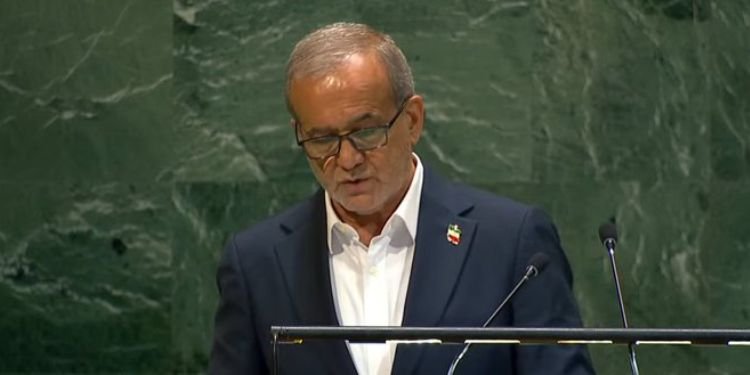
- U.N. sanctions return: Arms embargo, uranium enrichment bans, asset freezes, and travel restrictions hit Iran once more.
- Iran under pressure: The rial plunges to record lows as Tehran recalls ambassadors and warns of a “harsh response.”
- West vs. Iran: U.S., U.K., and EU insist sanctions are leverage for diplomacy; Israel demands stricter vigilance.
- Global divide deepens: Russia and China reject the sanctions as “illegitimate,” exposing fractures in world order.
The clock struck eight on Saturday night in New York, and with it, the weight of history descended once more on Iran. The United Nations reimposed sweeping sanctions—arms embargoes, uranium enrichment bans, travel restrictions, and asset freezes—that had been dormant since the 2015 nuclear deal. What was once hailed as a diplomatic breakthrough is now officially buried, its promises scattered across the battlefields of mistrust and geopolitical rivalry.
For Iran, this means more than frozen accounts and blocked oil exports. It is a suffocating reminder that the country has lived under sanctions for most of its modern history—each round cutting deeper into its economy, each round strengthening the hand of its hardliners.
Britain’s Bold Recognition of Palestine Has Redrawn the Map of Global Diplomacy
The new sanctions, triggered by Britain, France, and Germany, follow accusations that Tehran violated the nuclear accord meant to prevent it from building a bomb. Iran insists it never sought nuclear weapons, that its program is peaceful. Yet the symbolism matters more than the fine print. Once again, the Islamic Republic is cast as the world’s pariah, and once again, it vows to resist.
The Meaning of Sanctions for Iran
Inside Tehran, the impact is immediate and brutal. The rial currency slid to record lows on Saturday, sinking beyond 1.1 million per U.S. dollar. Inflation, already suffocating, is set to worsen. Oil exports—the backbone of Iran’s economy—face sharper restrictions. The Revolutionary Guards, adept at smuggling and black-market profiteering, will adapt, but ordinary Iranians will pay the steepest price: higher food costs, fewer jobs, dwindling medicine supplies.
READ MORE: United Nations arms embargo, other sanctions reimposed on Iran
President Masoud Pezeshkian has tried to project calm. He reassured that Iran will remain inside the Non-Proliferation Treaty and insisted, “Iran will never seek nuclear weapons.” But his words cannot mask the reality: sanctions hollow out hope. They erode the middle class, silence reformists, and deepen the narrative that the West is committed not to peace, but to suffocation.
The United Nations and the Western Powers
The reimposition of sanctions is not just about Iran—it is about the United Nations itself. The Security Council vote this week, rejecting a Russian-Chinese bid to delay sanctions, underscored the institution’s fragility. Russia’s Sergei Lavrov thundered that the snapback was “unlawful” and warned Secretary-General Antonio Guterres not to legitimize it. Yet within hours, the U.N. website had been updated to reflect the new restrictions. The message was clear: the machinery of multilateralism, however contested, still grinds on.
ALSO READ: IAEA Chief Pressures Iran to Allow Nuclear Inspections After U.S.-Israel Strikes, Warns Time Is Running Out
For Britain, France, and Germany—the so-called E3—the move was framed as a matter of credibility. “We urge Iran and all states to abide fully by these resolutions,” their foreign ministers declared. They left the door open to talks, but only if Tehran restored access to nuclear inspectors and scaled back its enrichment.
Washington’s line was sharper. U.S. Secretary of State Marco Rubio, echoing President Trump, insisted that sanctions are not the end of diplomacy but the leverage to force it. “Iran must accept direct talks, held in good faith,” Rubio said. “Until then, sanctions must be implemented immediately to pressure Iran’s leaders to do what is right for their nation, and best for the safety of the world.”
Israel’s Shadow
Hovering behind the sanctions debate is Israel, which only months ago joined the U.S. in bombing Iranian nuclear facilities. At the U.N. General Assembly, Prime Minister Benjamin Netanyahu was unapologetic. “We lifted a dark cloud that could have claimed millions of lives,” he said, warning that Iran’s enriched uranium stockpiles “must be eliminated.” For Israel, diplomacy is tolerated, but deterrence is enforced with warplanes, not words.
The Future: Escalation or Diplomacy’s Last Breath?
Sanctions are supposed to be a bridge back to negotiations. Yet history suggests they more often act as accelerants of confrontation. Tehran has already recalled its ambassadors from London, Paris, and Berlin. Its proxies in Lebanon, Syria, and Yemen may soon answer in kind, targeting Western or Israeli interests. Nuclear brinkmanship looms: Iran could enrich uranium faster, daring the West to strike again.
For Russia and China, Iran’s isolation is a weapon against Western dominance. By rejecting the sanctions as “illegitimate,” they signal that global governance is fractured—that the U.N. is no longer a consensus forum but a battlefield of competing blocs.
Conclusion
The return of U.N. sanctions on Iran is more than a legal mechanism. It is a theater where questions of sovereignty, legitimacy, and survival are played out. For the West, it is about enforcing red lines. For Israel, it is about existential vigilance. For Iran, it is about resisting what it sees as economic warfare. And for the United Nations, it is about proving it still matters in a world that increasingly doubts it does.
Whether this moment becomes a bridge to new diplomacy or the spark of fresh conflict depends not just on Tehran, but on whether global powers see sanctions as tools of pressure—or as the prelude to a much darker war.