


- Iran War Escalation intensifies after the assassination of a top Iranian security chief, marking a dangerous new phase in the conflict
- Supreme Leader Mojtaba Khamenei rejects ceasefire efforts and signals further retaliation against the U.S. and Israel
- Iran leverages control over the Strait of Hormuz to disrupt global oil flows and pressure Gulf economies
- Despite heavy strikes, the Islamic Revolutionary Guard Corps strengthens grip as Iran’s regime consolidates power rather than collapsing
The Iran war entered a dangerous new phase on Tuesday after Israel Katz announced that Iran’s top security figure Ali Larijani had been killed in an اسرائیلی strike—an escalation that underscores the intensifying campaign to dismantle Tehran’s command structure.
The assassination marks one of the most significant targeted killings since the start of the conflict and signals that Israel’s strategy remains focused on decapitating Iran’s security and political leadership. Yet, instead of forcing Tehran toward compromise, the development appears to have hardened its resolve.
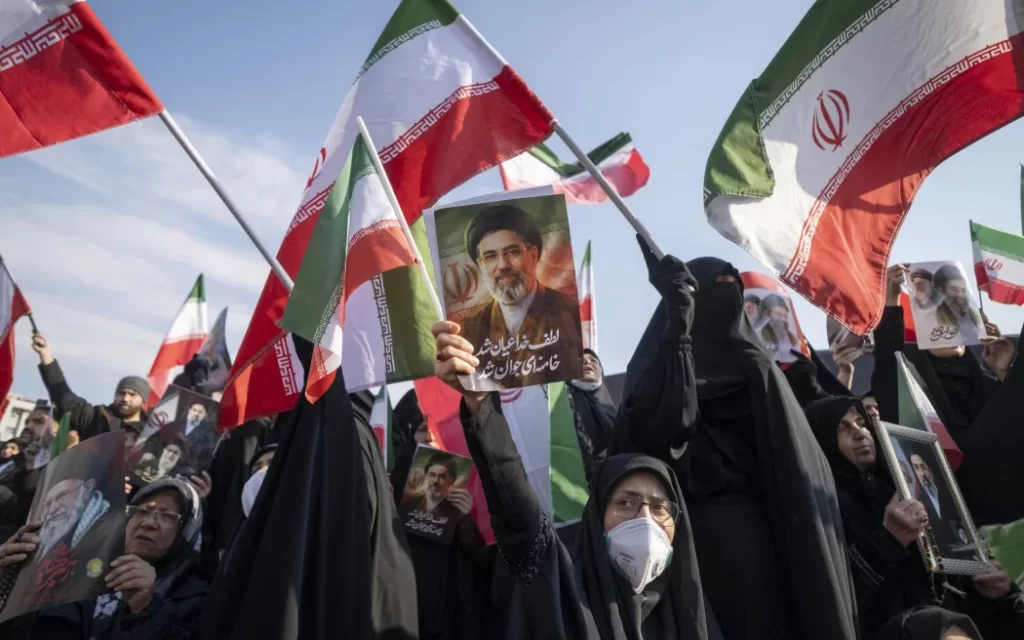
Iran’s Supreme Leader, Mojtaba Khamenei, has rejected all backchannel efforts aimed at reducing tensions or securing a ceasefire with the United States, according to senior officials familiar with the discussions. Sources told The Islamabad Telegraph that Khamenei enjoys “immense public backing” inside Iran and is in “no mood to give up,” choosing instead to escalate pressure on Washington and its regional allies.
US–Iran War: Russia Urges Washington and Israel to Halt Strikes on Iran
Officials say Tehran’s strategic doctrine has now shifted decisively: rather than seeking a negotiated exit, Iran aims to prolong the conflict and expand its regional impact. The primary objective, according to these sources, is to tarnish and destabilize U.S.-aligned Gulf economies—an effort that appears to be yielding early results.
Through sustained drone and missile operations and its control over the Strait of Hormuz, Iran has effectively turned the Gulf into a high-risk zone for global shipping, investors, and tourists. Energy flows have slowed, insurance costs have surged, and market confidence has been shaken across the region.
U.S. intelligence says Iran’s regime is consolidating power
Despite more than two weeks of relentless U.S.-Israeli strikes targeting over 15,000 sites, Iran’s regime remains intact. The killing of former Supreme Leader Ali Khamenei and multiple senior commanders has dealt a severe blow to Iran’s military hierarchy, but it has not translated into political collapse.
On the contrary, intelligence assessments indicate that the Islamic Republic has consolidated internally. The Islamic Revolutionary Guard Corps (IRGC) has expanded its influence, tightening its grip over security, governance, and the economy. Analysts increasingly describe a more centralized and hard-line system emerging from the war—one that is less vulnerable to internal dissent and more resistant to external pressure.
“There is no indication that the regime is going anywhere,” a regional security analyst said. “If anything, it has gained ground by surviving the most intense military assault in its history.”
The war has also exposed strategic miscalculations in Washington. Donald Trump acknowledged surprise at Iran’s wide-ranging retaliation, which has targeted Saudi Arabia, United Arab Emirates, Qatar, Bahrain, and Kuwait. However, officials familiar with pre-war intelligence assessments say such retaliation was always considered a likely scenario.
For Gulf states, the conflict has become an economic and security nightmare. Critical infrastructure, airports, and even civilian zones have come under threat, exposing vulnerabilities despite advanced defense systems. Investor confidence has been shaken, and long-term economic diversification plans now face uncertainty.
Yet, the impact has not been uniform across the region. Cities like Dubai and Abu Dhabi have so far retained their status as global tourism and investment hubs. Daily life in the UAE continues largely uninterrupted, with business activity and travel flows remaining stable.
However, analysts warn that this resilience may not hold if the conflict drags on. A prolonged war, combined with sustained threats to maritime security and regional stability, could eventually erode the Gulf’s appeal as a safe destination for capital and tourism.
Israel, too, faces mounting costs. While it has succeeded in degrading Iran’s military capabilities and eliminating key figures, it has not achieved its broader objective of destabilizing the regime. Instead, the conflict risks entrenching a more radicalized and militarized Iran.
As the war continues, the balance sheet is becoming clearer: Iran, though battered, remains defiant and politically consolidated; the United States faces rising costs and strategic uncertainty; and Gulf states and Israel are grappling with the unintended consequences of a conflict that shows little sign of ending.
In the evolving calculus of the Iran war, survival itself may be Tehran’s greatest victory—and a signal that the region is entering a prolonged and more volatile phase of confrontation.