


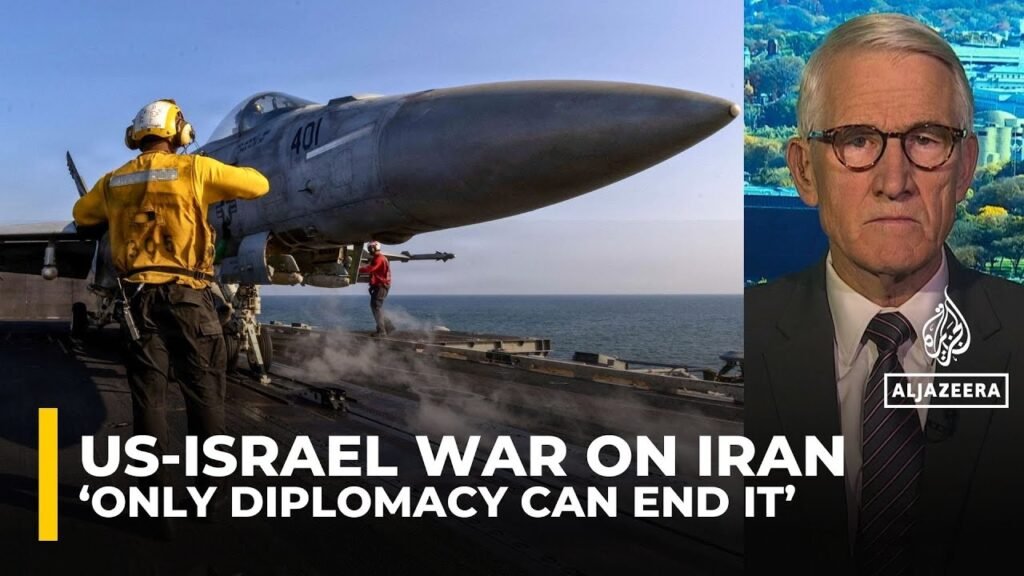
- Iran war escalation expands with drone attack on U.S. diplomatic facility in Iraq
- Gulf states scramble to intercept Iranian missiles and drones
- Pentagon confirms 140 U.S. troops wounded since conflict began
- Oil markets fluctuate amid fears of Strait of Hormuz disruption
The Iran war escalation continues to intensify across the Middle East as Iranian-backed militias expand their retaliatory attacks and regional powers scramble to intercept missiles and drones. Nearly two weeks into the conflict triggered by U.S. and Israeli strikes on Iranian leadership and military infrastructure, the battlefield has expanded across Iraq, the Gulf, Israel, and Lebanon.
A suspected militia drone strike targeting a major U.S. diplomatic logistics hub in Baghdad on Tuesday illustrated the widening nature of the Iran war escalation, raising fears that the conflict could engulf more states and destabilize energy markets despite recent declines in oil prices.
According to U.S. officials and internal alerts reviewed by media outlets, six drones were launched toward the Baghdad Diplomatic Support Center, a major logistical base supporting American diplomatic operations near Baghdad International Airport. Five drones were intercepted by air defenses, but one drone struck near a guard tower inside the facility.
Officials said no casualties were immediately reported, though security protocols required personnel to “duck and cover” as accountability checks continued across the compound. The strike is widely believed to have been carried out by factions operating under the umbrella of the Islamic Resistance in Iraq, a coalition of Iranian-backed militias.
The attack underscores how the Iran war escalation is increasingly shifting toward asymmetric warfare. Tehran’s network of regional proxies—from Iraqi militias to Hezbollah fighters in Lebanon—are now playing a more prominent role in targeting U.S. interests across the region.
Gulf States on High Alert
The expanding Iran war escalation has forced Gulf countries including Saudi Arabia, Qatar, the United Arab Emirates, Oman, and Iraq to activate advanced air defense systems to intercept Iranian missiles and drones. Several U.S. bases in the region—including Al Udeid in Qatar and Al Dhafra in the UAE—have faced repeated attack attempts.
Drone hits U.S. diplomatic facility in Iraq as Mideast violence deepens
Qatar’s foreign ministry confirmed this week that Doha intends to deepen its defense cooperation with Washington after Iranian missile strikes targeted its territory during the early days of the conflict. Officials emphasized that the security partnership with the United States remains a key deterrent.
Iran’s Revolutionary Guard has also threatened to block oil shipments through the Strait of Hormuz, a move that could disrupt nearly one-fifth of the world’s energy supply. Such threats have intensified global concerns about the broader economic consequences of the Iran war escalation.
U.S. Casualties and Military Pressure
Pentagon officials confirmed that approximately 140 U.S. service members have been wounded since the start of the conflict on February 28. While most injuries were classified as minor, eight troops remain seriously wounded.
Russia Iran U.S Targeting: Moscow’s Covert Role in Escalating Middle East Conflict
Seven American soldiers have been killed so far, including several in a drone strike on a U.S. installation in Kuwait. The casualty figures reveal the growing human cost of the Iran war escalation, even as Washington claims significant military progress against Iranian forces.
U.S. military officials say American air and naval operations have significantly degraded Iran’s missile launch capacity. According to the chairman of the Joint Chiefs of Staff, Iranian ballistic missile attacks have dropped by roughly 90 percent since the war began, while drone launches have decreased by 83 percent.
However, analysts caution that the decline may not indicate a permanent reduction in Iranian capabilities. Some defense experts believe Tehran could be conserving its remaining missile inventory for strategic strikes later in the conflict—a scenario that could prolong the Iran war escalation.
Markets React, but Uncertainty Remains
Global oil markets initially surged after the conflict erupted, pushing crude prices to multi-year highs amid fears that supply routes through the Persian Gulf could be disrupted. However, prices retreated sharply after U.S. President Donald Trump suggested the war could end soon.
Trump’s remarks helped calm financial markets, but analysts warn that the relief may be temporary. The continuing Iran war escalation and ongoing missile exchanges across the region suggest that the conflict remains far from resolution.
Energy traders remain particularly concerned about shipping routes through the Strait of Hormuz, where Iranian forces have reportedly deployed naval mines and missile units capable of threatening oil tankers.
War Expands Across Multiple Fronts
The conflict is no longer confined to Iran and Israel. Israeli air strikes have intensified in Lebanon as the Israeli military targets Hezbollah positions linked to Iran’s regional network. Meanwhile, millions of Israelis have been repeatedly forced into bomb shelters as Iranian missiles continue to be launched toward Israeli territory.
Inside Iran, the government has tightened internal security amid fears that wartime pressure could spark anti-government protests. Authorities warned that any demonstrations during the conflict would be treated as collaboration with enemy forces.
Despite heavy bombardment, Iran’s leadership remains in power following the death of the country’s previous supreme leader during the opening stages of the war. His successor, Mojtaba Khamenei, has sought to consolidate authority while mobilizing nationalist support.
Strategic Outlook
Military analysts say the trajectory of the Iran war escalation now depends on three critical factors: the durability of Iran’s missile capabilities, the willingness of regional proxy groups to intensify attacks, and Washington’s long-term military objectives.
While U.S. officials claim early battlefield success, the expansion of attacks across Iraq and the Gulf suggests that the Iran war escalation could evolve into a prolonged regional confrontation involving multiple armed groups and fragile states.
For now, diplomatic efforts led by Gulf countries and international mediators are attempting to prevent the Iran war escalation from spiraling into a wider Middle East war that could reshape regional alliances and disrupt global energy markets.