

- UAE leadership swiftly ensured compensation and long-term support for families of Pakistani martyrs after the missile debris tragedy
- Despite regional tensions, the UAE continues to protect and host nearly 500,000 Iranians, reflecting exceptional humanitarian commitment
- Strong governance and advanced security systems have kept life, business, and tourism fully stable across the UAE
- The UAE reinforces its global leadership through restraint, diplomacy, and unwavering commitment to peace and regional stability
It began, as so many crises in the Gulf now seem to begin, not with a siren but with a fragment—metal falling from the sky.
In the early hours, when the desert air over the Emirates still carries a deceptive calm, debris from an intercepted Iranian missile descended in scattered arcs. Among the casualties were foreign expatriates—workers, fathers, men who had left their homes in search of stability and livelihood. The news traveled quickly through the tightly coordinated corridors of power in United Arab Emirates, but what followed was not panic. It was grief—measured, immediate, and deeply personal.
Within hours, according to senior diplomatic sources and later confirmed in an exclusive interview, the President of the UAE, Mohamed bin Zayed Al Nahyan, issued direct instructions. The families of the victims—particularly those in Pakistan—were to be located, supported, compensated, and, crucially, cared for in the long term. Not as a gesture of diplomacy, but as a matter of principle.
UAE Embassy Marks 54th Union Day in Islamabad With Grandeur, Diplomacy, and a Vision for the Future
This instinct—to respond to tragedy not only with security but with responsibility—formed the emotional backdrop of a rare and wide-ranging conversation with Salem Alzaabi, the UAE’s Ambassador to Pakistan. Sitting in Islamabad, thousands of miles from the impact site, he spoke not in abstractions, but in assurances already set in motion.

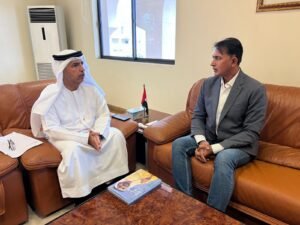
“We are in direct contact with the families of the three Pakistani martyrs,” he said, his tone deliberate. “Our leadership has ensured full support, compensation, and long-term care for them.”
The word “martyrs” was not incidental. It reflected a cultural and political framing that elevated the victims beyond statistics—into a shared narrative of sacrifice, one that binds the UAE and Pakistan through decades of labor migration, mutual reliance, and quiet solidarity.
We are in direct contact with the families of the three Pakistani martyrs. Our leadership has ensured full support, compensation, and long-term care for them.
Behind the scenes, The Islamabad Telegraph has learned, Emirati authorities had already begun outreach—phone calls placed, documentation processed, financial packages structured. It was a response executed with the same efficiency that has come to define the Emirati state, but also with an unmistakable human imprint.
Why are Iranian leaders sending mixed messages on Gulf attacks?
And yet, even as the UAE absorbed the shock of a missile-related incident on its soil, another reality persisted—one that complicates the simplistic binaries of conflict.
Nearly 500,000 Iranians continue to live and work in the UAE.
Despite the escalation, despite the rhetoric, despite the risks, they remain. And more remarkably, they are being protected.
“The UAE prioritizes the safety of all residents and visitors,” Ambassador Alzaabi said, emphasizing that the country’s security frameworks do not discriminate by nationality. “Comprehensive systems are fully operational, and authorities maintain transparent communication to ensure awareness and confidence.”
Dubai Business Recovery After Iran GCC Apology: How UAE Leadership and Pakistan’s Asim Munir Stabilized the Gulf
It is a striking paradox: a nation targeted by hostile actions, yet continuing to safeguard a large population connected to the very country at the center of those tensions. It speaks to a broader Emirati doctrine—one that separates geopolitics from governance, conflict from coexistence.
In cities like Abu Dhabi and Dubai, life continues with an almost studied normalcy. Skyscrapers gleam, flights arrive on schedule, restaurants fill each evening with a polyglot mix of languages and accents. According to the ambassador, this is no illusion.

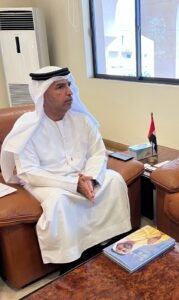
“The UAE continues to enjoy a high level of stability and security,” he said. “All sectors are operating efficiently. Recent incidents have been handled with utmost professionalism and preparedness.”
That preparedness is not accidental. Over the past decade, the UAE has invested heavily in advanced surveillance systems, integrated defense mechanisms, and rapid-response protocols. But what sets it apart, analysts say, is not just the hardware—it is the governance philosophy underpinning it.
Strong institutions, proactive leadership, and an almost corporate emphasis on continuity have allowed the UAE to absorb shocks without visible disruption. Business activities, tourism, and daily life proceed uninterrupted—not because threats do not exist, but because they are managed with precision.
Perhaps the most telling indicator of this resilience lies not in official statements, but in the behavior of the expatriate community itself.

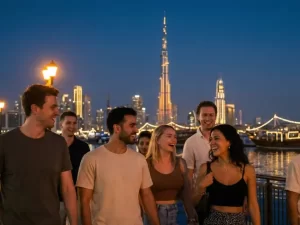
“Most expatriates have chosen to remain in the UAE and continue their professional activities,” Alzaabi noted. “It reflects deep trust in the country’s governance, safety, and resilience.”
Indeed, at a time when global headlines might suggest uncertainty, the ground reality tells a different story: millions choosing to stay. In some cases, even refusing to leave when given the option.
This trust has been cultivated over years, through policies designed not only to attract talent but to retain it. Long-term residency visas, tax incentives, and a regulatory environment that prioritizes ease of doing business have transformed the UAE into a magnet for global professionals.
“The UAE continues to implement forward-looking policies,” the ambassador said, framing these initiatives as part of a broader vision—one that positions the country as a hub where talent, innovation, and investment converge.
But beyond economics, there is a diplomatic dimension to the UAE’s current posture—one that becomes increasingly critical as regional tensions simmer.
“The UAE remains firmly committed to diplomacy and dialogue,” Alzaabi emphasized. “We believe dialogue is the only sustainable path to regional stability.”
This commitment is not merely rhetorical. The UAE has actively engaged with international partners, including major global powers, to promote de-escalation. It has also worked closely within the Gulf Cooperation Council (GCC), maintaining coordination on both security and diplomatic fronts.
“GCC countries maintain close coordination,” he said. “The UAE plays a constructive role in promoting unity, stability, and collective security.”
Notably, despite the escalation, no missiles have been launched from the UAE or other GCC states toward Iran. It is a restraint that speaks volumes.
“This reflects our principled commitment to responsibility and peace,” the ambassador said. “We do not seek escalation, though we retain the right to self-defense.”
In an era where retaliation often becomes reflex, the UAE’s measured approach stands out. It is a strategy rooted not in passivity, but in calculation—an understanding that stability, once lost, is far harder to restore.
The economic dimension of this stability cannot be overstated. The UAE’s diversified economy—spanning finance, tourism, logistics, and technology—provides a buffer against external shocks. Contingency plans are in place to ensure continuity, including in critical sectors like oil exports.
Yet, perhaps the most compelling aspect of the UAE’s response lies in its human dimension.
The quiet outreach to Pakistani families.
The continued protection of Iranian residents.
The unwavering support for a multinational population that calls the Emirates home.
These are not policies easily quantified, but they form the moral architecture of the state.
“The resilience of the UAE is reflected in the confidence of its people,” Alzaabi said in a closing reflection that felt less like a diplomatic statement and more like a thesis. “Millions of residents continue to live, work, and thrive here because they trust its leadership, its systems, and its unwavering commitment to stability, security, and opportunity.”
For Pakistan, this relationship carries particular weight. More than 2.3 million Pakistanis live in the UAE, forming one of the largest expatriate communities in the country. They are not just workers—they are stakeholders in a shared future.
And in moments of crisis, as the recent tragedy has shown, that future is not abstract. It is tangible, immediate, and deeply interconnected.
In the end, what emerges from this conversation is not just a portrait of a nation under pressure, but of a state that has chosen—deliberately and consistently—to respond with composure, compassion, and control.
In a region often defined by volatility, the UAE is making a different argument.
That stability is not the absence of conflict, but the presence of leadership.