


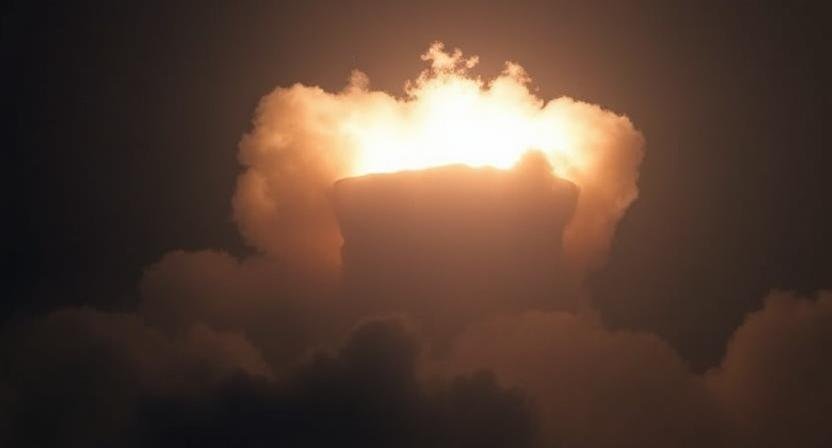
- Massive Damage Confirmed: Iran’s Foreign Minister admitted that U.S. and Israeli strikes caused “significant and serious” damage to nuclear facilities at Fordo, Natanz, and Isfahan.
- Uranium Stockpile Mystery: U.S. intelligence and IAEA officials disagree on the fate of Iran’s 880-pound stockpile of enriched uranium, sparking global concern.
- Diplomacy on Edge: Iran threatens to cut ties with the IAEA and denies confirming any talks with the U.S., despite President Trump’s calls for renewed negotiations.
- Nuclear Setback, Not End: Experts warn that Iran’s ability to rebuild or operate hidden nuclear sites could allow it to resume bomb-making efforts within months.
Tehran — Nearly two weeks after devastating U.S. and Israeli airstrikes pummeled Iran’s key nuclear facilities, the full scale of the damage is still emerging—and with it, growing uncertainty about the fate of Iran’s stockpile of enriched uranium and the country’s future nuclear ambitions.
According to Iranian Foreign Minister Abbas Araghchi, the country’s nuclear infrastructure has suffered “significant and serious damages.” In a rare admission broadcast on state television Thursday, Araghchi said Iran’s Atomic Energy Organization is still assessing the losses but stressed that the strikes caused “heavy and undeniable setbacks.”
Breaking: U.S. Strikes on Iran “Severely Damaged” Nuclear Program, New CIA Assessment Reveals
This is the first official acknowledgment by a senior Iranian official of the extent of damage inflicted during last week’s precision air raids targeting Fordo, Natanz, and Isfahan—three of Iran’s most critical nuclear sites.
Meanwhile, conflicting reports continue to swirl around a key issue: what happened to Iran’s 880-pound stockpile of 60% enriched uranium, material that could—if further enriched—be enough for up to 10 nuclear bombs.
What Was Hit?
The U.S. strikes, coordinated with Israeli forces, targeted three strategic locations:
-
Fordo: Built deep inside a mountain and fortified to withstand most conventional attacks, the Fordo site was pounded by U.S. B-2 bombers using 30,000-pound bunker-buster bombs. Intelligence and satellite imagery suggest the site’s centrifuge halls are no longer operational. “These centrifuges are toast,” said IAEA Director General Rafael Grossi.
-
Natanz: Iran’s largest enrichment center was hit by multiple Israeli missiles and U.S. cruise missiles, destroying both above-ground infrastructure and damaging underground enrichment halls. The IAEA confirmed “direct impacts” to vital sections of the facility.
-
Isfahan: A critical site for uranium conversion and metal processing, Isfahan sustained major damage. A U.S. submarine-launched missile barrage reportedly destroyed the under-construction enriched uranium metal processing facility, which could have played a vital role in weaponizing nuclear fuel.
Where is the Uranium?
Even more unsettling than the damage itself is what remains unknown: the status of Iran’s highly enriched uranium. U.S. officials say intelligence is contradictory.
READ MORE: What We Know About the Fate of Iran’s Nuclear Program After Israeli and U.S. Strikes
President Donald Trump declared on social media that “nothing was taken out of the facility” and that the uranium “was destroyed or buried” during the strikes. National Security sources said that moving such heavy material would have been difficult under surveillance and time constraints.
But international inspectors and some Western intelligence officials say otherwise. Grossi said the uranium was stored in small containers, easily transportable. “You could fit it in a car trunk,” he noted. Days before the strike, the IAEA reportedly observed unusual vehicle movements at Isfahan.
“There is strong evidence Iran moved part of the uranium,” a European official told reporters on Thursday, citing preliminary assessments. Rafael Grossi also confirmed that while the IAEA last verified the stockpile a week before the attacks, “evidence points to a lot of it being moved.”
The U.S. intelligence community has yet to reach a firm conclusion. Some Iranian officials, according to intercepted communications, themselves appear unaware of the exact status or location of the stockpile.
Iran’s Political Divide
Inside Iran, reactions to the strike vary.
Supreme Leader Ayatollah Ali Khamenei attempted to downplay the destruction, calling President Trump’s claims “exaggerated” and asserting the attacks had failed to do “anything important.”
ALSO READ: Breaking News: Trump Confirms U.S.-Iran Nuclear Talks Set for Next Month Despite Tensions Over Cease-Fire, Bombings
In stark contrast, Foreign Minister Araghchi admitted the seriousness of the damage and warned that Iran might end cooperation with the International Atomic Energy Agency (IAEA), a move seen by analysts as an attempt to leverage diplomatic pressure. “Our relationship with the agency will take a different shape,” Araghchi warned.
On Thursday, Iran’s Guardian Council approved a hardline bill barring IAEA cooperation—though its implementation depends on moderate President Masoud Pezeshkian’s decision. Araghchi hinted the government would comply with the bill, calling it “a legal obligation.”
The Future of Diplomacy
Despite calls for renewed talks, prospects for U.S.-Iran negotiations remain murky. President Trump and his special Middle East envoy, Steve Witkoff, insist that diplomatic channels remain open. “We’re ready to talk, but only from a position of strength,” Witkoff said at the NATO summit.
But Araghchi dismissed reports of imminent talks. “No meeting has been agreed upon,” he said, adding that Iran’s post-strike diplomacy would be shaped by “national interest” and the “new reality” created by the attacks.
The two sides appear to be talking past each other—for now.
Experts Warn: Not Over Yet
Analysts caution against assuming Iran’s nuclear threat has been fully neutralized. While the U.S. military campaign severely degraded Iran’s known infrastructure, the regime’s long-standing practice of building covert underground sites—some even deeper than Fordo—raises fears of undiscovered facilities.
Senator Lindsey Graham noted that while the strikes “obliterated” the visible infrastructure, “the problem is not over.” Representative Jim Himes added that if Iran relocated even part of its uranium and enough centrifuges, it could still attempt to build a crude bomb in secret.
“Iran wants to keep everyone guessing,” said Sina Azodi, a nuclear expert at George Washington University. “They’re playing poker with the world, hiding their hand and using the ambiguity to gain leverage.”
The U.S. strikes have dramatically altered the nuclear landscape in Iran, but left behind an equally dangerous information vacuum. Washington hopes its demonstration of force will bring Tehran back to the table, but Iran—reeling from destruction yet still enigmatic—seems in no rush.
The Biden administration’s Iran policy was built around containment and diplomacy. Trump’s policy is one of deterrence by devastation. Which will work remains to be seen—but one thing is clear: Iran’s nuclear future, and the world’s security, still hang in the balance.