


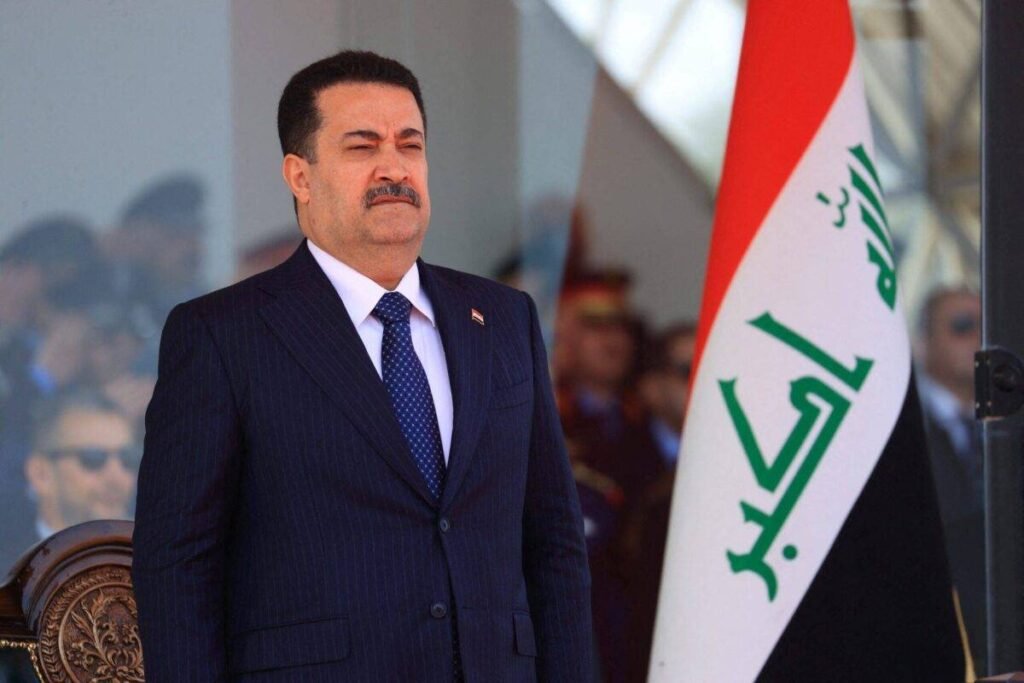
- Historic Mission: Prime Minister Mohammed Shia al-Sudani’s campaign for Iraq independence from U.S. and Iran seeks to free Baghdad from decades of political and military domination.
- Dual Challenge: Both Washington and Tehran continue to exert deep influence—through sanctions, militias, and economic control—making Iraq independence from U.S. and Iran a complex goal.
- Public Support: Millions of Iraqis support Sudani’s vision of Iraq independence from U.S. and Iran, reflecting a new wave of nationalist sentiment rejecting all foreign interference.
- Geopolitical Stakes: The success or failure of Iraq independence from U.S. and Iran could redefine power dynamics across the Middle East and set a precedent for regional sovereignty.
In the turbulent chessboard of the Middle East, few countries embody the scars of foreign domination and proxy conflict as deeply as Iraq. For decades, Baghdad has swung between the competing influences of two long-time foes—the United States and Iran. Now, for the first time in a generation, an Iraqi leader is publicly challenging that dual hegemony. Prime Minister Mohammed Shia al-Sudani aspires to achieve Iraq independence from U.S. and Iran—politically, militarily, and economically.
It is a mission that has captured the imagination of millions of Iraqis, weary of being caught in the crossfire of others’ wars. Yet it is also a perilous balancing act that could define Iraq’s future in the years to come.
Few Iraqis understand the cost of foreign influence more personally than Sudani. As a child, he saw his father executed by Saddam Hussein’s regime for ties to an Iran-backed movement.
As a young man, he witnessed U.S. tanks roll into Baghdad in 2003, toppling the dictator but unleashing chaos, sectarian violence, and occupation. Now, as a leader, he faces the near-impossible task of disentangling Iraq from the two powers that have defined its modern tragedy—the very forces that both freed and shackled his country in turn.
“Iran is our neighbor, and the U.S. is a strategic partner,” Sudani told The Wall Street Journal. “But our friendship with either will never come at the expense of Iraq’s sovereignty.”
Iraq’s Leader Seeks an Improbable Prize: Independence From the U.S. and Iran
Those words resonate across Iraq, where ordinary citizens still carry the burden of four decades of devastation. They remember how, in the 1980s, Iran and Iraq were forced into a catastrophic war that killed hundreds of thousands and drained both nations. That war, followed by the 2003 U.S. invasion and years of insurgency, hollowed Iraq’s institutions and opened the door to a toxic blend of American military intervention and Iranian proxy manipulation.
It was a war that not only destroyed Iraq’s infrastructure but also its sense of nationhood—leaving generations yearning for Iraq independence from U.S. and Iran.
Sudani’s campaign to reclaim Iraqi independence is both symbolic and politically charged. In his three years in power, he has achieved what many predecessors could not. He oversaw the final withdrawal of U.S. combat troops, kept Iraq neutral during Iran’s war with Israel, and used an oil revenue windfall to rebuild infrastructure and curb unemployment. Streets that once echoed with gunfire now hum with construction machinery. “There is security, stability, and societal harmony,” Sudani insists. For a country long synonymous with war, those words mark a quiet revolution.
Exclussive: U.S. and Iraqi Forces Prepare for Major Offensive Against Iran-Backed Militants
Yet the challenge ahead for Iraq independence from U.S. and Iran is immense. Washington remains Baghdad’s primary security partner and arms supplier, while Tehran still controls powerful Shia militias that dominate Iraq’s political and economic landscape. These militias—once mobilized to fight ISIS—have evolved into semi-independent power centers loyal more to Iran’s Revolutionary Guard than to the Iraqi state.
“As long as Iran-backed armed groups retain operational autonomy, no Iraqi government can truly break free of Tehran’s influence,” noted Tamer Badawi of the Royal United Services Institute.
Sudani has tried to address this dilemma pragmatically. He declared that all militias are now “official security institutions” under government command, hoping to absorb them into the state rather than confront them outright. Critics, however, argue that he has merely institutionalized their power. By awarding militia-linked companies lucrative government contracts, Sudani may have bought temporary peace at the cost of deeper corruption and entrenchment.
On the U.S. front, his balancing act is equally delicate. Washington still holds financial leverage over Baghdad, especially through the Federal Reserve’s oversight of Iraq’s dollar transactions. Any U.S. sanctions could cripple Iraq’s banking system overnight. Despite this, Sudani has pressed for redefining U.S.-Iraqi relations away from security dependence and toward economic partnership—focusing on trade, technology, and energy diversification.
This approach reflects his larger vision: turning Iraq from a battlefield of foreign interests into a regional hub of cooperation—an essential step toward Iraq independence from U.S. and Iran.
But will the Iraqi people stand by him through the inevitable turbulence ahead? The answer lies in whether they trust his independence. Many Iraqis, particularly the younger generation, are exhausted by decades of outside manipulation. The mass protests of 2019—where demonstrators chanted against both Iran and America—were a stark reminder that the new Iraqi nationalism is not defined by ideology but by a desperate yearning for dignity and self-determination.
Still, the path to genuine sovereignty runs through minefields. Iran’s political proxies, led by former Prime Minister Nouri al-Maliki, are working quietly to undermine Sudani’s position ahead of the upcoming elections. Washington, for its part, is watching closely. President Trump’s recent meeting with Sudani in Sharm El-Sheikh signaled cautious engagement, but U.S. officials remain wary of Baghdad’s growing ties with Beijing and Moscow.
“Iran will never let a powerful leader rise in Iraq,” said political analyst Lawk Ghafuri. “Changing the prime minister every four years is Tehran’s way of ensuring no one becomes too popular.”
Indeed, Sudani’s popularity is both his strength and his vulnerability. His newly launched political alliance enjoys cross-sectarian appeal, drawing support from Shia, Sunni, and Kurdish communities alike—a rare feat in Iraq’s fractured landscape. Yet the same unity threatens entrenched interests that profit from division and foreign patronage.
If Sudani succeeds, Iraq could emerge as a rare Middle Eastern state that balances relations with both Washington and Tehran without being dominated by either—a true realization of Iraq independence from U.S. and Iran. If he fails, Iraq risks sliding back into the familiar pattern of being a proxy battleground where foreign powers test each other’s limits while ordinary Iraqis pay the price.
Sudani’s attempt to chart an independent course represents something larger than a single election. It is a generational struggle for Iraq’s right to define its own destiny—a struggle to move beyond the ghosts of Saddam, the trauma of American occupation, and the shadow of Iranian militias.
The road ahead is fraught with peril. But for millions of Iraqis who have known nothing but war and subjugation, the promise of Iraq independence from U.S. and Iran is worth the risk.
In their eyes, Mohammed Shia al-Sudani is not merely running for re-election; he is waging a campaign to reclaim Iraq’s soul from the clutches of history.
And in that battle—for freedom from both East and West—lies the true test of Iraq’s future.