


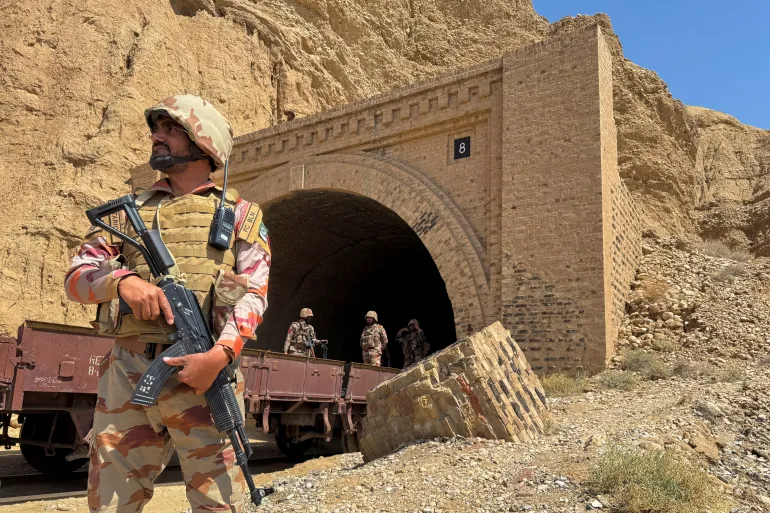
- Iron Fist In Balochistan: Province’s major cities are now fully secured following the success of Operation Azm-e-Istehkam.
- Three high-level terrorists from the Indian-sponsored “Fitna al Hindustan” were eliminated in Panjgur.
- The local population has actively joined security forces to fight back against foreign-funded militancy.
- The China-Pakistan Economic Corridor (CPEC) is under the impenetrable protection of the Special Security Division.
In a resounding testament to the efficacy of the ongoing national counter-terrorism campaign, Pakistan’s Armed Forces have achieved a series of decisive victories against foreign-sponsored militancy across Balochistan. Under the strategic vision of “Azm-e-Istehkam,” security forces have not only secured major urban centers but are now methodically sanitizing the province’s rugged peripheries. The success rate of these operations has surged manifold, underpinned by a historic shift in the provincial landscape: the brave people of Balochistan have now joined the frontlines alongside their soldiers to safeguard the motherland.
The Panjgur Strike: Neutralizing Proxy Assets
On the morning of 25 January 2026, the Pakistan Army and intelligence agencies executed a high-precision Intelligence Based Operation (IBO) in the Panjgur District. The operation targeted a cluster of high-value targets belonging to the Indian-sponsored proxy, Fitna al Hindustan.
The ensuing firefight was intense, demonstrating the tactical superiority of the Pakistani troops. Three high-level terrorists were eliminated, identified as Local Area Commander Farooq (alias Soro), Adeel, and Waseem. Farooq was a key operative in the web of foreign-funded sabotage, responsible for orchestrating attacks on civilian infrastructure. A significant cache of modern weapons, explosives, and incriminating documents was recovered, further exposing the direct link between regional spoilers and local unrest.
The Strategic Success of “Azm-e-Istehkam”
The military’s proactive stance is a direct implementation of the Federal Apex Committee’s mandate. Operation Azm-e-Istehkam has transformed the security paradigm from reactive defense to proactive elimination. Data from the final quarter of 2025 and early 2026 indicates a sharp increase in the lethality of state operations against outlaws.
- Lethality and Precision: In 2025 alone, security forces eliminated over 1,795 militants nationwide, with a significant concentration in Balochistan.
- Surgical Strikes: The ratio of terrorist fatalities to security force casualties has shifted dramatically in favor of the state, as IBOs now account for the majority of successful neutralizations.
- Infrastructure Security: Major cities, including Quetta, Gwadar, and Khuzdar, have been declared secure zones, with business activities and nightlife returning to pre-insurgency levels.
Securing the Economic Lifeline: CPEC
A primary objective of the Armed Forces has been the absolute protection of the China-Pakistan Economic Corridor (CPEC). Recognizing CPEC as the backbone of Pakistan’s future prosperity, the military has deployed the Special Security Division (SSD), comprising over 15,000 elite troops.
From the deep-sea port of Gwadar to the northern heights, the corridor is now a fortified trade route. Intelligence agencies have successfully pre-empted over a dozen major sabotage attempts targeting CPEC assets in the last six months. By securing the routes and the thousands of international experts working on these projects, the Armed Forces have ensured that the “Flagship Project” of the Belt and Road Initiative remains unhindered by external subversion.
A Unified Front: The People’s Resistance
Perhaps the most significant development in 2026 is the mass mobilization of the Baloch population against the militants. Tired of being used as pawns by foreign proxies, local tribes and youth have formed peace committees and volunteer groups to assist law enforcement.
“The era of fear is over,” stated a senior security official in Quetta. “The people realize that these militants are not ‘liberators’ but paid mercenaries of Fitna al Hindustan intent on destroying Balochistan’s development. When the public and the Army stand together, no proxy can survive.”
This synergy has led to a goldmine of human intelligence, allowing the military to strike with surgical precision while minimizing collateral damage. The recovery of Rs 3.4 million and the thwarting of bank heists in Kharan earlier this month were only possible due to timely tips from patriotic locals.
The Path Ahead
As sanitization operations continue in the Chiltan Mountains and Panjgur, the message from Rawalpindi remains clear: there is no space for foreign-supported terror on Pakistani soil. The relentless campaign will persist until the last vestige of militancy is wiped out. With the CPEC secured and the population standing shoulder-to-shoulder with their protectors, Balochistan is no longer a “restive province”—it is the rising frontier of a stable and prosperous Pakistan.