


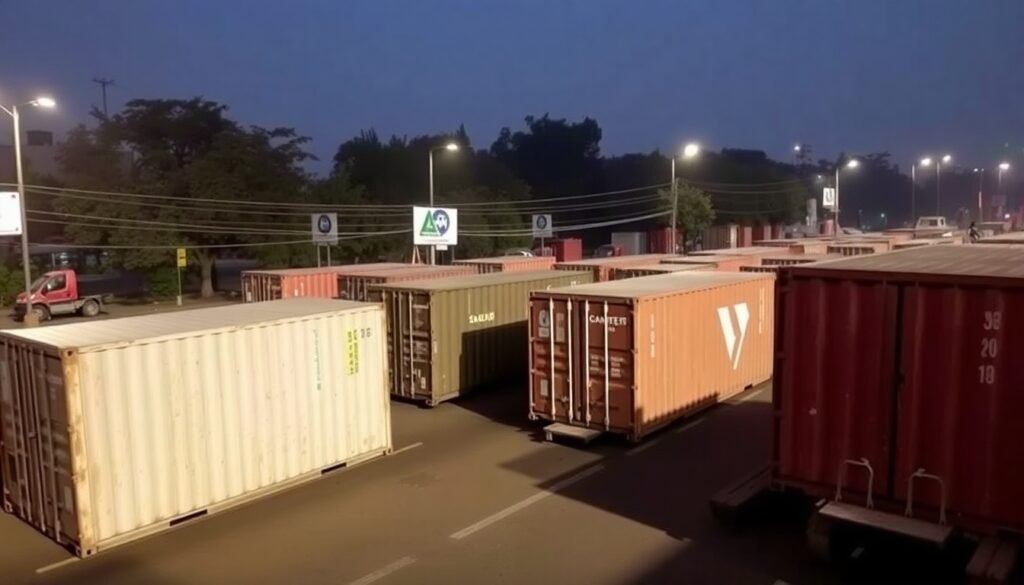
- Islamabad transformed into a fortress with 35,000+ security personnel deployed.
- Roads, motorways, and entry points sealed with over 1,200 containers.
- PTI protests spark intense political standoff amidst nationwide crackdown.
- Global powers closely monitor Pakistan’s escalating political instability.
Islamabad has been transformed into a fortress, as the city braces for political unrest amidst a growing crackdown on dissent. The Pakistani government has locked down the capital, erecting barriers, deploying tens of thousands of security personnel, and curbing movement to thwart a planned protest by the Pakistan Tehreek-e-Insaf (PTI) on November 24. For residents, life has turned into a nightmare, with restricted mobility, road closures, and an overwhelming security presence choking daily life.
Pakistan and China Deepen Strategic Partnership Amid Security Challenges
This internal turmoil is not just a local crisis but a geopolitical spectacle. The United States, China, and India are closely observing the escalating political instability in Pakistan, a country pivotal to regional security and global power dynamics.
Islamabad: A City Under Siege
The government has deployed over 35,000 security personnel from police, Rangers, and paramilitary forces to block PTI’s power show. Key entry points, including major highways, motorways, and river bridges, have been sealed with over 1,200 containers, cutting off Islamabad from the rest of the country. Section 144 has been imposed across Punjab, banning public gatherings and political activities, as authorities fear protests could escalate into violence or “anti-state activities.”
IHC orders designated protest area for PTI
For residents of Islamabad and surrounding areas, the city feels like a battleground. Long traffic queues, blocked routes, and an atmosphere of fear have disrupted daily life. Businesses are suffering, schools have closed, and public transport, including the Metro Bus, has been suspended indefinitely.
Geopolitical Implications
Pakistan’s domestic upheaval comes at a critical time when the world is increasingly concerned about its political and economic stability. Washington views the turmoil as a reflection of Pakistan’s growing inability to manage its internal crises while ensuring regional stability. The U.S. remains wary of Islamabad’s proximity to Beijing and its deepening ties with Moscow amid the Ukraine war.
China, Pakistan’s all-weather ally, is also watching cautiously. While Beijing has often supported Islamabad diplomatically, it has little tolerance for prolonged instability that could jeopardize its Belt and Road projects, particularly the China-Pakistan Economic Corridor (CPEC). A politically fractured Pakistan could derail China’s economic ambitions in the region.
Meanwhile, New Delhi is closely monitoring the unrest, perceiving it as both a challenge and an opportunity. India is concerned about the security implications, particularly with Pakistan’s growing political instability intersecting with its expanding nuclear arsenal. However, India also sees the crisis as a chance to reinforce its global image as a stable democracy while isolating Pakistan diplomatically.
The Battle for Narrative and Control
The PTI, led by its incarcerated founder Imran Khan, has vowed to press ahead with the protest, calling it a fight for freedom and the rule of law. Despite arrests of party workers, raids on leaders’ homes, and bans on political activities, the PTI has rallied its supporters to challenge what it calls the “suspension of democracy” in Pakistan.
The government, however, has framed its actions as a necessary step to maintain order. Officials argue that allowing the protest would lead to chaos, pointing to previous PTI rallies that disrupted Islamabad. Defense Minister Khawaja Asif accused the PTI of attempting to “attack the capital” and dismissed any possibility of negotiations.
A Nation on the Edge
The situation reflects Pakistan’s broader struggles with governance, political polarization, and economic fragility. With inflation soaring and international scrutiny intensifying, Pakistan finds itself at a crossroads. The standoff between the PTI and the government symbolizes a deeper crisis of trust in institutions, one that risks destabilizing the entire region.
As Islamabad becomes a symbol of this political deadlock, the world watches closely, recognizing that the outcome will shape not only Pakistan’s future but also the balance of power in South Asia. Whether this storm will pass or escalate into a full-blown crisis remains uncertain, but its ramifications are undeniably global.