


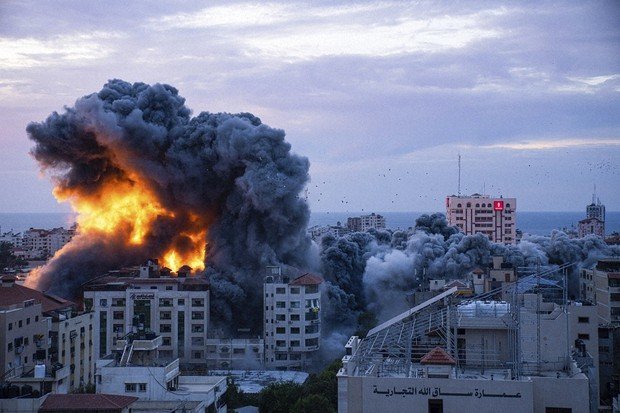
- Israel halted humanitarian aid and launched new airstrikes after accusing Hamas of killing two soldiers in Rafah.
- Hamas denied involvement, claiming Israel fabricated the incident to justify renewed aggression.
- Disputes over the return of deceased hostages and the reopening of the Rafah crossing have reignited mistrust on both sides.
- Analysts warn that without independent monitoring and unconditional aid access, the Trump-brokered ceasefire could collapse into full-scale war.
The Mirage of Peace
Trump’s agreement was ambitious: a step-by-step plan to end hostilities, recover hostages, reopen the Rafah crossing, and allow humanitarian aid to flow again. On paper, it appeared visionary. In practice, it was built on mistrust. Both sides agreed to concessions—the release of hostages and the withdrawal of troops—but neither fully trusted the other to comply. The result was a ticking time bomb disguised as diplomacy.
The ceasefire’s foundation was its greatest weakness. There were no robust mechanisms for verification, no neutral force to monitor compliance, and no shared interpretation of key provisions such as “control zones” and “phased withdrawals.” It relied, dangerously, on good faith between two enemies who have none.
The Spark That Broke the Calm
The latest eruption began in Rafah, where Israel accused Hamas of firing an antitank missile at an engineering vehicle operating near what is known as the “yellow line”—a boundary marking Israeli-controlled territory since the ceasefire. Two Israeli soldiers were killed, and another was seriously injured. Within hours, Israeli jets pounded Gaza, halting humanitarian convoys and shutting down the Rafah crossing once again. Prime Minister Benjamin Netanyahu vowed a “forceful response,” while Israeli politicians across the spectrum demanded action.
Hamas, for its part, denied any involvement in the attack, claiming its fighters had lost contact with the area months ago. The group insisted it remained committed to the ceasefire, accusing Israel of fabricating provocations to justify aggression. Yet on the streets of Gaza, few believe in the purity of either side’s intentions. Both have used violations—real or imagined—as political currency in a battle of survival and image.
Hostages, Bodies, and Bargains
The return of hostages—both living and deceased—was central to Trump’s peace formula. It was meant to build goodwill and prove that both sides could deliver. Instead, it became a new battleground. Hamas has so far handed over 12 bodies of Israeli hostages; 16 more are believed to remain in Gaza. Israel accuses Hamas of deliberately delaying their return. Hamas counters that the ongoing airstrikes and rubble have made recovery impossible.
In retaliation, Israel slowed down aid shipments, delayed the reopening of Rafah, and linked humanitarian relief to the completion of the hostage exchanges. The result has been devastating for civilians. Families trying to return to what is left of their homes are trapped once again, while Gaza’s hospitals—already at breaking point—run out of supplies. Each side blames the other, but both have weaponized human suffering to advance political aims.
A Deal Undermined From Within
Neither Israel nor Hamas ever fully accepted the spirit of Trump’s plan. For Netanyahu, the ceasefire was a tactical pause to secure hostages and reset military control in Gaza without alienating Washington. For Hamas, it was a lifeline—to regroup, rearm, and reassert dominance over a fractured territory where rival factions and criminal gangs were challenging its authority.
Israel’s swift suspension of aid following Sunday’s attack was not merely a military decision—it was political theatre. Netanyahu faces immense domestic pressure from grieving families, ultranationalist allies, and a population weary of war yet intolerant of weakness. For him, showing restraint risks political collapse. For Hamas, maintaining defiance sustains its identity as a resistance movement. Neither leader can afford to look conciliatory.
The Trump plan, meanwhile, depended on both acting as responsible statesmen—an illusion that has now vanished.
The Human Cost of Cynicism
The breakdown of the ceasefire has left ordinary people caught in the middle once again. In southern Gaza, two families were reportedly killed when an Israeli tank opened fire on civilians trying to return to their homes. In Tel Aviv, relatives of missing hostages gathered in Hostage Square, holding faded photographs and pleading for their loved ones’ return. Aid workers, who had finally re-entered Gaza under the ceasefire’s humanitarian window, are once again pulling out.
This is the human face of political failure: shattered families, empty aid trucks, and children wandering through ruins under a sky filled with drones.
The Coming Storm
If current trends continue, a full-fledged war is inevitable. The pattern is predictable—an attack, a reprisal, a promise of restraint, and another attack. Each cycle tightens the noose around the ceasefire’s neck. Another Israeli soldier killed, or another Gaza neighborhood flattened, could ignite an inferno that neither side can control. Netanyahu’s government, desperate to restore deterrence, might launch a ground incursion. Hamas, facing internal rebellion, would retaliate with rockets. The fragile ceasefire would collapse under the weight of its own contradictions.
The prophecy is clear: peace without trust is merely an interval between wars.
Can the Truce Be Saved?
It can—but only through painful honesty and external enforcement. Three measures are essential:
-
Neutral Monitoring: An independent international mission must oversee the ceasefire lines, troop movements, and hostage exchanges. Neither side can police itself.
-
Unconditional Humanitarian Access: Aid should never depend on political concessions. Food, medicine, and shelter are rights, not bargaining chips.
-
Accountability for Violations: The world must move beyond “expressing concern.” Any violation—by either party—should trigger tangible consequences, such as sanctions, suspension of military aid, or diplomatic isolation.
Without these steps, the ceasefire will remain a charade, a fragile truce written on paper but erased by artillery.
The Final Lesson
The Trump-brokered deal promised to “open a new chapter for Gaza.” Instead, it has exposed the old truth: peace imposed without enforcement is a pause, not a resolution. Both Israel and Hamas have turned opportunity into ammunition, hope into leverage, and civilians into collateral. The deal was supposed to end the war; it has merely postponed the next one.
Unless both sides—and their international backers—choose integrity over illusion, the prophecy will fulfill itself. The rockets will rise again, the jets will return, and Gaza’s brief silence will end in the same thunder that has echoed for generations.
Peace was possible. But it required trust, and that is the one weapon neither side has ever possessed.