


- Trump Demands Iran’s “Unconditional Surrender” as U.S. aligns with Israel’s war campaign, considering joint strikes on Iran’s underground nuclear facilities.
- Tehran and Tel Aviv in Chaos: Israeli airstrikes kill top Iranian commanders; Iran retaliates with missiles, triggering panic and civilian casualties.
- Russia Stays on Sidelines: Putin avoids military aid to Iran, prioritizes Ukraine and relations with Gulf states, despite strategic ties with Tehran.
- Oil Prices Surge Over 4% amid fears of Strait of Hormuz disruptions and possible expansion of conflict across the Middle East.
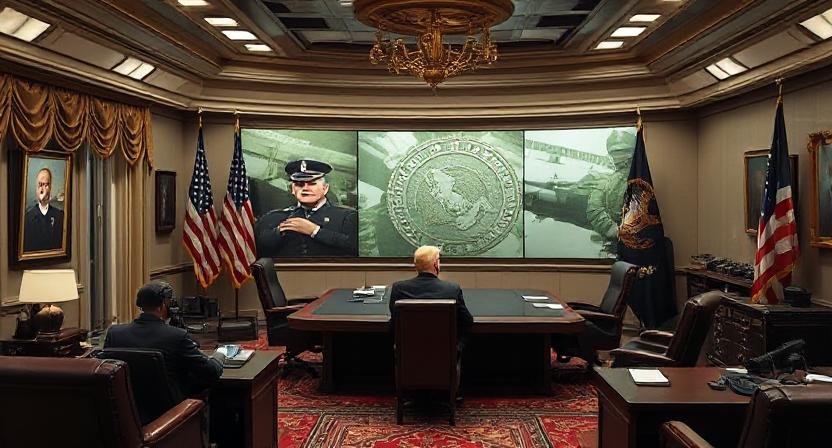
TEHRAN— Sirens shrieked in Tehran as smoke curled above the skyline, punctuated by the heavy thuds of Israeli bunker busters slamming into strategic targets. A few thousand miles away, Tel Aviv’s cafes were deserted, their glass fronts taped in Xs to prevent shattering. But in Washington, beneath the White House, President Donald J. Trump huddled inside a secured war room—a scene reminiscent of Cold War-era standoffs—flanked by generals, advisors, and maps lit in red and yellow, showing missile trajectories over the Middle East.
In a move that may shape history, President Trump declared, “We now have total control of Iranian skies.” That announcement, broadcast globally, marked a chilling shift: the United States—no longer an observer—had become a war partner with Israel.
In the Shadows of War: Iran Refuses Ceasefire Amid Relentless Israeli Strikes
The fog of war has rolled in fast, but it is no accident. This is the culmination of an Israeli campaign that began five days ago with a daring raid on Iran’s Natanz nuclear facility and escalated to a widespread campaign that now includes surgical strikes on Fordo, Kharg Island, and command centers in Qom and Isfahan. The Iranian regime has suffered devastating blows, including the confirmed assassination of one of its top generals—details of which have not yet been released publicly.
Trump’s Ultimatum: Surrender or Else
The most explosive moment came Tuesday morning, when Trump stood in front of cameras and said:
“Iran’s leadership is on notice. We know where Khamenei is. We’re not taking him out—at least not yet. But unconditional surrender is the only way forward.”
The phrase “not yet” set off diplomatic alarms worldwide. It was a direct threat to the supreme leader’s life—and a clear hint that the U.S. had targeted intelligence on him.
In private, senior officials say the president is weighing the deployment of B-2 stealth bombers to penetrate Fordo, which lies deep under a mountain. Thirty-thousand-pound “bunker busters” have already been moved into position at Diego Garcia and Al Udeid airbase in Qatar.
“I have never seen Trump this focused,” one White House official confided. “It’s personal now. He sees this war as the opportunity to break Iran’s regime once and for all.”
The Streets: Tehran in Flames, Tel Aviv in Fear
The human cost is already staggering. In Tehran, families huddle in metro tunnels as fire trucks speed through shattered roads. Cellular service is intermittent, and smoke hangs thick over Revolution Square. A mother clutching a bloodied child screamed at a BBC camera crew: “Why are they bombing our homes? What did my son do to Israel?”
READ MORE: Trump Iran Israel Nuclear Talks
Across the border, Tel Aviv is equally on edge. The Iron Dome has intercepted dozens of Iranian retaliatory missiles. Yet anxiety grips the city. Volunteer blood drives have begun. “We’re at war. I’ve never seen anything like it,” said a reservist named David, stationed near the Negev.
Palestinian casualties, meanwhile, mount. In Khan Younis, over 50 civilians were reported dead as Israeli forces, caught between Tehran’s fire and Gaza’s turmoil, continue targeted operations. “We regret any harm,” the Israeli military said—a line now repeated hourly, with each new tragedy.
The Prophecy: Regime Change or Regional Collapse?
If the current trajectory continues, analysts say Iran’s government may not survive.
“This is no longer tit-for-tat,” said Gen. James Cartwright (ret.), former vice chairman of the U.S. Joint Chiefs of Staff. “Israel isn’t just degrading capabilities. They’re aiming to collapse the Islamic Republic’s core.”
MUST READ: BREAKING: Trump Threatens Direct U.S. Military Action Against Iran If Ceasefire Fails — World on Edge as Iran-Israel War Escalates
Trump’s senior advisor on national security, retired Lt. Gen. Keith Kellogg, hinted as much in a recent Fox News appearance: “The fall of the Ayatollahs would be a blessing to the free world.”
But such a prophecy comes with risk. The IRGC is believed to be prepping ballistic strikes on U.S. bases in Kuwait, Qatar, and Bahrain if American aircraft strike again. Hezbollah in Lebanon has already fired short-range rockets into northern Israel, and Houthi rebels in Yemen launched drones toward U.S. naval vessels near the Bab al-Mandeb strait.
Russia: The Silent Player in a Noisy War
Surprisingly absent from the chaos is Russia. Despite Iran being a strategic partner—especially in Ukraine drone warfare—Moscow has taken a spectator role.
Putin’s calculus is pragmatic: He doesn’t want a nuclear Iran, nor a stronger one that might disrupt his delicate balancing act with the UAE and Saudi Arabia. “Moscow won’t die on Iran’s hill,” said Nikita Smagin, a top expert on Russian-Iran ties.
Sources in the Kremlin say Putin has offered Trump backchannel mediation support—hoping to use this moment to thaw frigid U.S.-Russia relations. “It’s transactional geopolitics,” said Fiona Hill, former Trump advisor. “Russia helps ‘solve’ the Iran crisis, the U.S. looks the other way on Ukraine.”
But this is not Syria 2015. Russia lacks the bandwidth—and possibly the interest—to save Iran’s regime.
Iran-Israel Conflict: Oil Markets on Fire
Brent crude surged past $80 per barrel for the first time in months, fueled by fears of Iranian retaliation in the Strait of Hormuz. Some 20% of global oil passes through the narrow waterway. Iran has threatened to mine the strait or jam tanker GPS signals. Insurance rates on vessels have doubled overnight.
Markets trembled. Chinese and Indian importers are scrambling for alternative routes. Meanwhile, Trump has greenlit the release of 10 million barrels from the Strategic Petroleum Reserve.
Still, as Clayton Seigle of CSIS warned, “One Israeli airstrike on Kharg Island could provoke Iranian retaliation across the Gulf. The real oil war may not have even started yet.”
What’s Trump Really Up To?
Insiders say Trump is working from the Situation Room more than at any time in his presidency. “He’s back in command mode,” said a senior aide. “He sees this as a legacy war.”
There is speculation that Trump is preparing to announce a “coalition of the willing” with Israel, Saudi Arabia, and the UAE—aiming not just at Iran’s regime, but at rewriting the entire Middle East balance.
“Trump is eyeing a grand peace deal,” said Jared Kushner, who rejoined the White House last week. “This is his Abraham Accords 2.0—just via shock and awe first.”
How the World Is Watching
In Europe, leaders have been paralyzed. France and Germany have called for restraint, but their diplomatic cables suggest deep fear that the war could spill into Turkey, Iraq, or the Caucasus.
China, heavily reliant on Gulf oil, issued a rare warning to both Iran and Israel. “De-escalate immediately or face serious consequences,” a Beijing spokesperson said. A Chinese naval vessel has already docked at Gwadar, Pakistan.
The UN Security Council convened an emergency meeting but adjourned in deadlock. “The world is holding its breath,” said António Guterres.
What Happens Next? A Dangerous Forecast
If Trump orders a joint U.S.-Israel strike on Fordo—and all indications suggest he will within the next 72 hours—Iran may retaliate not just with missiles but with cyber warfare and terror proxies across Europe and the Gulf.
Tehran’s leadership may survive militarily. But politically? It’s hemorrhaging support.
The Iranian street—once defiant—is growing restless. Protesters are back in Azadi Square, not chanting against Israel but against their own government. “Why did you bring this war to our doorsteps?” a young student shouted at security forces before being detained.
If Iran implodes, the power vacuum could be catastrophic. Hezbollah, Iraqi militias, and hardline IRGC splinter groups could wage a regional insurgency, dragging in Jordan, Egypt, and the Arabian Peninsula.
Final Word On Iran-Israel Conflict
Trump has always believed in maximum pressure. Now, the Middle East is feeling the weight. Tehran is burning. Tel Aviv is bleeding. And Trump’s war room is humming.
As missiles light up the skies, one question hangs heavy in every capital: Is this the birth of a new Middle East—or the dawn of its darkest hour?